Brief Power Loss in Brisbane? What It Means
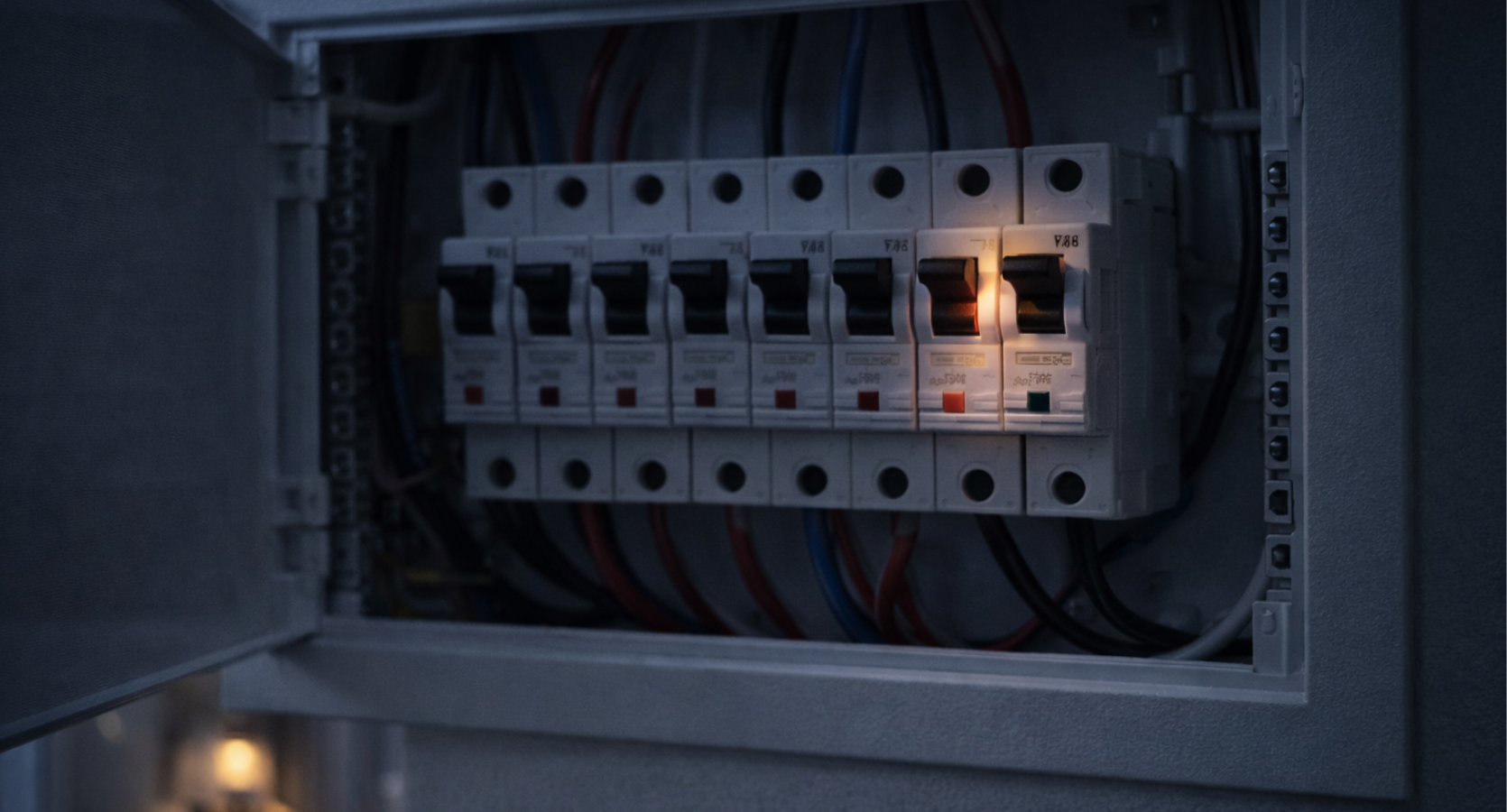
If your home drops out for a second then springs back, that’s not normal. In Brisbane, that usually points to voltage dips or a failing connection. Here’s what to look for and when to call.
If your home loses power briefly then comes back on, that’s not normal.
Clocks reset. Modems reboot. Lights flick or go dark, then everything returns like nothing happened. In Brisbane, that’s usually a voltage dip or a connection opening and re‑making under load. It’s common in storm season and on heatwave afternoons, but it’s still a fault sign worth checking.
The risk is bigger than an annoying blink. Loose terminals arc. Arcing overheats. Overheating starts fires. If it’s happening more than once in a blue moon, don’t ignore it.
Here’s the truth:
A healthy home supply doesn’t drop out and come back by itself if something is collapsing voltage or a connection is chattering.
One quick blip during a wild storm can happen, but repeat blips point to a fixable electrical issue.
This isn’t about guessing. It’s about checking the right spots and ruling out the dangerous ones first.
1. Network reclosers and voltage dips during storms
Brisbane’s grid uses automatic reclosers. When a branch slaps a line in a storm, the grid may drop power for a second, clear the fault, then re‑energise. You feel a brief blackout, then lights return.
On hot afternoons, demand surges.
Transformers run hard. Voltage can sag, especially on long overhead runs feeding older Queenslanders.
Electronics can reboot even if breakers don’t trip.
If you only notice blips during storm season or during big heatwaves, this may be the reason.
But frequent dips outside those windows suggest something else at your place.
At this point, you may see:
✔ Microwave and oven clocks flashing 12:00
✔ Wi‑Fi modem and NBN box rebooting
✔ LED lights flicking or going out, then recovering
✔ Aircon (air conditioner) pausing then restarting its cycle
✔ No safety switch (RCBO) tripping at the switchboard
2. Loose or damaged neutral at the switchboard or service
A loose neutral is high‑risk. It can cause voltage to swing when loads change. One moment, everything’s fine. Next moment, a compressor starts and the neutral arcs, opening briefly, then re‑making.
You’ll notice random bright/dim lights, especially with different rooms behaving differently. Bayside homes see more neutral corrosion from salty air. In older switchboards, neutrals can loosen with heat expansion and contraction.
Left alone, this cooks terminals and appliances. It’s not a “wait and see” fault. It needs a proper test under load.
At this point, you may see:
✔ Lights brightening then dimming with no pattern
✔ Some rooms drop out while others stay on
✔ Warmer‑than‑normal neutral bar or discoloured insulation
✔ Crackling sounds near the switchboard under heavy load
✔ Sensitive devices resetting without any breaker trip
3. Failing main switch or meter isolator
Main switches and meter isolators carry your whole house load. When contacts wear or loosen, they heat up. Hot contacts can expand just enough to open, drop supply, cool, then reconnect.
Heatwaves make this worse. Metal expands. Plastic softens. A borderline switch may chatter right when your ducted aircon and oven are both on.
You won’t see a tripped breaker. It looks like a quick blackout for the whole house. Then it’s back as if nothing happened.
At this point, you may see:
✔ Whole‑home dropouts unrelated to weather
✔ A warm or humming main switch body
✔ Discolouration around the main switch cover
✔ Brief outage when big loads start or stop
✔ No visible tripping on any device
4. Heavy motor start pulling voltage down
Big motors take a big gulp at startup. Aircon (air conditioner) compressors, pool pumps, and bore pumps can pull voltage down for a split second. If your supply is marginal, that dip can be enough to blank out electronics.
Add a long run from the street, or smaller cabling in an older home, and the sag gets worse. In Queenslanders with add‑on renovations, mixed wiring sizes can exaggerate the drop.
If blips match your pool timer or aircon cycle, this is a strong clue.
At this point, you may see:
✔ Modem or TV resets when the pool pump kicks in
✔ Lights dip when the ducted aircon starts
✔ Brief outage on the same schedule each day
✔ No safety switch tripping
✔ Motor buzzing or struggling to start smoothly
5. Water ingress and arcing in outdoor fittings
Brisbane humidity and wind‑driven rain push moisture into gear that isn’t sealed. Outdoor junction boxes, eave lights, and even the switchboard can take on moisture. When that moisture tracks to earth, it can arc. The arc collapses voltage for a moment, then dries or moves and power returns.
Storm season makes this common, especially on the bayside with salty air accelerating corrosion. A drip today becomes carbon tracking tomorrow.
You may never see a trip. Just a blip and a smell, or a mark that wasn’t there last week.
At this point, you may see:
✔ Sooting or green/white crust on outdoor terminals
✔ Faint scorch smell after rain
✔ Blips worse on humid nights or after storms
✔ Rusty screws on external isolators
✔ No obvious trip at the switchboard
6. Loose terminals in a power point (GPO) or light fitting
A single loose active or neutral can blink a whole circuit. Vibration, heat cycles, or poor earlier workmanship can leave a screw just shy of tight. It arcs under load, opens briefly, then re‑makes.
This often shows up after a renovation or when a big plug‑pack is moved in a power point. On lighting, you’ll see certain rooms affected while others are fine.
The risk is heat at the loose point. That’s where fires start. Inside a wall, behind a plate.
At this point, you may see:
✔ One room or one circuit drops out briefly
✔ A power point faceplate feels warm
✔ Crackle when you bump a plug or switch
✔ Blackening on a terminal when inspected by a pro
✔ No change at the switchboard devices
7. Phase drop or solar‑related voltage swings
Some Brisbane homes run two or three phases for large loads. If one phase has a weak connection or a blown service fuse, that phase can drop momentarily as loads shift. Parts of the home go off, then return.
Solar can add another layer. On bright, mild days, voltage can rise on your street. Inverters trip to protect the grid, and the rapid shift can upset sensitive gear even though supply remains present.
If you see blips on sunny middays or only certain circuits, this belongs on the list.
At this point, you may see:
✔ Certain appliances drop while others keep running
✔ Solar inverter messages about over/under‑voltage
✔ Blips mid‑day more than evenings
✔ Aircon unaffected but study loses power briefly
✔ No tripping, just resets and clock flashes
Is This Normal?
One quick blink in a wild storm can happen. The grid protects itself and restores power fast.
Blips during a brutal heatwave can happen too. Demand is huge. Voltage dips.
But frequent dropouts are not normal. They point to a connection, load, or protection issue.
If it’s tied to your aircon, pool pump, or bore pump, it’s not normal.
If it happens on clear days with light load, it’s not normal.
If lights go bright then dim, that’s not normal at all.
If anything smells hot or you hear crackling, that’s urgent.
Normal means stable. Anything else needs a look.
When You Should Call an Electrician
If you’re in Brisbane and this is more than a rare storm blip, call a licensed electrician. Fast if you’re near the bayside or in an older Queenslander with timber cavities.
Call sooner if you notice heat, smell, or sounds around the switchboard. Loose neutrals and failing main switches escalate quickly.
If the issue matches a specific load starting, that’s still not normal. It’s a supply or wiring capacity flag.
Frequent blips outside storms or heatwaves
Lights brightening or dimming randomly
Warm main switch or unusual humming
Specific rooms or circuits dropping out
Resets when pool pump or aircon starts
Visible corrosion or water staining at gear
Any scorch smell after rain or high humidity
Brief power loss that comes back by itself is your home telling you something. In Brisbane, the weather and load extremes reveal weak points fast. It might be a grid dip once. But if it repeats, the cause is usually local, a loose neutral, a tired main switch, water intrusion, or load‑related voltage sag. None of those improve on their own. They quietly get worse, and they can damage appliances long before they fail outright. A clean inspection, tightening under torque, proper testing under load, and fixing any moisture or corrosion will steady your supply and lower the risk.
Need help in Brisbane? Talk to Exclusive Electrical & Air.
We diagnose voltage dips, loose connections, and load issues across all Brisbane suburbs.
We’ll test under real load, check your switchboard, and sort the cause properly.
Call now to book a licensed electrician who knows Brisbane homes, storm season, and heatwave loads.