Can Your Brisbane Home's Wiring Handle a Smart Home Setup?
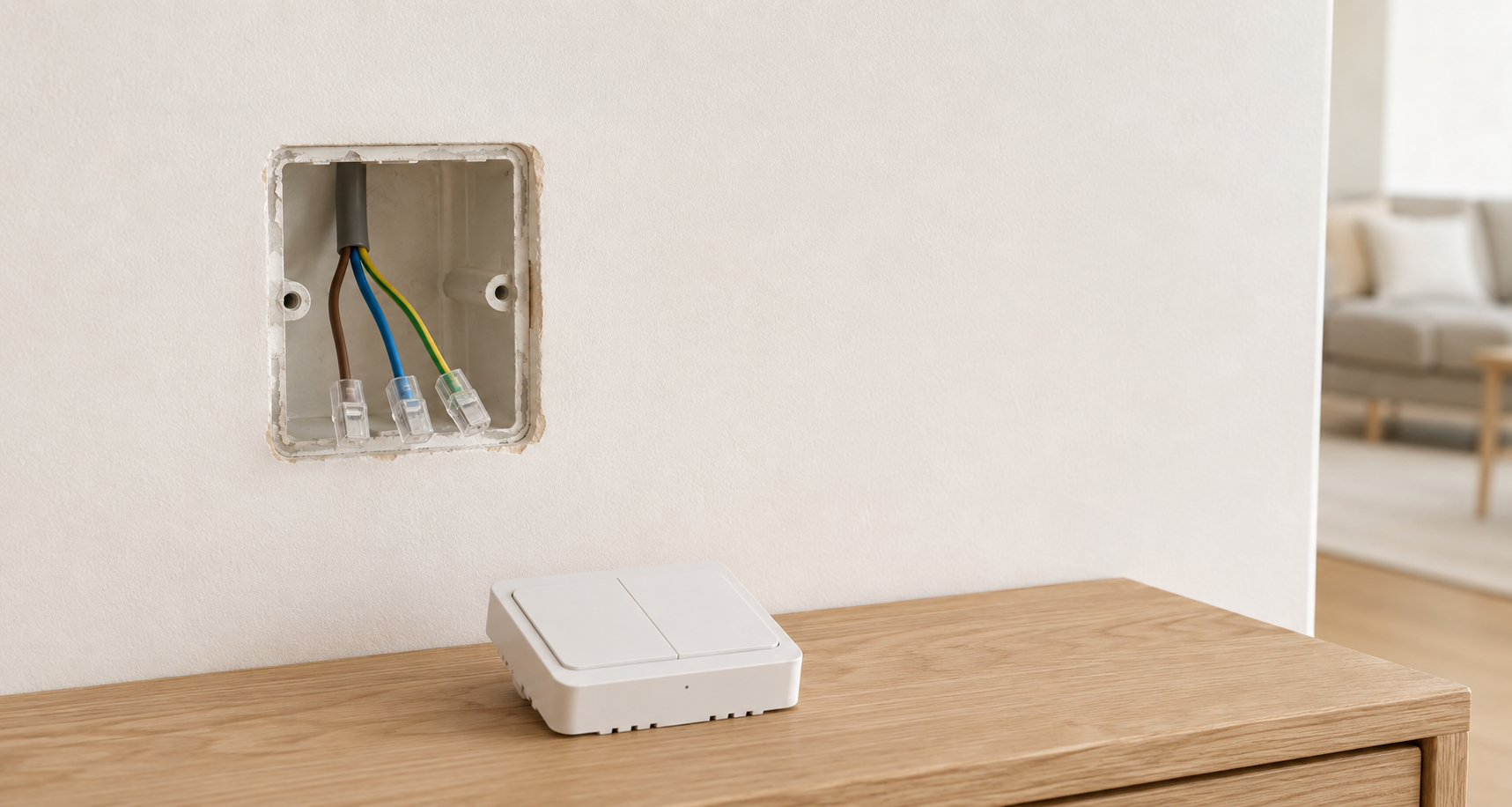
Smart home technology assumes a certain standard of electrical infrastructure beneath it. In a newly built Brisbane home that assumption is usually safe. In an older property, it frequently is not, and discovering that mid-installation is a frustrating and avoidable experience. Here is what your wiring needs to support a smart home setup and how to find out where yours stands.
Can Your Brisbane Home's Wiring Handle a Smart Home Setup?
Smart home technology is increasingly accessible, increasingly affordable, and increasingly something Brisbane homeowners want to incorporate into their properties. Smart switches, smart ceiling fans, home energy monitors, EV chargers, and solar integration systems all make genuine contributions to how a household operates, and the market for these products has matured to the point where quality options exist at every price point.
What the product marketing rarely addresses is the electrical infrastructure those devices depend on. A smart switch that requires a neutral wire at the switch location does not work in a home where the switch wiring was configured without one. A home energy monitoring system that connects at the switchboard cannot be correctly installed in a switchboard that is already operating beyond its safe capacity. An EV charger on a dedicated 32-amp circuit cannot be added to a home whose switchboard has no available circuit positions. The technology is ready. The wiring may not be.
A common version of this in practice: a household in a 1970s home in a suburb like Kedron orders a batch of smart switches, then discovers during installation that most of the switch locations are wired with a switch loop, meaning there's no neutral present at the switch box at all. Nothing wrong with the original wiring for what it was built to do, it simply predates a wiring standard that didn't exist yet when the house went up. Finding this out before the switches are purchased rather than after saves both the return hassle and the awkward gap between what was bought and what could actually be installed.
For Brisbane homeowners considering a smart home upgrade, understanding the state of the existing electrical infrastructure before devices are purchased is the step that separates a straightforward installation from a disruptive and expensive one. Exclusive Electrical & Air has carried out residential electrical assessments and smart home installations across Brisbane for over a decade, serving more than 2,000 customers in suburbs including Kenmore, Mitchelton, Hamilton, Toowong, and Aspley. Rated 5 stars on Google. 📞 0468 813 833.
Why Brisbane's Older Housing Stock Creates Specific Challenges
Brisbane's residential suburbs contain an enormous variety of housing ages, and the electrical infrastructure in those homes reflects the standards, materials, and practices of when they were built. A home constructed in the last ten to fifteen years in a newer suburb is likely to have wiring, switchboard, and earthing arrangements that are broadly compatible with smart home device requirements. A home built in the 1960s, 1970s, or earlier in an established suburb is a different proposition.
Properties in suburbs like Mitchelton, Kedron, St Lucia, Indooroopilly, and Hamilton frequently retain original or partially updated wiring that was not designed with smart home technology in mind, because smart home technology did not exist when those homes were built. The gaps that create problems for modern device installation are not defects in the original work. They are simply the product of electrical standards and practices that predate the requirements of contemporary smart home equipment. See the Electrical Safety Office Queensland.
The specific issues that arise most frequently in Brisbane's older housing stock are covered in the sections that follow.
The Neutral Wire: The Single Most Common Compatibility Issue
The neutral wire is the most frequently encountered wiring compatibility issue for smart switch and smart fan installations in Brisbane homes, and it is worth understanding clearly because it affects a significant proportion of the city's older residential properties.
In a standard modern wiring configuration, both an active wire and a neutral wire run from the switchboard to each switch location. The switch interrupts the active wire to control the circuit. The neutral wire is present at the switch but is not connected to the switch itself. It sits unused in the switch box, available for any device that needs it.
Smart switches and smart fan speed controllers require a neutral wire at the switch location to power their internal electronics. Without a neutral present, the device's Wi-Fi radio, microprocessor, and app connectivity have no power source when the switch is in the off position. Some smart switch models include a workaround that draws a tiny amount of current through the load circuit for power, but this approach has compatibility limitations with LED lighting and is not a universal solution.
The issue arises in homes wired with a switch loop configuration, which was common practice in Australian residential wiring for decades. In a switch loop, only the active wire runs to the switch location. The neutral does not reach the switch box at all. A smart switch installed in a switch loop location either requires a workaround device with its own limitations or requires a licensed electrician to run a neutral wire to the switch location before the smart device can be installed correctly.
Identifying which switch locations in a Brisbane home have a neutral present and which do not is a standard part of a pre-installation wiring assessment. It shapes the installation scope and informs which smart switch models are appropriate for each location.
Wiring Condition and Age
Beyond configuration, the physical condition of existing wiring is assessed before any smart home installation proceeds. This is particularly relevant for Brisbane homes with wiring that dates to original construction.
Rubber-insulated wiring, common in homes built before the 1970s, degrades over time as the rubber insulation dries, cracks, and loses its insulating properties. While not every older Brisbane home with rubber wiring requires immediate full rewiring, adding new electrical loads and devices to circuits with significantly degraded insulation is not appropriate. A licensed electrician identifies sections of wiring in poor condition and advises on the extent of remediation required before smart home devices are connected.
Aluminium wiring, used in some Brisbane homes built during the late 1960s and 1970s when copper prices were high, presents specific compatibility concerns with modern devices. Aluminium conductors expand and contract differently to the copper connections in modern devices and switches, and without correctly specified connections and compatible devices, aluminium wiring installations can develop overheating issues at termination points over time. A licensed electrician identifies aluminium wiring and advises on the appropriate approach for connecting modern smart devices to those circuits. See the Electrical Safety Act 2002 QLD.
Switchboard Capacity and Condition
The switchboard is the hub that all smart home electrical upgrades ultimately connect back to, and its condition and capacity directly affect what is possible without further work.
A smart home setup that includes an EV charger, home energy monitoring, smart hot water switching, and additional circuit-level control requires a switchboard that has the physical circuit positions, total load capacity, and correctly rated protection equipment to support those additions. A switchboard that is already fully populated, contains outdated fuse wire rather than circuit breakers, or lacks correctly installed safety switches on power and lighting circuits is not a suitable foundation for an expanding smart home electrical system.
Assessment of the switchboard as part of a pre-smart-home wiring check covers available circuit positions, total load headroom, protection equipment condition and type, safety switch presence and correct operation, and earthing quality. Where the switchboard requires upgrading before smart home additions can proceed, combining the switchboard upgrade with the smart home installation is the most efficient approach.
Earthing and bonding quality is assessed alongside the switchboard. Smart home devices that connect to metal enclosures, metallic pipework, or conductive building elements depend on correctly installed earthing to ensure that any fault current is safely directed to earth rather than accumulating on surfaces that occupants might contact. Older Brisbane homes with incomplete or degraded earthing arrangements are not safe foundations for expanded electrical systems regardless of the technology being added.
Not sure whether your switchboard has the headroom for what you're planning? That's exactly what an assessment answers before you spend anything on devices. 📞 0468 813 833 | Book Your wiring and smart home assessment.
What a Pre-Installation Wiring Assessment Covers
A wiring assessment by a licensed electrician from Exclusive Electrical & Air ahead of a smart home installation covers the following items across the property.
Switch location wiring configuration is checked at each proposed smart switch or smart fan controller location to confirm whether a neutral wire is present. The findings inform which devices are compatible at each location without additional wiring work and which require a neutral to be run.
Switchboard condition, capacity, and protection equipment are assessed to confirm the board is suitable for the additional circuits or monitoring connections required by the smart home setup. Any upgrade requirements are scoped and quoted as part of the assessment.
Wiring condition in accessible areas is assessed for degradation indicators including insulation condition, conductor type, and connection quality. Sections identified as requiring remediation are flagged with a recommended priority level.
Earthing and bonding is confirmed as adequate for the property's existing and proposed electrical load.
From that assessment, a clear scope of work is established that covers any wiring preparation required before smart home devices are installed, the smart home installation itself, and the compliance documentation covering all notifiable work. See our electrical safety inspection Brisbane service page.
What This Means in Practice
For most newer Brisbane homes, a pre-installation assessment confirms the wiring is broadly compatible and the smart home installation proceeds with minimal or no preparatory work. For older properties, the assessment identifies specific items that require attention before installation, and the scope and cost of that work is known before anything is purchased or committed to.
Either outcome is useful. A confirmed compatible wiring installation gives the homeowner confidence that the smart home setup will work correctly from day one. An identified preparation scope gives the homeowner an accurate picture of the full project cost rather than a series of unexpected additions during installation.
All notifiable electrical work associated with smart home installations, including smart switch installations, circuit additions, and switchboard modifications, is subject to the Electrical Safety Regulation 2013 QLD and must be carried out by a licensed electrician with a Certificate of Testing and Compliance issued upon completion. See our electrical installations Brisbane service page.
FAQ
Q: How do I know if my Brisbane home has switch loop wiring without calling an electrician?
A: The most reliable indicator is the age of the home. Properties built before the mid-1980s in Brisbane's established suburbs are more likely to have switch loop wiring configurations at some or all switch locations. However, many homes have been partially rewired or extended over the years, meaning wiring configurations can vary between rooms in the same property. A licensed electrician confirms the arrangement at each specific switch location during the assessment.
Q: Can smart switches be installed in a home with aluminium wiring?
A: Yes, but the installation requires correctly specified connections that account for aluminium's expansion and contraction characteristics. A licensed electrician experienced with aluminium wiring installations selects compatible devices and connection methods as part of the installation. Standard copper-specified terminations are not appropriate for aluminium conductors.
Q: My home was built in the 1990s. Is the wiring likely to be compatible with smart home devices?
A: Homes built in the 1990s in Brisbane are generally more likely to have copper wiring and in many cases neutral wires at switch locations, though this is not universal. A wiring assessment confirms the specific configuration at each installation point. Switchboard condition in 1990s properties varies and is worth assessing before significant additional load is added.
Q: Do I need a wiring assessment before buying smart home devices?
A: Having the assessment before purchasing devices is the more efficient sequence. Knowing the wiring configuration at each switch location before selecting smart switch models means you purchase devices that are compatible with your specific installation rather than discovering incompatibilities after the fact. Your licensed electrician can advise on compatible device categories during the assessment.
Q: How much does a pre-smart-home wiring assessment cost?
A: The cost depends on the size of the property and the scope of the assessment. A fixed-price quote is provided following the initial site visit. Given that the assessment determines the full installation scope and prevents unexpected costs during the smart home installation itself, most Brisbane homeowners find the upfront assessment cost is recovered immediately in avoided surprises.
Still deciding whether to book an assessment before or after picking out devices? Before is always the cheaper order to do it in. 📞 0468 813 833 | Book Your wiring and smart home assessment.
A smart home setup works best when the wiring beneath it is assessed and confirmed before installation begins. For Brisbane homes with older electrical infrastructure, that assessment is the step that makes the difference between a smooth installation and a disruptive one.
Exclusive Electrical & Air carries out wiring assessments and smart home electrical installations across all Brisbane suburbs, from Kenmore and Toowong in the west to Hamilton, Chermside, and Aspley in the north. All work is performed by licensed electricians, fully certified upon completion, and backed by a workmanship warranty. Rated 5 stars on Google. 10+ years experience. 2,000+ Brisbane customers. Licensed Queensland Electrical Contractor.
Call 0468 813 833 or book online at Connect With Exclusive Electrical to arrange a wiring assessment for your Brisbane smart home project.