How to Read Your Brisbane Power Bill and Spot If Something's Wrong Electrically
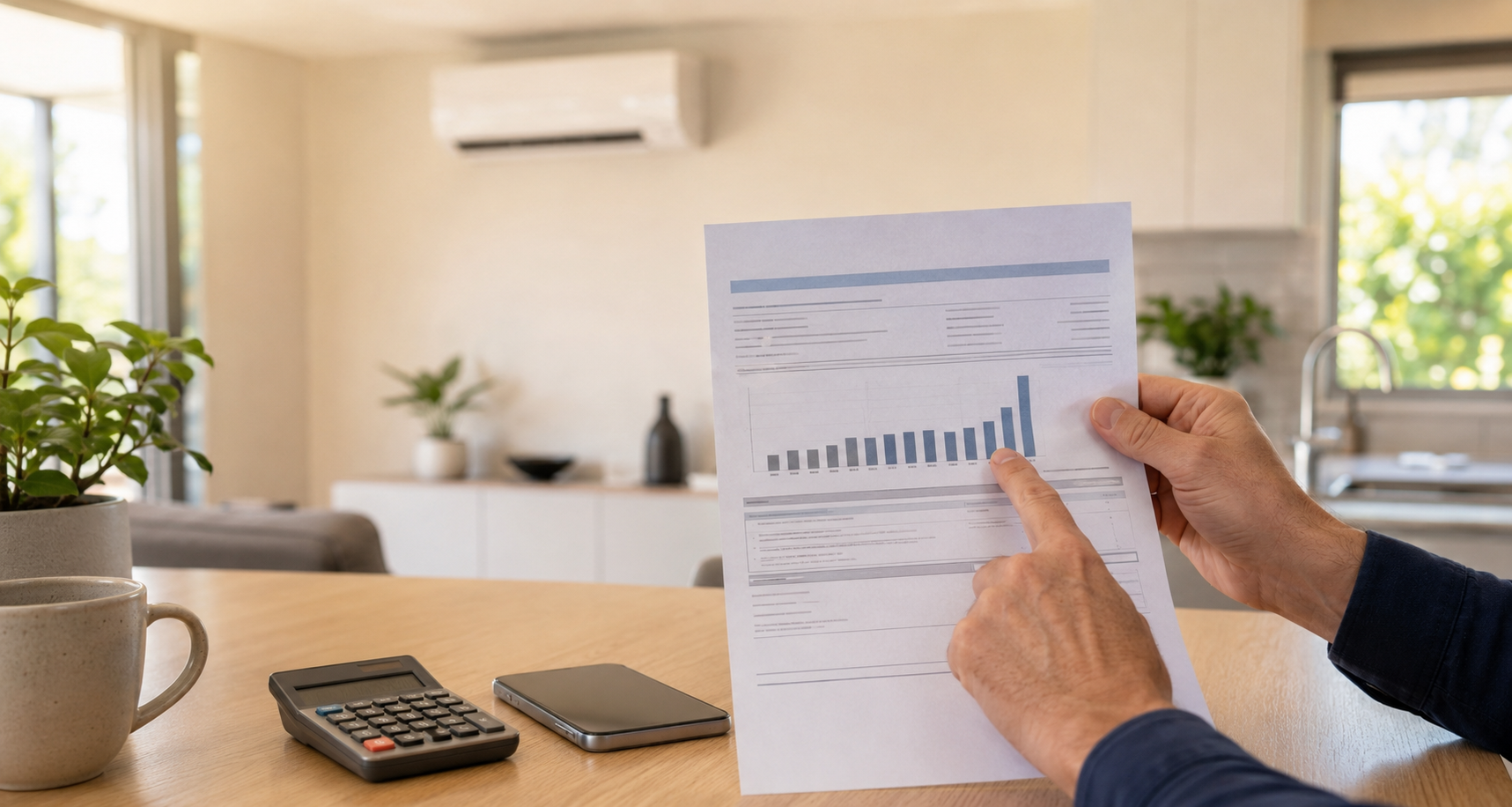
Most Brisbane homeowners look at the total, wince, and file the bill. But buried in that document is data that can tell you whether a circuit is overloaded, an appliance is failing, or something on your property is drawing power it shouldn't be. Here's how to actually read what your bill is telling you.
How to Read Your Brisbane Power Bill and Spot Electrical Problems
Most people interact with their electricity bill the same way: open it, look at the total, feel vaguely aggrieved, and move on. The detailed sections in the middle, the ones listing tariffs, daily averages, usage graphs, and controlled load breakdowns, get ignored almost universally. That is understandable. Queensland power bills are not exactly designed for casual reading. But a high power bill in Brisbane is often the first sign of an electrical problem, not just a pricing one.
The problem is that those ignored sections contain genuinely useful information. Unusual spikes in daily usage, consistently elevated consumption that does not match your lifestyle, or controlled load figures that are far higher than they should be are all signals that something in your home's electrical system may not be working as it should. Catching those signals early, before an appliance fails catastrophically or a wiring fault causes a larger problem, is exactly the kind of thing a power bill can help with if you know what to look for.
Exclusive Electrical & Air has worked with Brisbane homeowners across suburbs including Chermside, Toowong, Kenmore, The Gap, and Hamilton for over a decade. Rated 5 stars by Brisbane homeowners on Google, the team regularly sees situations where a spike in electricity costs led a homeowner to investigate and uncover a failing hot water element, a faulty circuit, or an air conditioning system working far harder than it should have been. A typical version of this: a household notices their quarterly bill has jumped by several hundred dollars with no change in behaviour, and the investigation traces it back to a hot water system element that has partially failed, drawing power continuously through the controlled load circuit but losing most of that energy as heat rather than warming the water. Replacing the element costs a fraction of what the ongoing electricity waste would have added up to over the following year. The bill is usually the first clue. 📞 0468 813 833.
This guide walks through the key sections of a Queensland electricity bill, explains the tariff structure relevant to Brisbane households, and identifies the specific patterns that may indicate an underlying electrical problem worth investigating.
What Does a High Brisbane Power Bill Mean Electrically?
A sudden spike in your Brisbane electricity bill with no obvious lifestyle change can indicate a failing hot water element cycling continuously, an air conditioning system running inefficiently, a faulty appliance drawing excess current, or in some cases a wiring or circuit fault creating a parasitic load.
How Queensland Power Bills Are Structured: What Brisbane Households Pay For
A standard Queensland residential electricity bill has two primary cost components: the supply charge and the usage charge.
The supply charge, sometimes called the daily service charge or network charge, is a fixed daily fee charged regardless of how much electricity you use. It covers the cost of maintaining the poles, wires, and infrastructure that connect your property to the grid. In South East Queensland, this infrastructure is managed by Energex, the distribution network service provider for the Brisbane region.
The usage charge is based on how much electricity your household actually consumes, measured in kilowatt-hours (kWh). This is where the tariff structure becomes relevant.
Tariff 11: Standard anytime residential usage. Applies to all general household circuits.
Tariff 31: Controlled load, off-peak. Applies to hot water systems and pool pumps.
Tariff 33: Controlled load, extended off-peak. Applies to hot water systems and pool pumps.
Tariff 12: Time-of-use for smart meter households. Applies to peak, off-peak, and shoulder periods.
Most Brisbane residential customers are on Tariff 11 for general household usage, with Tariff 31 or 33 applied to hot water systems and pool pumps that run during off-peak periods. Some Brisbane households on smart meters are on Tariff 12, a time-of-use tariff charging different rates for peak, off-peak, and shoulder periods. If your bill shows Tariff 12 pricing, when you use power matters as much as how much you use, since a household running high-draw appliances during peak periods pays noticeably more than one that shifts the same usage to off-peak.
The Queensland Competition Authority electricity tariffs sets the regulated electricity tariffs that apply to eligible residential customers in Queensland. Your retailer, the company you actually pay the bill to, may apply its own pricing structure on top of the regulated network charges. Understanding which component of your bill has changed when costs spike is the first step in working out whether you have a usage problem or a pricing change.
How to Read Brisbane Electricity Usage Data and What to Look For
Most Queensland electricity bills include a usage graph or table showing your daily average consumption in kilowatt-hours across the current billing period, often with a comparison to the previous period or the same period last year. This section is where patterns that suggest electrical problems become visible.
A meaningful comparison requires accounting for obvious variables. Summer usage will typically be higher than winter usage in Brisbane households simply because of air conditioning demand. Usage during school holidays when a house is full of people all day will be higher than during term time. If you have recently added a significant new appliance, a pool pump, a second air conditioning system, or an EV charger, that will appear in usage data.
What should prompt a closer look is an increase that cannot be explained by any of those variables. If your daily average has climbed twenty or thirty percent compared to the same period last year with no obvious lifestyle or appliance change, something is drawing more power than it should be.
If your home has a smart meter, most Brisbane retailers provide access to interval data, half-hourly consumption records accessible through their app or online portal. Interval data is significantly more useful than quarterly bill averages for identifying the source of unexpected consumption. A half-hourly consumption spike at 3am that repeats nightly points to a very different cause than elevated consumption during business hours.
Brisbane Power Bill Patterns That Signal an Electrical Problem
A sudden unexplained spike in usage over a single billing period is the most obvious signal. Unlike a gradual increase, a sharp spike usually points to a specific event or failure. Common causes include a hot water system element that has failed and is cycling continuously in an attempt to heat water it cannot retain, an air conditioning system that has developed a refrigerant leak and is running constantly without achieving the set temperature, or a large appliance such as a refrigerator or freezer that has developed a compressor fault.
A storage hot water system with a failed element can draw considerably more energy trying to heat water it can no longer retain properly, and this shows up as a noticeable jump specifically on the controlled load line of your bill rather than the general usage line.
Consistently high usage that does not drop when the house is unoccupied is another pattern worth investigating. A property showing significant electricity consumption during a period when no one was home for an extended time, confirmed by a controlled test where known standby devices are unplugged, has an unexplained load that warrants a licensed electrician's assessment. This has occasionally been traced to wiring faults creating a parasitic load or faulty equipment running continuously on standby, though genuinely unauthorised use of a property's supply is rare.
Pool pumps on a controlled load tariff should draw a relatively consistent amount across billing periods. A pool pump with a failing motor or a pump running longer cycles than the timer dictates will show up in controlled load consumption figures. If your Tariff 31 or 33 figures are significantly higher than expected and you have a pool, common in suburbs like Kenmore, The Gap, and Chapel Hill, the pump timer and motor are worth checking.
For Brisbane households that have added an EV charger since the last billing period, the increase in grid consumption should roughly correspond to the distance driven. If the increase is substantially higher than that suggests, the charger or its circuit is worth having inspected.
Estimated meter readings followed by an unusually large correction bill is a different kind of signal. While estimated reads are a billing process issue rather than an electrical one, they can mask ongoing usage problems by smoothing out consumption data across periods. When a correction read comes through and the catch-up amount is substantially larger than expected, it is worth reviewing what changed during the estimated period.
Recognised one of these patterns in your last power bill? A licensed electrician can diagnose whether an appliance, a circuit, or a wiring issue is the cause. 📞 0468 813 833 | Book Your fault investigation.
When Your Brisbane Power Bill Points to a Wiring or Circuit Fault
Not every high bill is caused by a failing appliance. Some of the less obvious causes involve the electrical installation itself. Loose connections in wiring, switchboards, or outlets generate resistance that wastes energy as heat and can also create a fire risk over time. Degraded wiring connections that create resistive heating are a documented fire risk under Queensland's electrical safety framework, and the Electrical Safety Act 2002 places the obligation on property owners to ensure their electrical installation is maintained in a safe condition.
Older wiring in Brisbane homes, particularly properties in established suburbs like Mitchelton, Aspley, St Lucia, Kedron, Paddington, and Red Hill, may include aluminium wiring or rubber-insulated cables that have degraded over decades. Degraded insulation can cause low-level leakage current that does not trip a circuit breaker but does register on your meter and contribute to higher bills.
A switchboard operating at or near capacity under summer load may also show signs of inefficiency that manifest in usage data. This is particularly relevant for homes with older switchboards that have not been assessed recently. See our switchboard upgrades Brisbane service page.
If your bill analysis points toward a possible wiring or circuit issue rather than a specific appliance, a residential electrical safety inspection Brisbane is the appropriate next step. A residential electrical safety inspection in Brisbane typically costs between $200 and $500 depending on property size and complexity. Where the inspection identifies a specific fault or wiring issue contributing to elevated consumption, a separate quote covers the remediation work, and any remediation carried out is covered by a Certificate of Testing and Compliance confirming the installation meets Queensland's electrical safety standards.
Any electrician you engage for fault investigation or wiring assessment should hold a current Queensland electrical contractor licence, verifiable through the QBCC licence register at qbcc.qld.gov.au. While on site investigating your consumption issue, we can also check your smoke alarm compliance ahead of Queensland's 1 January 2027 deadline, no second visit required.
Solar Households: What Your Brisbane Power Bill Should Show
For Brisbane homes with solar installed, including newer estates like North Lakes and Springfield as well as established suburbs, the bill structure includes additional figures covering solar feed-in credits and net consumption. A useful check is comparing your import figures, the power drawn from the grid, against what you would expect based on your system size and your household's typical usage pattern.
A solar system that is underperforming, due to a failing inverter, shading issues, or panel degradation, will show up as higher grid imports than expected rather than lower. A well-sized 6.6kW solar system in Brisbane should generate a solid daily output in good conditions, so if your grid import figures suggest you are pulling noticeably more from the grid than that output would explain, even a modest underperformance can add up to a meaningful amount in missed annual savings. If your solar bills have been climbing despite no significant change in household usage, the system is worth having assessed.
If your solar bill suggests the system is underperforming, a licensed solar assessment can confirm whether the inverter, panels, or system configuration is the issue. 📞 0468 813 833 | Book Your solar assessment.
FAQ
Q: How much of an increase in my power bill should prompt concern?
A: There is no fixed threshold, but a meaningful comparison accounts for seasonal variation and lifestyle changes. A sustained increase of fifteen percent or more compared to the same period in the previous year, with no obvious explanation, is worth investigating. A single-period spike of thirty percent or more with no clear cause is a stronger signal that something has changed in your home's electrical consumption.
Q: My power bill went up but the retailer says prices increased. How do I tell if it is a pricing issue or a usage issue?
A: Your bill shows both the unit rate applied and the total units consumed. If usage in kilowatt-hours is consistent with previous periods but the total cost has increased, the change is pricing-related. If the kilowatt-hour figure itself has increased, you have a usage issue to investigate regardless of what has happened to rates.
Q: Can a faulty meter cause a high electricity bill?
A: Meter faults are rare but do occur. If you have investigated appliances and wiring and cannot identify a cause for elevated consumption, you can request a meter test through your retailer. Your retailer coordinates with Energex to have the meter checked. If the meter is found to be faulty, adjustments are made. If it tests accurately, the usage is genuine and the investigation should continue elsewhere.
Q: What is the most common electrical cause of a high power bill in Brisbane homes?
A: Based on the team's experience across Brisbane properties, failing hot water system elements are among the most frequent culprits. A storage hot water system with a failed element draws power continuously without successfully heating water, which shows up clearly in controlled load tariff usage. Air conditioning systems running inefficiently due to refrigerant loss or filter blockage are another common contributor, particularly after summer.
Q: Should I contact my electrician or my energy retailer first if I suspect an electrical problem?
A: Start with your retailer to rule out billing errors, pricing changes, or meter issues. If the retailer confirms your usage data is accurate and the increase is genuine, a licensed electrician is the right next call. Electrical faults, failing appliances, and wiring issues are all within the electrician's scope to diagnose and rectify.
Your power bill is trying to tell you something. Whether it is a hot water element on its way out, a circuit working harder than it should, or a solar system underperforming, the data is there if you know how to read it.
Exclusive Electrical & Air carries out electrical inspections, fault finding, and appliance circuit assessments across all Brisbane suburbs, from Hamilton and Chermside in the north to Kenmore, Indooroopilly, and Toowong in the west, and everywhere in between. All work is carried out by licensed electricians, backed by a workmanship warranty, and covered by a Certificate of Testing and Compliance where applicable. Rated 5 stars on Google. 10+ years experience. 2,000+ Brisbane customers. Licensed Queensland Electrical Contractor.
A failing hot water element or overloaded circuit does not fix itself between billing periods. Each month the fault continues is another month of excess consumption on your bill. If the investigation confirms your system is operating correctly, you have eliminated the electrical explanation and can focus your search elsewhere. Either way, you know where you stand.
Call +61 468 813 833 or book online at https://www.exclusiveqld.com.au/connect if your bill is pointing toward a problem worth investigating.