CCTV for Brisbane Rental Properties: What Landlords Can and Can't Install
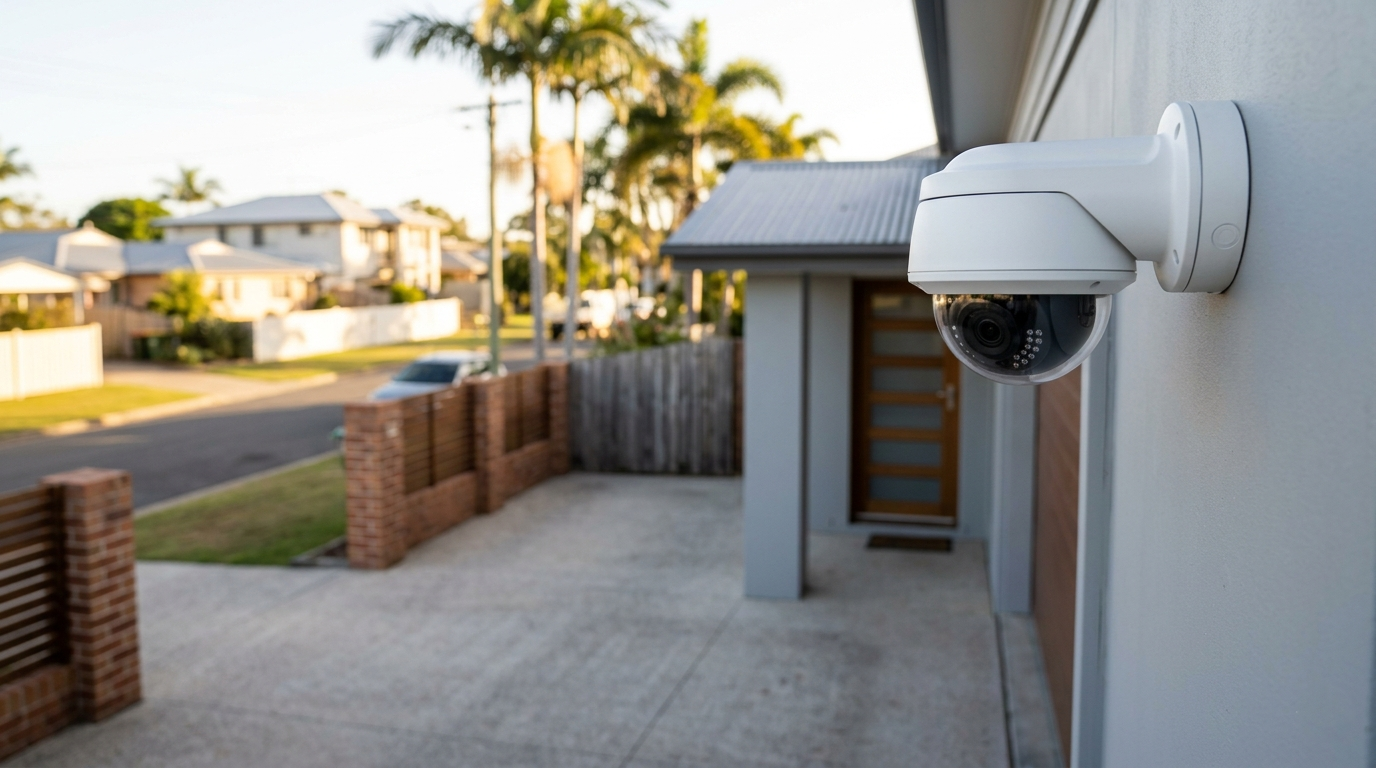
Landlords in Brisbane have legitimate reasons to install security cameras on rental properties, but Queensland law draws firm lines around where cameras can go and what they can capture. Here's what's permitted, what's not, and how to approach CCTV installation in a way that protects your investment without breaching your tenant's privacy rights.
CCTV for Brisbane Rental Properties: What Landlords Can and Can't Install
Protecting a rental property is a legitimate concern. Vandalism, break-ins, damage disputes, and unauthorised alterations are real risks that Brisbane landlords deal with, and security cameras are a reasonable response to them. The problem is that a rental property isn't just an investment — it's someone's home. And in Queensland, the law takes that distinction seriously.
The rules around CCTV in rental properties sit at the intersection of tenancy law, privacy legislation, and general property rights. Get it right, and you've got a system that protects your asset without overstepping. Get it wrong, and you're exposed to tenancy disputes, privacy complaints, and potentially serious legal consequences.
Here's a clear breakdown of what Queensland law permits, where the boundaries are, and how to approach CCTV installation in a rental property the right way.
The Legal Framework Landlords Need to Understand
There is no single piece of Queensland legislation that covers every aspect of CCTV in rental properties. The rules are drawn from several overlapping sources, and understanding how they interact is what matters in practice.
The Residential Tenancies and Rooming Accommodation Act 2008 (Qld) governs the landlord-tenant relationship, including a tenant's right to quiet enjoyment of the property. This is the principle that a tenant is entitled to live in the property without undue interference from the landlord.
The Information Privacy Act 2009 (Qld) and the Commonwealth Privacy Act 1988 apply depending on the context of the recording and who is doing it. For individual landlords, the Commonwealth Act's small business exemption may apply, but this doesn't remove all obligations.
The Invasion of Privacy Act 1971 (Qld) is the most directly relevant piece of legislation when it comes to surveillance. It is a criminal offence in Queensland to observe or visually record a private activity without consent. The penalties are significant.
Taken together, these laws draw a clear line: landlords can install cameras to protect their property, but not to surveil their tenants.
What Landlords Can Install
The permissible zone for landlord-installed CCTV is external areas of the property that monitor security rather than tenant activity. In practice, this means:
Cameras covering the front entry, front door approach, and street-facing aspects of the property
Driveway and garage coverage, where the camera monitors vehicle access rather than activity inside the home
Rear yard coverage aimed at the fence line and external access points
Side access paths and gates
These are all areas where the purpose of the camera is clearly property security, and where a person approaching or on the property would have limited expectation of privacy compared to inside the dwelling.
The key test is whether the camera could capture what a tenant is doing inside or within a genuinely private part of the property. External cameras positioned to cover entry points generally pass that test. Cameras positioned to monitor what a tenant does in their backyard, on their private outdoor entertaining area, or in any space they use as a living area do not.
What Landlords Cannot Install
This is where the line becomes firm, and crossing it carries real consequences.
Landlords cannot install cameras in any of the following locations:
Inside the dwelling, including living areas, bedrooms, bathrooms, kitchens, or any internal space
In locations that directly overlook or monitor outdoor areas used as private living space, such as a covered entertaining area, a private courtyard, or a pool area used exclusively by the tenant
In positions specifically aimed at capturing tenant activity rather than monitoring property access
Installing a camera inside a rental property without the tenant's knowledge and consent is not a grey area under Queensland law. It is a potential criminal offence under the Invasion of Privacy Act 1971 (Qld), regardless of whether the landlord owns the property. The fact that it is your investment does not give you the right to monitor the people living in it.
Hidden cameras of any kind, regardless of location, are not permissible in a rental property context without explicit tenant consent.
The Tenant Consent Question
Some landlords ask whether tenant consent changes the picture. In limited circumstances, it can.
If a tenant explicitly agrees in writing to the installation of cameras in specific locations, including locations that would otherwise be off-limits, that consent has some weight. However, there are important caveats.
Consent must be genuinely voluntary. A tenant who feels pressure to agree in order to secure the tenancy, or who agrees under conditions they don't fully understand, has not given meaningful consent in a legal sense. Including camera provisions in a lease without adequately explaining what is being consented to is not the same as obtaining informed agreement.
Consent can also be withdrawn. A tenant who initially agrees to cameras may later withdraw that consent, and the landlord's options at that point become limited.
For external cameras covering access points and entry zones, landlord consent requirements are less fraught because those areas don't engage the same privacy protections as internal or private outdoor spaces. Notifying the tenant that external security cameras are installed is best practice regardless of whether it is strictly required in every circumstance.
What Happens When a New Tenancy Begins
If a rental property already has CCTV cameras installed when a new tenancy begins, the landlord has a clear obligation to disclose their existence to the incoming tenant. Failing to disclose cameras that a tenant could not reasonably be expected to notice is problematic from both a tenancy law and a privacy law perspective.
Disclosure should include:
The location of every camera on the property
What each camera covers
How footage is stored, for how long, and who has access to it
This information gives the tenant the ability to make an informed decision about the tenancy and raises no issues for landlords whose cameras are legitimately positioned to monitor property access rather than tenant activity.
Practical Guidance for Brisbane Landlords
For landlords in Brisbane looking to install CCTV on a rental property, a straightforward approach keeps you on the right side of the law while still achieving meaningful security coverage.
Consider the following steps before installation:
Map the external access points of the property — front entry, driveway, side gates, rear fence line — and design the camera system around those zones
Confirm that no proposed camera position will capture internal spaces or private outdoor living areas used by the tenant
Notify the current or incoming tenant in writing before installation, explaining what is being installed and where
Use a licensed electrician for the installation, both to ensure the work meets Queensland electrical standards and to have a professional record of what was installed and where
Document the system, including camera locations, coverage areas, storage arrangements, and access controls, and provide a copy to the tenant
For property managers handling installations on behalf of landlords in suburbs like Bulimba, Paddington, or across Brisbane's inner north, building this disclosure and documentation process into the standard tenancy setup is the cleanest way to manage it at portfolio level.
A Note on Cameras Already on the Property
A situation that comes up more often than expected is a landlord purchasing a property that already has CCTV installed, or a landlord discovering that a previous owner or tenant installed cameras that are still in place.
In both cases, the obligation is the same. Any camera that is active and recording on a rental property must be disclosed to the tenant, must be positioned appropriately, and must not capture private areas of the dwelling. If existing cameras are in positions that would breach the tenant's privacy, they need to be repositioned or deactivated before a tenancy begins.
FAQ
Can a landlord install security cameras inside a rental property in Queensland? No. Installing cameras inside a rental property without the tenant's explicit informed consent is a potential criminal offence under the Invasion of Privacy Act 1971 (Qld). Landlords are permitted to install external cameras covering access points and entry zones, but internal cameras are not permissible without tenant agreement.
Do I need to tell my tenant about security cameras on the rental property? Yes. Disclosing the existence, location, and purpose of any cameras on the property to an incoming or current tenant is both legally prudent and required in any situation where cameras could affect the tenant's reasonable expectation of privacy. For external access cameras, this is best practice. For cameras in any other location, it is essential.
Can a landlord install a camera pointing at the backyard of a rental property? It depends on the positioning and purpose. A camera monitoring the rear fence line and external access points may be appropriate. A camera positioned to monitor what a tenant does in their private backyard or entertaining area raises significant privacy concerns and is likely to be considered an invasion of privacy under Queensland law.
What if the tenant refuses to allow security cameras? For external cameras covering access points to the property, a landlord generally has the right to install them as a property security measure. For any camera that requires tenant consent, if the tenant refuses, the landlord cannot proceed with that installation. Attempting to install cameras against a tenant's explicit objection in a location requiring consent is not a viable or legal path.
Can a tenant install their own security cameras in a rental property? A tenant wishing to install security cameras would typically need the landlord's approval, particularly for any installation involving drilling or permanent fixtures. The tenant's cameras must also comply with the same privacy obligations — they cannot install cameras that capture areas beyond the property or that could monitor other occupants without consent.
Who has access to footage from cameras on a rental property? The landlord controls footage from landlord-installed cameras. That footage should not be accessed routinely or used to monitor tenant activity. Access should be limited to genuine security incidents. The tenant should be informed of how footage is stored and who can access it as part of the disclosure process.
Install It Right From the Start
Getting CCTV right on a rental property isn't complicated if you approach it with the right intent and the right process. Cameras positioned to protect the property rather than monitor the tenants, disclosed properly, and installed by a licensed professional create no issues for landlords and provide genuine security value.
At Exclusive Electrical & Air, we work with Brisbane landlords and property managers to design and install security camera systems that are appropriate for rental property contexts; covering the access points that matter, positioned correctly, and documented properly. Whether you're setting up a new system or assessing what's already in place, we'll make sure it's done right.
Get in touch with Exclusive Electrical & Air today to discuss a security camera solution for your Brisbane rental property.