Can You Install a Ceiling Fan Where a Light Used to Be in Queensland?
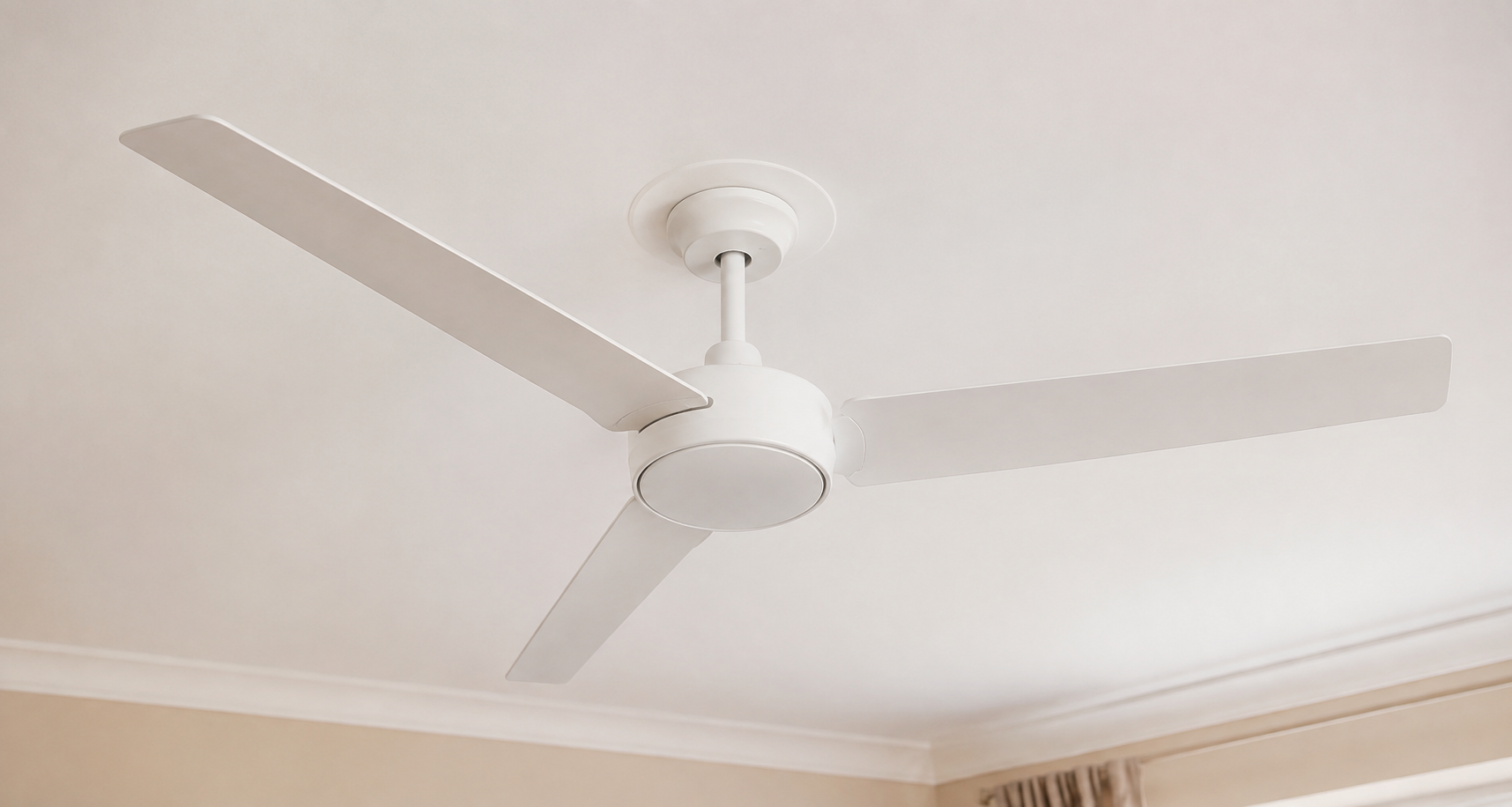
The existing hole in the ceiling and the wiring that fed your old light fitting make a ceiling fan swap look simple. Sometimes it is. But the ceiling outlet, the mounting structure, and the wiring configuration all need to be assessed before the new fan goes up, and the answers are not always what homeowners expect.
Can You Install a Ceiling Fan Where a Light Used to Be in Queensland?
It seems like it should be a simple job. There is already a hole in the ceiling. There is already wiring running to it. The old light fitting came down without drama. Surely the ceiling fan just goes up in its place.
In many Brisbane homes, that is broadly how it works out. But in enough cases it does not, and the reasons why are worth understanding before the old fitting comes down and the new fan is sitting in its box. The ceiling outlet, the wiring configuration, the condition of the existing junction box, and the structural integrity of the ceiling in the mounting area are all factors that affect whether a direct swap is possible or whether additional work is needed first.
A common version of this in practice: a 1960s home in a suburb like Mitchelton where the original light rose is nothing more than a small plaster-mounted fixture point, not rated for anything beyond a static light. Once the electrician gets up there, it's clear the fan can't just hang off that point, and a joist-mounted brace goes in first. Not a dramatic finding, just the kind of thing that needs sorting before the fan goes up rather than after.
Exclusive Electrical & Air installs ceiling fans across Brisbane for residential and commercial customers, with over a decade of experience and more than 2,000 customers served across suburbs including Kenmore, The Gap, Mitchelton, Hamilton, and Aspley. Rated 5 stars on Google. The team carries out ceiling fan installations in existing homes regularly, and the following reflects what a licensed electrician actually checks before a fan goes up where a light used to be. 📞 0468 813 833.
Why a Light Fitting Outlet and a Ceiling Fan Outlet Are Not the Same Thing
The most important thing to understand is that a light fitting and a ceiling fan place fundamentally different demands on the ceiling outlet that supports them.
A standard light fitting is a static load. It hangs from the ceiling outlet, draws electrical current, and does not move. The outlet needs to support the fitting's weight and carry the electrical current required by the globes or LED array. Beyond that, it does not experience any dynamic forces during normal operation.
A ceiling fan is a dynamic load. It has a motor that runs continuously, blades that rotate, and a mass that oscillates slightly as it operates. That combination creates dynamic forces on the mounting point that are substantially different from anything a static light fitting produces. The ceiling outlet that adequately supported a light fitting may not be rated or structurally suitable to support those dynamic loads safely over the long term.
This is not a theoretical concern. Ceiling fan mounting failures in homes where fans were installed onto outlets designed only for light fittings have caused property damage and injury. It is the reason Australian Standards and Queensland electrical safety requirements address ceiling fan mounting specifically, and it is the reason a licensed electrician assesses the outlet before any fan installation proceeds.
What Gets Checked Before the Fan Goes Up
A licensed electrician carrying out a ceiling fan installation in an existing Brisbane home checks several specific items at the proposed mounting location before the installation begins.
The existing ceiling outlet or junction box is the first item assessed. Standard light fitting ceiling roses and junction boxes are not rated for the dynamic load of a ceiling fan. A fan installation requires a fan-rated mounting point that is either secured directly to a ceiling joist or to a correctly specified fan brace rated for the fan's weight and dynamic operating load. Where the existing outlet is not fan-rated, a new mounting point must be installed before the fan goes up. This is not an unusual finding and does not necessarily add significant time to the job, but it is a step that cannot be skipped.
Ceiling structure at the mounting location is assessed to determine whether a joist or appropriate structural element is accessible for direct mounting, or whether a fan brace rated for the span between joists is required. Brisbane homes built from timber framing, which covers a large proportion of the city's older residential stock in suburbs like St Lucia, Toowong, Mitchelton, and Kedron, generally have accessible ceiling joists that can support direct fan mounting. Homes with steel framing or non-standard ceiling construction require a different approach that the electrician determines during the assessment.
Wiring configuration and capacity at the existing outlet is checked to confirm the circuit is appropriate for the ceiling fan's electrical requirements. Most standard lighting circuits in Brisbane homes are wired at a capacity compatible with ceiling fan motor loads. However, the specific wiring arrangement at the outlet matters for how the fan's speed controller or remote receiver is connected, and in some cases the wiring configuration requires modification to support the fan's control system correctly.
Switch configuration is a related consideration. A light fitting is typically controlled by a single wall switch. A ceiling fan with a separate light kit may require two switched circuits to allow independent control of the fan motor and the light. If the existing switch wiring provides only a single switched circuit to the outlet, adding a second switch requires additional wiring work. This is a common finding in older Brisbane homes and is worth clarifying before the fan is selected, as it affects both the installation scope and the choice of fan model and control system.
Wondering whether your specific room is a straightforward swap or needs extra work first? An assessment gives you a definite answer before you buy the fan. 📞 0468 813 833 | Book Your ceiling fan assessment.
The Wiring Question: Is the Existing Circuit Compatible?
For most Brisbane homes, the existing lighting circuit wiring that fed the old light fitting is electrically compatible with a ceiling fan installation. Standard residential lighting circuits are wired with cable rated to carry the current a ceiling fan motor draws, and in most cases the circuit protection at the switchboard is appropriate for the additional load.
Where compatibility issues arise is in homes with older wiring that has not been updated in decades. Properties in established Brisbane suburbs built before the 1970s may have rubber-insulated wiring or wiring that has degraded to a point where a new fan installation is not appropriate without first addressing the wiring condition. A licensed electrician identifies this during the assessment and advises on what remedial work is required before the installation proceeds.
The neutral wire is another wiring consideration that occasionally affects ceiling fan installations in older homes. Some older switching arrangements were wired with a switch loop configuration that does not bring a neutral wire to the ceiling outlet. Modern ceiling fans, particularly DC motor models with electronic speed controllers or smart home receivers, require a neutral at the ceiling outlet to power their control electronics. Where a neutral is not present, additional wiring work is required. This is a less common finding in Brisbane homes but is worth identifying before the fan arrives on site.
Is This Notifiable Electrical Work in Queensland?
Yes. Ceiling fan installation that involves any connection to, modification of, or extension of electrical wiring is notifiable electrical work under the Electrical Safety Regulation 2013 QLD and must be carried out by a licensed electrician. This covers the replacement of a light fitting with a ceiling fan in virtually all residential situations, including cases where the existing wiring is being reused without modification, because the installation of the fan's mounting hardware, the connection of the fan's wiring, and the configuration of any control system all constitute electrical installation work.
The completed installation requires a Certificate of Testing and Compliance where the work meets the notifiable threshold under the Electrical Safety Act 2002 QLD. That certificate confirms the work has been tested, inspected, and found to comply with the relevant Australian Standards and Queensland electrical safety legislation. It should be retained with your property records.
Unlicensed persons carrying out ceiling fan installation work are in breach of the Electrical Safety Act 2002 and create significant liability in the event of any subsequent fault, damage, or injury. See our electrical installations Brisbane service page.
What Happens When the Existing Outlet Is Not Suitable
Where the assessment identifies that the existing ceiling outlet is not rated for a ceiling fan, the licensed electrician installs an appropriate fan-rated mounting point as part of the installation. The approach depends on ceiling construction.
For timber-framed ceilings with accessible joists, a fan-rated ceiling medallion or mounting bracket secured directly to the joist is the standard solution. This provides a structurally sound mounting point rated for the fan's weight and dynamic operating loads.
For ceilings where joist access is not straightforward, a fan-rated brace bar that spans between joists and is installed through the existing ceiling opening is the alternative. These brace systems are specifically designed and rated for ceiling fan mounting and allow a compliant installation without requiring ceiling access from above.
In either case, the installation proceeds as a single job. The assessment, mounting point installation, fan installation, wiring connection, and testing are all completed in one visit by the licensed electrician.
FAQ
Q: Can I remove the old light fitting myself before the electrician arrives?
A: Removing a light fitting involves disconnecting live wiring and is electrical work under Queensland legislation. It must be carried out by a licensed electrician. Leaving the existing fitting in place and allowing the electrician to remove it as part of the fan installation is the correct approach. The electrician isolates the circuit safely before any work begins.
Q: How long does it take to install a ceiling fan where a light used to be?
A: For a straightforward installation where the existing outlet is suitable or requires only a standard mounting upgrade, the job typically takes one to two hours per fan. Where additional wiring work is required, such as running a second switched circuit for a fan with a separate light kit, the timeline extends accordingly. Your electrician can give a specific estimate after assessing the installation location.
Q: My ceiling fan came with a remote control receiver. Does that change the installation?
A: A remote control receiver is installed in the fan's canopy and connects between the ceiling wiring and the fan's motor and light kit. It requires a neutral wire at the ceiling outlet to power the receiver's electronics. If the existing wiring does not include a neutral at the outlet, your electrician addresses this as part of the installation. Confirm the wiring arrangement at the assessment stage.
Q: Can I install a ceiling fan with a light kit where my old light fitting was?
A: Yes, provided the installation location is structurally suitable and the wiring supports it. A fan with a light kit that requires independent switching of the fan motor and light needs two switched circuits to the ceiling outlet. If the existing wiring provides only a single switched circuit, adding a second switch requires additional wiring work that your electrician includes in the installation scope.
Q: I have a high ceiling in my Brisbane home. Does that affect the fan installation?
A: High ceilings affect fan selection and mounting configuration rather than the fundamental installation process. Ceiling fans on high ceilings typically require a drop rod extension to position the fan blades at an optimal height for air circulation, generally 2.1 to 2.4 metres above floor level. Your licensed electrician advises on the appropriate drop rod length for your ceiling height during the assessment.
Got a high ceiling, an older home, or just want to know what your specific room needs before committing? 📞 0468 813 833 | Book Your ceiling fan assessment.
Replacing a light fitting with a ceiling fan is a straightforward job when the assessment confirms the existing outlet and structure are suitable, and a manageable one when they are not. Either way, knowing what is involved before the old fitting comes down avoids surprises on the day.
Exclusive Electrical & Air installs ceiling fans across all Brisbane suburbs, including Kenmore, Toowong, Mitchelton, Hamilton, and Chermside. All installations are carried out by licensed electricians, fully certified upon completion, and backed by a workmanship warranty. Rated 5 stars on Google. 10+ years experience. 2,000+ Brisbane customers. Licensed Queensland Electrical Contractor.
Call 0468 813 833 or book online at https://www.exclusiveqld.com.au/connect to arrange a ceiling fan installation assessment for your Brisbane property.