What Is a Certificate of Testing and Compliance and When Do You Need One in Queensland?
Most Brisbane homeowners have heard of electrical compliance certificates without being entirely sure what they cover or when they apply. If you've recently had electrical work done, or you're planning some, understanding the Certificate of Testing and Compliance could save you a serious headache down the track.
Certificate of Testing and Compliance Queensland: What You Need to Know
Most people do not think about electrical paperwork until they need it and cannot find it. That tends to happen at the worst possible moment, usually during a property sale, an insurance claim, or a building approval process, when the absence of a certificate of testing and compliance Queensland homeowners are legally required to have creates delays, complications, and costs that could have been entirely avoided.
What Is a Certificate of Testing and Compliance in Queensland?
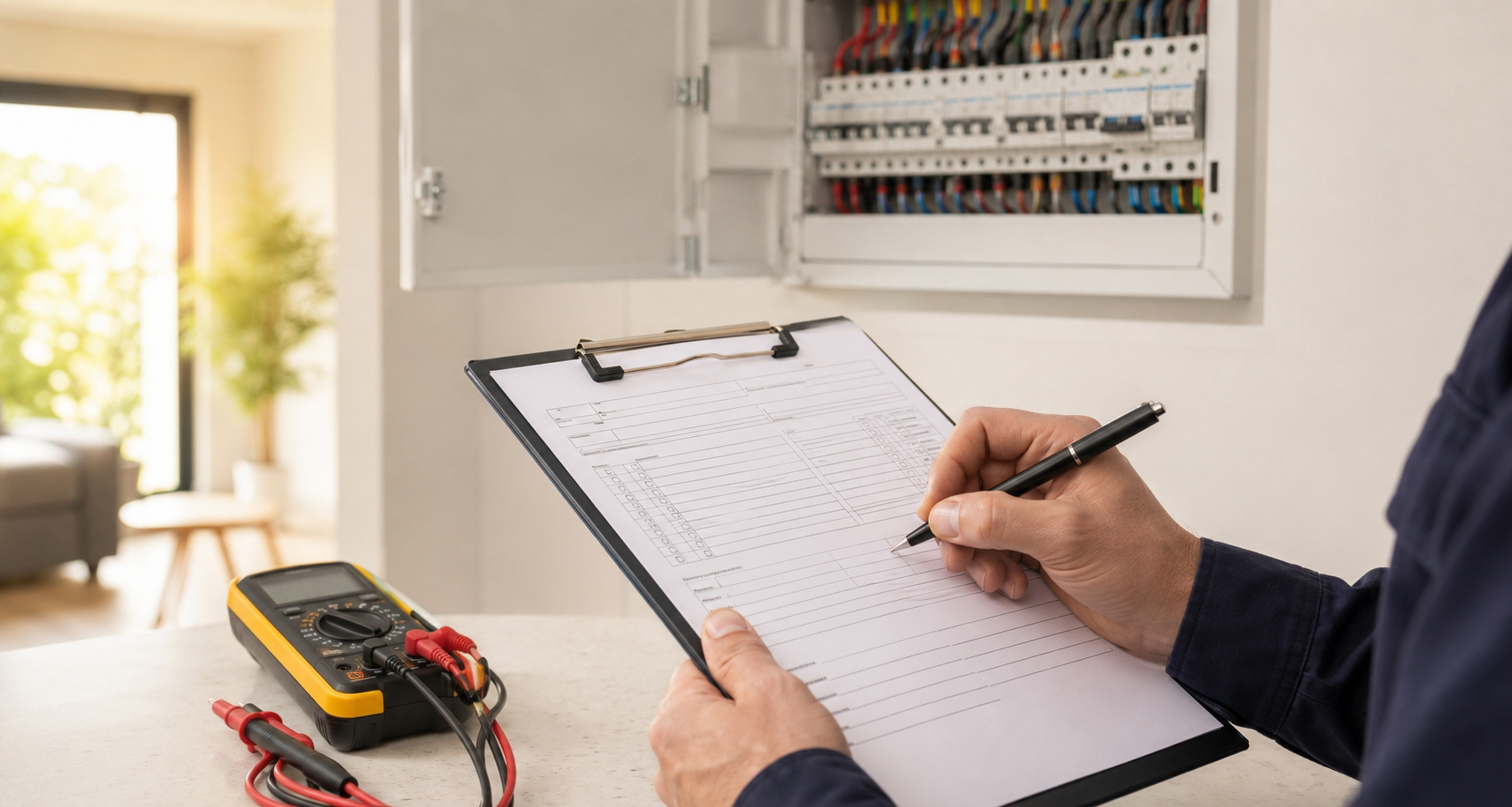
A Certificate of Testing and Compliance, commonly called a CTC or Form 4, is a legal document issued by a licensed electrician after completing notifiable electrical work. It confirms the work has been tested and complies with the relevant Australian Standards and Queensland electrical safety legislation. It is not optional for the work it covers, and it cannot be generated by a homeowner or business owner.
In Queensland, a Certificate of Testing and Compliance is a legal document issued by a licensed electrician following the completion of notifiable electrical work. It confirms that the work has been tested, inspected, and found to comply with the relevant Australian Standards and Queensland electrical safety legislation.
Exclusive Electrical & Air has been completing notifiable electrical work and issuing compliant certificates across Brisbane for over a decade, serving more than 2,000 residential and commercial customers in suburbs from Hamilton and Chermside in the north to Kenmore, Toowong, and Indooroopilly in the west. Rated 5 stars by Brisbane homeowners and businesses on Google, the team understands what this certificate covers and when it applies, and that clarity is worth having before work begins rather than after.
A situation that comes up more often than people expect: a homeowner nearing settlement on a property sale discovers that a switchboard upgrade or similar job done years earlier was never certified, and the original electrician can no longer be reached. A fresh inspection can usually resolve it, but it is a stressful and time-pressured way to find out. Getting the certificate right the first time avoids that entirely. 📞 0468 813 833.
What Is the Legal Basis for the Certificate of Testing and Compliance in Queensland?
Queensland's electrical safety system operates under the Electrical Safety Act 2002 QLD and its associated Electrical Safety Regulation 2013. Together, these set out who can carry out electrical work, what categories of work must be notified and certified, and what documentation is required upon completion.
The Electrical Safety Office Queensland administers and enforces these requirements across the state. It has the authority to audit compliance records, investigate electrical incidents, and take action where work has been carried out without appropriate certification.
The Certificate of Testing and Compliance is the document that closes the loop on notifiable electrical work. It confirms that the installation has been tested against AS/NZS 3000, commonly called the Australian and New Zealand Wiring Rules, the standard that governs how all electrical installations must be designed and carried out. See the AS/NZS 3000 Wiring Rules.
A Certificate of Testing and Compliance is not the same as a Certificate of Inspection. The CTC is issued by the electrician who completed the work, confirming it meets the required standard. A Certificate of Inspection is issued by a third-party inspector or the Electrical Safety Office following an independent inspection. For most residential notifiable work, the CTC issued by the completing electrician is the required document. Independent inspection certificates are more common in commercial and industrial contexts.
What Is Notifiable Electrical Work in Queensland?
Not every electrical task triggers a compliance certificate requirement. Notifiable electrical work is a defined category under Queensland legislation, and it broadly covers any work that involves the installation, alteration, addition, or replacement of electrical wiring or electrical equipment that is fixed or permanently connected.
New circuits or sub-circuits. Adding a circuit to service a new room, a granny flat, or a new appliance connection point is notifiable work and requires a certificate.
Switchboard upgrades and replacements. Whether a switchboard is being upgraded to accommodate solar, to install safety switches, or because it has reached the end of its serviceable life, the work is notifiable. This is one of the most common certificate triggers for Brisbane homes undergoing any kind of upgrade or renovation. See our switchboard upgrades Brisbane service page.
Solar panel system installation. Grid-connected solar systems are notifiable electrical work. The certificate is also required by energy distributors such as Energex before a solar system can be approved for connection to the grid. There is no pathway to a legal grid-connected solar installation in Queensland without a compliant CTC. See our solar panel installation Brisbane service page.
Air conditioning installation. Hardwired air conditioning systems, which covers most split systems and all ducted systems, require a licensed electrician to complete the electrical connection. That connection is notifiable work. See our air conditioning installation Brisbane service page.
New construction and significant renovations. Any new build or renovation involving electrical wiring requires certification across all notifiable components before an occupation certificate can be issued through the local council approval process.
Smoke alarm installations involving hardwired connections. Hardwired interconnected smoke alarms, required in Queensland properties under the compliance framework ahead of the 1 January 2027 deadline, involve notifiable electrical work where hardwired installation is performed. With the deadline less than 18 months away, this is a current rather than future planning consideration for most Brisbane homeowners. See our smoke alarm installation Brisbane service page.
EV charger installation. Dedicated electric vehicle charger circuits are notifiable work. As EV uptake in Brisbane continues to grow, this is becoming an increasingly common certificate trigger for residential and commercial properties alike.
What is not notifiable is generally minor maintenance work, such as replacing a single power outlet with a like-for-like substitution, or changing a light fitting without altering the circuit. However, the line between notifiable and non-notifiable work is not always obvious, and if there is any doubt, a licensed electrician can confirm the requirement before work begins.
How the Certificate of Testing and Compliance Process Works in Queensland
The process is straightforward when carried out by a licensed electrician. Once the notifiable work is completed, the electrician conducts the required testing of the installation. This includes insulation resistance testing to verify that wiring insulation is intact and not degraded, continuity testing to confirm all circuit connections are correctly made, verification of correct circuit protection devices and their ratings, and polarity and earthing checks. Each of these tests must return a satisfactory result before the certificate can be issued.
Once the installation passes testing, the electrician completes and issues the Certificate of Testing and Compliance. The document records the nature of the work, the address, the licence number of the issuing electrician, the testing results, and a declaration of compliance. A copy is provided to the property owner, and the issuing electrician retains a record.
In some cases, such as solar installations, the certificate must also be submitted to the network distributor as part of the grid connection approval process. Your licensed electrician handles this submission.
You should receive your certificate at or shortly after job completion. Every notifiable electrical job we complete at Exclusive Electrical & Air is followed by a Certificate of Testing and Compliance issued to the property owner at or immediately after completion. It is not an optional extra. It is part of what a compliant licensed electrical job looks like.
If you have had electrical work done in recent years and cannot locate a certificate for work that sounds notifiable, it is worth raising that with a licensed electrician. In some cases, particularly with older work, records can be difficult to trace.
Why the Certificate of Testing and Compliance Matters Beyond Just Compliance
Property sales are the most common point at which missing certificates cause problems. During a conveyancing process, buyers or their solicitors may request evidence of compliance for electrical work that is visible or disclosed during inspections. Missing certificates can hold up settlements or become a point of negotiation.
Insurance claims involving electrical faults or fire can become significantly more complicated when work that should have been certified was not. Insurers investigating a claim may request certification records, and the absence of a certificate for relevant work can affect the outcome of the claim.
Building approvals for further works on a property can also be impacted. If a council inspector identifies uncertified electrical work during an approval process for a subsequent renovation, the path to approval can become considerably longer and more expensive.
For Brisbane businesses, the obligation goes beyond individual job certificates. Employers have an ongoing duty under the Electrical Safety Act 2002 to ensure electrical equipment and installations used in the workplace are maintained in a safe condition. A portfolio of current Certificates of Testing and Compliance for notifiable work carried out on the premises supports that duty. Body corporate managers for commercial strata buildings in precincts like Fortitude Valley, Milton, and Toowong face the same obligation across common area electrical infrastructure.
Keeping a digital copy of every Certificate of Testing and Compliance in a property folder, alongside building approvals and other compliance documents, is strongly recommended. Certificates stored only in physical form are vulnerable to loss, water damage, or simply being misplaced during a move.
Not sure whether your electrical work was certified? We can assess the installation and advise on whether a certificate can be issued or whether remediation is needed. 📞 0468 813 833.
What to Do If Previous Electrical Work Was Done Without a Certificate in Queensland
This situation is more common than most people realise, particularly in older Brisbane homes, including many in Paddington and Ashgrove, that have had work done by unlicensed tradespeople or where previous owners have no documentation. The appropriate course of action is to have a licensed electrician assess the relevant installation. Depending on the condition and safety of the work, a fresh inspection and certification may be possible, or remedial work may be required to bring the installation to a certifiable standard.
Having a licensed electrician inspect existing work and issue a certificate where the installation is found compliant typically costs between $200 and $500 depending on the scope of the assessment. Where the existing work is found non-compliant, remediation work is required before a certificate can be issued, and a separate quote covers that scope.
Failing to issue a required Certificate of Testing and Compliance is a breach of the Electrical Safety Regulation 2013. Under section 227 of that regulation, the maximum penalty is 40 penalty units. At the current Queensland penalty unit value of $172.70, that represents a maximum penalty of around $6,908 for the electrician who fails to provide it.
The QBCC licence register allows you to verify the licence status of any electrical contractor operating in Queensland. Using a licensed electrician from the outset is the only way to ensure the paperwork is correct and the legal obligation is met.
If you are unsure whether past electrical work on your property was notifiable and whether certificates should have been issued, a licensed electrician can carry out an electrical safety inspection Brisbane and review your documentation at the same time. Identifying any gaps before a property sale or insurance event gives you the options to address them on your timeline.
If you have had notifiable electrical work done and cannot locate the certificate, start with a call. Most situations are resolvable with the right inspection. 📞 0468 813 833.
FAQ
Q: Who issues a Certificate of Testing and Compliance in Queensland?
A: The certificate is issued by the licensed electrician or electrical contractor who completed the notifiable work. It cannot be issued by a homeowner, a building inspector, or any person who is not a licensed electrical worker under Queensland legislation.
Q: How long should I keep my electrical compliance certificate?
A: There is no prescribed minimum retention period for homeowners, but keeping certificates for the life of your ownership of the property is strongly recommended. They are relevant for property sales, insurance purposes, and any future electrical work that builds on the original installation.
Q: What happens if an electrician does notifiable work and does not issue a certificate?
A: Failing to issue a required certificate is a breach of the Electrical Safety Regulation and can result in penalties for the licensed electrician or contractor. If you have had notifiable work completed and did not receive a certificate, follow up with the electrician directly. If the issue is not resolved, the Electrical Safety Office can be contacted.
Q: Is a Certificate of Testing and Compliance the same as a building approval?
A: No. They are separate documents covering different aspects of construction and renovation compliance. A building approval is issued by a building certifier and relates to the structural and planning aspects of the work. A Certificate of Testing and Compliance is an electrical document issued by a licensed electrician. For projects that require both, such as a new build or a significant renovation, both documents will be required.
Q: Do I need a certificate for a like-for-like replacement of a power outlet?
A: A straightforward like-for-like replacement of a single outlet is generally not notifiable work and does not require a certificate. However, if the work involves any modification to the circuit or wiring, or if multiple outlets are being replaced as part of a broader project, the position may change. A licensed electrician can confirm the requirement for your specific situation before work begins.
Electrical compliance in Queensland is one of those areas where getting it right from the start saves significant trouble later. Whether you are planning notifiable work, trying to locate certificates for past jobs, or wanting to understand your property's complete electrical documentation, Exclusive Electrical & Air can help.
We carry out licensed electrical work and issue Certificates of Testing and Compliance across all Brisbane suburbs, including Chermside, Aspley, Hamilton, Kenmore, Indooroopilly, Paddington, and beyond. All work is performed by licensed electricians and backed by a workmanship warranty. Rated 5 stars on Google. 10+ years experience. 2,000+ Brisbane customers. Licensed Queensland Electrical Contractor.
With Queensland's 1 January 2027 smoke alarm compliance deadline approaching, hardwired smoke alarm installations are generating a growing volume of notifiable work, and the certificate requirements that come with it. If the work turns out not to be notifiable, we will tell you that, and the consultation costs nothing extra.
Call +61 468 813 833 or book online at Book Your Compliance Assessment to discuss your electrical compliance needs.