Why Brisbane Businesses Should Consider Commercial Solar in 2026
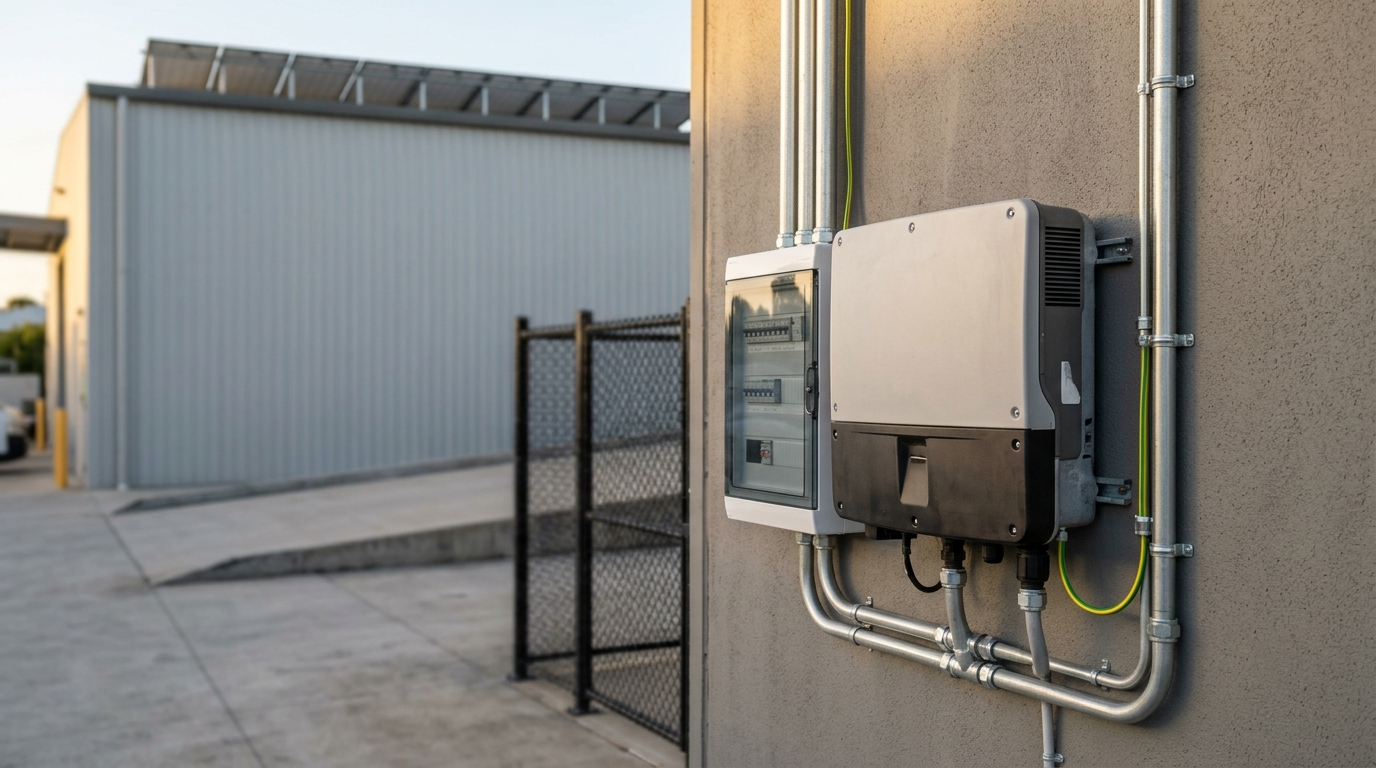
Commercial electricity tariffs in Brisbane have risen consistently, and the case for commercial solar in 2026 is stronger than it has ever been. For businesses with significant daytime consumption, payback periods of two to three years are achievable on well-sized systems, with STC incentives reducing upfront costs by $8,000 to $15,000 for systems up to 100kW. Here's an honest look at the financial picture, the federal incentives available, and what Brisbane businesses need to evaluate before committing.
Commercial Solar for Brisbane Businesses: The 2026 Financial Case
Commercial solar in Brisbane in 2026 sits in a fundamentally different position to where it was five or even three years ago. For Brisbane businesses with significant daytime electricity consumption, the question is less whether solar makes sense and more why they haven't done it yet. Panel costs have fallen dramatically, inverter technology has matured, and the financial case for businesses with suitable premises has never been stronger.
We recently installed a 50kW commercial solar system for a trade business in Rocklea with high Monday-to-Friday daytime consumption. Based on their actual interval meter data, the projected annual saving is $22,000, with full payback expected in approximately 2.4 years.
With over 10 years of experience and 2,000-plus electrical and solar jobs completed across Brisbane, Exclusive Electrical & Air is a Clean Energy Council accredited installer, meaning every commercial installation we complete meets the standards required for STC incentive eligibility and valid manufacturer warranties.
This isn't a blanket recommendation. Commercial solar works well for some businesses and less well for others. Here's an honest assessment of where the opportunity sits, what the numbers look like in 2026, and what Brisbane businesses need to evaluate before committing capital.
Is Commercial Solar Worth It for Brisbane Businesses?
For Brisbane businesses with significant daytime electricity consumption, commercial solar typically delivers a payback period of two to four years in 2026. The financial case is stronger than residential because commercial electricity tariffs are higher and business consumption aligns with peak solar generation hours. Here's how the numbers break down across real Brisbane commercial scenarios.
Why Commercial Solar ROI Beats Residential for Brisbane Businesses
The financial return on commercial solar is generally more compelling than the residential equivalent, and understanding why helps frame the rest of the discussion.
Most Brisbane businesses pay commercial electricity tariffs structured differently from household rates, often including demand charges — fees based on the peak power demand recorded during a billing period rather than just total consumption. These tariffs mean businesses typically pay an effective rate of 35 to 45 cents per kilowatt-hour for commercial electricity when network charges, demand components, and retail margin are included. That's meaningfully higher than the flat 30-cent tariff most residential customers pay.
The direct implication for solar is that every kilowatt-hour of grid energy displaced by solar generation is worth more to a business than to a household. A Brisbane office, warehouse, retail premises, or manufacturing facility displacing energy at 35 to 45 cents generates more value per panel than a residential customer on a flat tariff.
The second advantage is consumption timing. Most businesses operate primarily during daylight hours, which is exactly when solar panels generate energy. A Brisbane business in Toowong, Milton, or Spring Hill running Monday to Friday from 8am to 5pm is consuming energy during the peak solar generation window. That alignment between generation and consumption means a higher proportion of solar energy is used directly rather than exported at the low commercial feed-in tariff rate.
Residential households, by contrast, are often empty during the day, meaning solar energy is exported at 5 to 10 cents per kilowatt-hour rather than displacing higher-cost grid imports. Commercial premises don't have that problem to the same degree, which is why the commercial solar ROI consistently outperforms the residential equivalent. You can review current Queensland commercial electricity tariff context through the Queensland Competition Authority electricity price monitoring | destination: .
Typical Commercial Solar Costs and Savings in Brisbane (2026)
The figures below provide a realistic guide to what Brisbane businesses can expect from a quality commercial solar installation. Actual costs and savings will vary depending on your roof, electricity usage, tariff structure, and system design.
30kW Small Commercial System
Typical installed cost (before incentives): $25,000 to $40,000
Typical annual electricity savings: $12,000 to $18,000 per year
Estimated payback period: 2 to 3 years
This size is well suited to trade workshops, small warehouses, retail stores, cafés, and professional offices with consistent daytime electricity usage.
100kW Medium Commercial System
Typical installed cost (before incentives): $80,000 to $120,000
Typical annual electricity savings: $45,000 to $70,000 per year
Estimated payback period: 2 to 3 years
A 100kW system is commonly installed on larger manufacturing facilities, commercial buildings, distribution centres, and businesses with substantial daytime power demand.
Commercial Systems Above 100kW
Installation cost: Quoted individually based on the site's requirements.
Annual savings: Vary according to electricity consumption, tariff structure, and system size.
Estimated payback period: Generally 2 to 4 years for businesses with strong daytime electricity consumption.
Larger commercial installations require detailed engineering, network approvals, and customised financial modelling, so every project is individually assessed to maximise return on investment.
Small Commercial Premises: 30kW System
A small Brisbane business — a trade workshop in Geebung or Archerfield, a retail operation in Fortitude Valley or Newstead, or a professional services office in Toowong or South Brisbane — with a 30kW solar system and moderate daytime consumption might generate annual electricity savings of $12,000 to $18,000 per year. At those savings figures, the payback period sits between two and three years for well-matched premises.
Medium Commercial Premises: 100kW System
A medium-sized Brisbane business with significant daytime consumption — a manufacturing facility in Rocklea or Acacia Ridge, a large retail complex in Chermside or Carindale, or a multi-tenancy commercial building in South Bank or West End — with a 100kW system can generate annual savings of $45,000 to $70,000 or more depending on consumption profile and tariff structure. A 100kW system in Brisbane in 2026 typically costs between $80,000 and $120,000 installed, with payback periods of two to three years achievable for premises with strong daytime consumption alignment.
The Demand Charge Factor
For businesses on tariffs that include demand charges, solar can deliver savings beyond simple energy displacement. By reducing peak power draw during solar generation hours, a well-sized system can lower the demand charge component of the bill, which in some commercial tariff structures represents a significant proportion of total electricity costs.
Pairing commercial solar with commercial solar battery storage Brisbane | addresses demand charges even more directly, by storing solar generation and discharging during peak demand windows to reduce the metered peak. This combination is worth modelling for any business where demand charges represent a significant portion of the electricity bill.
The interaction between solar generation and demand charges is complex and specific to the business's consumption profile and tariff structure. It requires analysis by someone who understands both solar system sizing and commercial electricity billing, not just a solar salesperson working from a residential model.
If those payback periods match what you've been looking for, the next step is getting the numbers modelled against your actual consumption data rather than an industry average.
📞 0468 813 833 | Book Your Commercial Solar Assessment
Free commercial solar assessment. No obligation. We'll tell you honestly whether the numbers work for your business before you commit to anything. Licensed Queensland Electrical Contractor. Clean Energy Council accredited.
Federal Solar Incentives for Brisbane Businesses in 2026
Small-Scale Technology Certificates
Businesses installing systems up to 100kW are eligible for Small-scale Technology Certificates (STCs) under the federal Small-scale Renewable Energy Scheme. STCs are calculated based on the system's expected generation over the remaining deeming period to 2030, multiplied by the current certificate market price. An accredited installer calculates and applies the STC discount at point of sale, reducing the upfront cost before you pay.
For a 30kW commercial system, STC incentives in 2026 can represent $8,000 to $15,000 in upfront cost reduction depending on the certificate price and system location. A Clean Energy Council accredited installer will calculate and apply STCs as part of the installation process.
STC incentives reduce in value each year as the 2030 scheme end date approaches. A 30kW system installed in 2026 generates fewer STCs than the same system installed in 2025. Acting sooner preserves more of the upfront incentive.
Large-Scale Generation Certificates
Businesses installing systems above 100kW fall under the Large-scale Renewable Energy Target and their incentive structure operates differently through Large-scale Generation Certificates (LGCs), managed through the Clean Energy Regulator. For larger commercial and industrial installations, the LGC mechanism creates an ongoing revenue stream rather than an upfront discount. Installers handling systems of this scale will manage this process, but businesses should understand that the incentive structure differs from the small commercial model.
Instant Asset Write-Off
Commercial solar systems may be eligible for immediate deduction under the federal government's instant asset write-off provisions, subject to current ATO rules and thresholds. For a profitable Brisbane business on the 25% company tax rate installing a $40,000 commercial solar system eligible for immediate deduction, the after-tax cost in year one is effectively $30,000, reducing the already short payback period further.
The instant asset write-off has been a meaningful accelerator for commercial solar ROI for profitable Brisbane businesses. Your accountant will confirm your specific eligibility, but it's worth having that conversation before ruling it in or out.
STC incentives reduce every year and the instant asset write-off position can change with federal budgets. Both arguments favour acting in 2026 rather than waiting.
📞 0468 813 833 | Book Your Commercial Solar Assessment
STC discount applied at point of sale. Most Brisbane commercial installations completed within two to four weeks of assessment. 10+ years experience. 2,000+ Brisbane customers.
Is Your Brisbane Business a Good Candidate for Commercial Solar?
Not every business premises is equally well-suited to commercial solar, and being honest about the fit before committing capital is important.
The strongest candidates for commercial solar in Brisbane share the following characteristics:
High daytime electricity consumption that aligns with solar generation hours, ideally across five or six days per week
A commercial electricity tariff with a high effective rate per kilowatt-hour, including demand charge components
A roof or ground-mounted area with suitable orientation, structural capacity, and minimal shading
Ownership of the premises, or a long-term lease with landlord agreement, providing sufficient tenure to realise the financial return
A stable operating profile that gives confidence in future electricity consumption remaining at current levels
Businesses that are less well-suited include those with primarily evening or night-time operations, businesses with very low electricity consumption relative to the system cost, or tenants in short-term lease arrangements without clarity on tenure. Some landlord-tenant arrangements involve shared benefit structures that make solar viable for tenanted premises — worth exploring if tenure is the sticking point.
Body corporate managers responsible for common area electricity in Brisbane commercial strata buildings are a growing segment of the commercial solar market, with common area solar installations offering meaningful reductions in body corporate electricity costs across shared facilities.
What Brisbane Businesses Must Assess Before Going Solar
System Sizing
Commercial solar systems should be sized based on actual consumption data rather than maximum available roof space. Twelve months of electricity consumption data, ideally with interval meter data showing half-hourly consumption patterns, gives an installer the information needed to size the system appropriately. A system that consistently generates more energy than the business can use exports the surplus at 5 to 10 cents per kilowatt-hour — well below the cost of grid energy it was meant to displace.
Roof Assessment and Structural Certification
Commercial roofs vary significantly in their suitability for solar. Structural certification from a qualified engineer is required for many commercial installations, confirming that the roof structure can accommodate the additional load of the panel array. This is a standard part of the commercial installation process but adds time and cost that should be factored into planning.
Electrical Infrastructure
Commercial premises often require switchboard upgrade Brisbane works, protection device additions, or metering changes before a solar system can be connected. A licensed electrician should assess the existing electrical infrastructure as part of the pre-installation process. For larger commercial systems, the connection to Energex may require a formal application and technical assessment.
What the Commercial Installation Process Involves
A properly managed commercial solar installation in Brisbane follows these steps: site assessment and consumption analysis using actual interval meter data, structural engineering certification where required, Energex network application for larger systems, installation scheduling around business operations to minimise disruption, testing and commissioning, and issue of Compliance Certificates for all electrical work carried out. For smaller commercial systems up to 30kW on straightforward premises, installation typically takes one to two days. Larger systems or installations requiring structural engineering and Energex pre-approval may take several weeks from contract to commissioning.
Monitoring and Ongoing Maintenance
A commercial solar system is a capital asset that should be inspected annually by a licensed electrician and Clean Energy Council accredited installer. Annual inspection covers inverter performance, DC isolator condition, cabling assessment, and output verification against expected benchmarks. Monitoring the system's output against consumption benchmarks is how underperformance is identified before it compounds into significant lost savings.
Installer Accreditation
Commercial (commercial solar installation Brisbane) must be carried out by a Clean Energy Council accredited installer to be eligible for STC incentives and to comply with Queensland's electrical safety requirements. Verifying accreditation before engaging an installer is a basic but important step.
FAQ
Is commercial solar worth it for small businesses in Brisbane?
For small businesses with significant daytime electricity consumption and commercial tariffs, the payback period on a well-sized commercial solar system in Brisbane in 2026 is typically two to four years. At those payback periods, the financial return over the system's 25-year performance warranty is compelling. The key variable is the alignment between business operating hours and solar generation hours. Find out more about commercial solar installation Brisbane.
How much does a commercial solar system cost in Brisbane in 2026?
A small commercial system of 30kW typically costs between $25,000 and $40,000 installed before incentives. A 100kW system typically costs between $80,000 and $120,000 installed. STC incentives reduce these figures meaningfully for systems up to 100kW. As a general benchmark, quality commercial installations in Brisbane typically cost between $900 and $1,400 per kW installed before incentives.
Can a business claim tax deductions on a commercial solar system?
Commercial solar systems may be eligible for immediate deduction under the federal instant asset write-off provisions, subject to current ATO rules. For a profitable business on the 25% company tax rate, the after-tax cost of a $40,000 system eligible for immediate deduction is effectively $30,000 in year one. This is a tax matter requiring advice from a qualified accountant based on your specific circumstances and the current legislative position.
Do I need to own my premises to install commercial solar in Brisbane?
Ownership is not strictly required, but tenants need landlord agreement and sufficient remaining lease tenure to realise a financial return. A lease with five or fewer years remaining is unlikely to provide sufficient payback period for most commercial system sizes. Some landlord-tenant arrangements involve shared benefit structures that make solar viable for tenanted premises.
What size solar system does my Brisbane business need?
System sizing should be based on your actual daytime electricity consumption, ideally using 12 months of interval meter data. A system sized to match daytime consumption maximises the proportion of solar energy used directly and minimises lower-value grid exports. An accredited installer should conduct a consumption analysis before recommending a system size.
How long does it take to install a commercial solar system in Brisbane?
For smaller commercial systems up to 30kW on straightforward premises, installation typically takes one to two days. Larger systems, or installations requiring structural engineering assessment, Energex network pre-approval, or significant electrical infrastructure work, may take several weeks from contract to commissioning when all preparatory steps are included.
Book Your Commercial Solar Assessment in Brisbane
The combination of rising commercial electricity prices, falling system costs, and meaningful federal incentives makes 2026 a strong year to be acting on commercial solar for a Brisbane business. The businesses that act while STC incentive structures are in place and before further tariff increases compound will be in a better position than those that wait.
At Exclusive Electrical & Air, we design and install commercial solar systems for Brisbane businesses across all industries and premises types, from trade workshops in Rocklea and Acacia Ridge to retail operations in Fortitude Valley and Newstead to professional services offices in Toowong, Milton, and Indooroopilly. We analyse your consumption data, assess your premises, and give you an honest projection of savings, payback period, and STC incentives before you make any commitment. No surprises. No oversized systems designed to maximise commission rather than ROI.
📞 0468 813 833 | Book Your Commercial Solar Assessment
Rated 5 stars by Brisbane businesses on Google. Clean Energy Council accredited. Licensed Queensland Electrical Contractor. 10+ years experience. 2,000+ Brisbane customers. Free assessment. No obligation.