Are Your Old Halogen Downlights a Fire Hazard? (Brisbane Safety Guide)
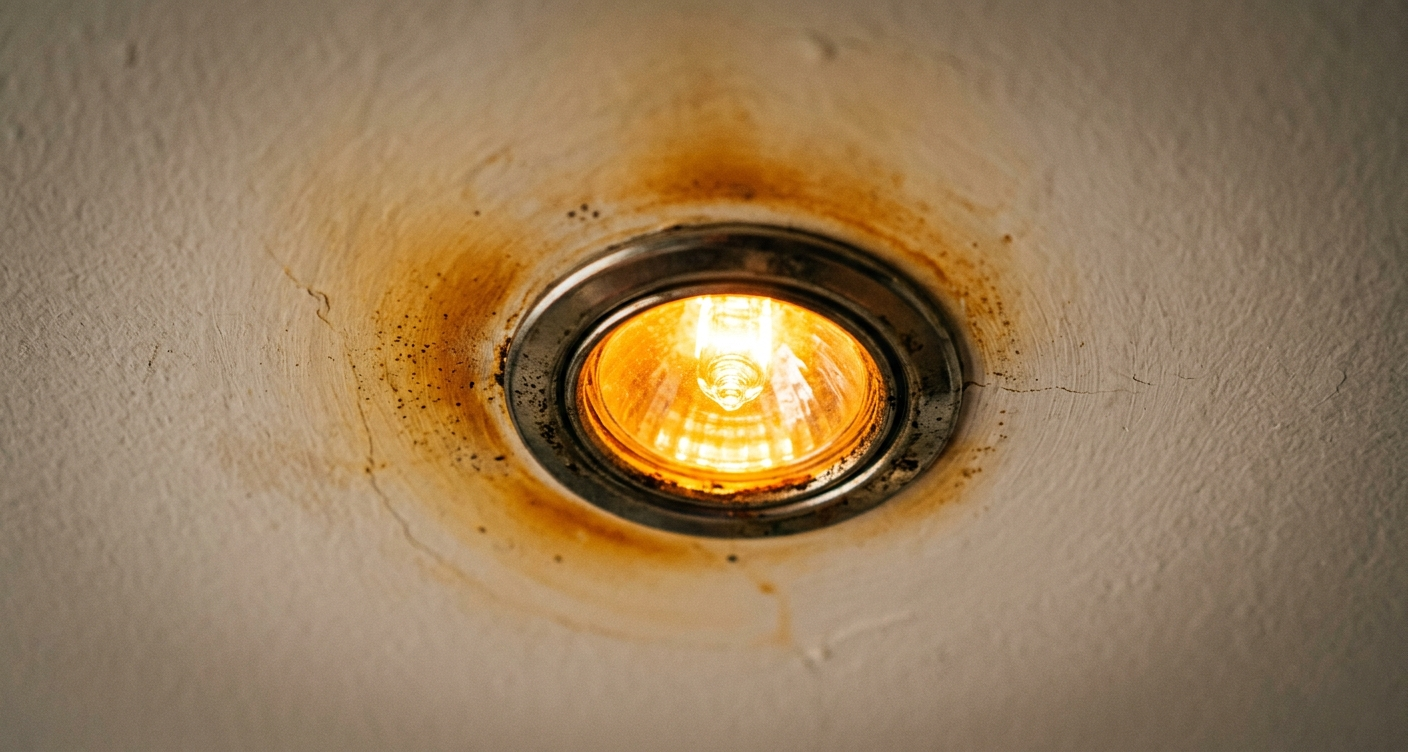
Halogen downlights are still present in thousands of Brisbane homes, and in properties where ceiling insulation is in contact with or too close to those fittings, the fire risk is real and documented. Here's what conditions create genuine danger, what warning signs to check in your own home tonight, and why replacing halogen fittings with IC-F rated LED downlights is both a safety and financial decision worth making now.
Are Halogen Downlights a Fire Hazard in Brisbane Homes?
The halogen downlight fire risk in Brisbane homes is real, documented, and present in a significant number of older Queensland properties right now. Most homeowners don't think twice about the downlights in their ceiling. They've been there for years, they work fine, and replacing them feels like an unnecessary expense. The problem is that halogen downlights installed in hundreds of thousands of Queensland homes between the 1990s and 2010s can and do cause house fires, and the conditions that create that risk are sitting undetected in ceilings across Brisbane suburbs from Chermside and Aspley in the north to Carindale and Camp Hill in the east.
This isn't alarmist. Queensland Fire and Emergency Services, the Queensland Building and Construction Commission, and insurers across the country have all documented the fire risk associated with halogen downlights in residential ceilings. The risk isn't universal or inevitable, but it is real, it is specific, and it is worth understanding clearly.
With over 10 years of experience and 2,000-plus electrical jobs completed across Brisbane, the team at Exclusive Electrical & Air has inspected hundreds of ceiling spaces with exactly these conditions present. Here's what the evidence says, what conditions create genuine risk, and what to do about it.
Are Halogen Downlights a Fire Hazard?
Yes. Halogen downlights operate at surface temperatures exceeding 200 degrees Celsius. In Brisbane homes where ceiling insulation is in contact with or too close to halogen fittings, heat builds up around the fitting and surrounding timber framing, creating conditions where ignition is possible. This risk is documented by Australian residential fire investigations and acknowledged by Queensland Fire and Emergency Services and the QBCC.
Why Halogen Downlights Are a Fire Risk in Brisbane Homes
The fire risk associated with halogen downlights starts with a basic physics problem. Halogen technology produces light by heating a tungsten filament inside a pressurised capsule to temperatures exceeding 2,500 degrees Celsius. That process is inherently inefficient — a significant proportion of the energy consumed by the fitting is released as heat rather than light.
The surface temperature of a running halogen downlight fitting can reach well above 200 degrees Celsius. In Brisbane ceiling spaces, which can reach 60 to 70 degrees Celsius on hot summer days, that thermal environment is meaningfully worse than the same fitting operating in a cooler climate. A halogen fitting already running at 200 degrees Celsius in a ceiling space that is itself at 60 degrees creates compounding heat stress on insulation, timber framing, and wiring that most homeowners are completely unaware of.
LED downlights, by contrast, produce a fraction of that heat. A quality LED fitting running at the same light output as a halogen equivalent typically operates at surface temperatures below 60 degrees Celsius. The thermal profile of the two technologies is not comparable, and that difference is the core of the fire risk argument.
The Three Conditions That Make Halogen Downlights Dangerous
The fire risk becomes most serious when one or more of the following conditions are present in a Brisbane home. Each condition can exist independently, and in older properties, more than one is often present at the same time.
Insulation Contact or Proximity
This is the most well-documented cause of halogen downlight fires in Australian homes. Standard halogen downlight fittings are not rated for contact with ceiling insulation. When insulation is installed in direct contact with or too close to a halogen fitting, the heat generated by the fitting has nowhere to dissipate. It builds up around the fitting, heating the insulation and the surrounding timber framing.
The required clearance between a standard halogen fitting and bulk insulation varies depending on the fitting's rating, but a minimum of 200mm is commonly cited for fittings not rated for insulation contact. In practice, insulation batts are frequently compressed or pushed against downlight fittings, particularly where ceiling insulation has been retrofitted after the original electrical installation.
Ceiling insulation is present in the majority of Brisbane homes built after 2000, and in many retrofitted older homes in suburbs like Paddington, Kelvin Grove, and Windsor where insulation upgrades were carried out under government rebate programs. If you're not certain whether your home has ceiling insulation, a licensed electrician can confirm this during an inspection — but for most Brisbane homes built or renovated in the last 25 years, the answer is yes.
Incorrect or Damaged Fittings
Halogen downlight fittings that have been incorrectly installed, damaged over time, or replaced with incompatible globe types can develop hot spots or arcing that significantly increases fire risk. Common issues include globes installed with incompatible transformers causing overheating, fittings where the globe retaining mechanism has failed, heat damage to wiring connections over years of operation, and globes of a higher wattage than the fitting is rated for.
In homes across Ashgrove, Taringa, Bardon, and Red Hill where the original downlight installation was carried out in the late 1990s or early 2000s, the likelihood of one or more of these issues being present after 20 to 30 years of operation is real. Aged wiring connections at downlight fittings compound the insulation clearance risk and are worth assessing at the same time as any downlight inspection.
Combustible Material in the Ceiling Space
Roof spaces accumulate material over time. Dust, debris, timber off-cuts from renovations, and pest nesting material can all accumulate around downlight fittings. Brisbane ceiling spaces are also notorious for possum and rodent activity, particularly in inner suburbs where roof space access is common. Possum and rodent damage to wiring insulation in ceiling spaces is a genuine compounding fire risk factor that no interstate content could credibly highlight — it's a Brisbane-specific reality for a significant number of inner-city homes. Any combustible material in contact with or close to a fitting operating at 200 degrees Celsius or above is a potential ignition source.
What Australian Research Says About Halogen Downlight Fires
Australian residential fire investigations have consistently identified halogen downlights as a contributing factor in house fires, with insulation contact identified as the most common cause. Queensland Fire and Emergency Services and the QBCC have published guidance acknowledging the risk, and the Electrical Safety Office Queensland has documented electrical fire risk in residential properties.
The risk is not theoretical. It is documented across real fires in real Australian homes, and Brisbane properties are not exempt from the conditions that produce it.
Warning Signs Your Brisbane Home Has a Halogen Downlight Problem
Not every Brisbane homeowner can easily access their ceiling space to assess the clearance around downlight fittings. The following warning signs are worth checking right now. If any apply to your home, an inspection by a licensed electrician is the appropriate next step.
Your home was built between the mid-1990s and mid-2010s and has the original downlight fittings still in place
Ceiling insulation has been added or upgraded at any point since the downlights were installed
Globes require frequent replacement, which can indicate heat-related stress on the fitting or a transformer compatibility issue
Yellowing or discolouration of the ceiling paint around any downlight fitting
A burning smell near the ceiling, particularly after the lights have been on for a period
The ceiling around a fitting feels warm to the touch after extended use
Any of these signs warrants an inspection before the issue is allowed to continue. A downlight safety inspection typically takes 30 to 45 minutes, involves a licensed electrician accessing the ceiling space to check clearances, wiring condition, and fitting ratings, and ends with a clear assessment of any issues found. Credentials for any licensed Queensland electrical contractor can be verified through the QBCC licence register
If you recognised any of those signs in your home, don't leave it sitting. The longer halogen fittings run in contact with insulation, the greater the cumulative heat stress on the surrounding materials.
📞 0468 813 833 | Book Your Downlight Safety Assessment
Same-week bookings available across Brisbane. We inspect, advise, and if needed, replace on the same visit. 10+ years experience. 2,000+ Brisbane customers. Licensed Queensland Electrical Contractor.
What Is an IC-F Rated Downlight and Why Does It Matter?
When LED downlights are discussed in the context of fire safety, the term IC-F comes up consistently. It stands for insulation contact, fire rated, and it describes a fitting that has been tested and certified for installation in direct contact with ceiling insulation.
An IC-F rated LED downlight eliminates the clearance requirement that makes halogen fittings a fire risk in insulated ceilings. The fitting is designed to operate safely when insulation is in contact with it, removing the thermal buildup risk entirely. And because a quality IC-F rated LED fitting operates at surface temperatures below 60 degrees Celsius compared to the 200 degrees Celsius-plus of a halogen fitting, the margin of safety is not marginal — it's substantial.
For Brisbane homeowners upgrading from halogen to LED, specifying IC-F rated fittings is not just a technical preference. It is the specification that directly addresses the fire risk created by the previous halogen installation. A licensed electrician sourcing LED fittings for a replacement job should be specifying IC-F rated products as the default for any home with ceiling insulation.
What Queensland Law Says About Downlight Safety
Queensland's electrical safety framework, administered under the Electrical Safety Act 2002 (Qld) and associated regulations, requires that all electrical installations in residential properties meet the relevant Australian Standards. For downlight installations, this includes the requirements of AS/NZS 3000 Wiring Rules and the fitting ratings required relative to their installation environment.
An existing halogen downlight installation that does not comply with current standards is not automatically required to be upgraded simply because it predates current requirements. However, any electrical work carried out on that installation creates an obligation on the electrician to ensure the work is compliant. A licensed electrician who inspects an existing halogen installation with clearance issues has an obligation to advise on the risk.
Will Your Insurance Cover a Halogen Downlight Fire?
This is the question most homeowners don't think to ask until it's too late. Where a fire investigation identifies that halogen downlights were in contact with insulation and that the installation did not comply with applicable standards, some insurers have declined or reduced claims. A non-compliant installation that has been present for years is not necessarily a defence — the question an insurer asks is whether the risk was known or knowable, and in many cases it is.
Reviewing your policy and understanding what it covers in the context of existing electrical non-compliance is worth doing before a problem occurs rather than after. A whole-home LED downlight upgrade Brisbane in a standard Brisbane home typically costs between $1,500 and $2,800 — a fraction of the cost of a structural fire, a declined insurance claim, or both.
If the insurance angle has you thinking, you're right to take it seriously. A safety assessment is the fastest way to know where you stand.
📞 0468 813 833 | Book Your Downlight Safety Assessment
Same-week bookings available. We inspect your ceiling space, check clearances, assess wiring condition, and give you a clear assessment of any issues found — all in a single visit.
Why Brisbane Homeowners Should Replace Halogen Downlights Now
The decision to replace halogen downlights with IC-F rated LED fittings is not just an energy efficiency decision. In a Brisbane home where ceiling insulation is present and the original halogen fittings have been in place for a decade or more, it is a safety decision.
Brisbane ceiling spaces in summer reach 60 to 70 degrees Celsius on hot days. A halogen fitting already running at over 200 degrees Celsius in that environment creates a thermal risk that is worse every year the fittings remain in place. Homes across Kenmore, The Gap, and Indooroopilly with larger roof spaces and significant ceiling insulation are sitting with this combination right now.
Replacing ageing halogen fittings with IC-F rated LED products that operate below 60 degrees Celsius removes the fire risk, reduces power bills, and eliminates the ongoing cost of globe replacements — all in a single job that typically takes a few hours.
The cost comparison is straightforward. A whole-home LED upgrade for a standard Brisbane home costs between $1,500 and $2,800. A structural fire costs multiples of that before insurance complications are factored in. The disruption of an upgrade is measured in hours. The disruption of a fire is measured in months.
And while we're in your ceiling space assessing your downlights, we'll also check your smoke alarm placement. Under Queensland regulations, smoke alarms must not be positioned within 300mm of a light fitting, and with Queensland's smoke alarm compliance deadline of 1 January 2027 approaching, getting both checked in a single visit is the most practical approach. If a downlight fire does start, correctly positioned and compliant smoke alarms are your first line of defence.
FAQ
Can halogen downlights really cause a house fire?
Yes. Halogen downlights have been identified as a contributing factor in residential fires across Australia, with insulation contact being the most commonly documented cause. Queensland Fire and Emergency Services and the QBCC have acknowledged this risk. It is not a theoretical concern.
How do I know if my halogen downlights are too close to insulation?
Without accessing the ceiling space directly, the clearest indicators are yellowing or discolouration of the ceiling paint around fittings, globes that require unusually frequent replacement, a burning smell near the ceiling after lights have been on for a period, or a ceiling that feels warm around fittings after extended use. A licensed electrician can inspect the ceiling space and assess clearances properly. Find out more about booking a [INTERNAL LINK: downlight safety assessment Brisbane | destination: electrical safety inspection service page].
What is an IC-F rated downlight and do I need one?
IC-F stands for insulation contact, fire rated. It describes an LED downlight fitting that has been tested and certified for installation in direct contact with ceiling insulation. In any home with ceiling insulation, IC-F rated LED fittings are the appropriate specification and directly address the fire risk associated with halogen fittings in insulated ceilings. These fittings operate at surface temperatures below 60 degrees Celsius, compared to over 200 degrees Celsius for a halogen equivalent.
Do I have to replace my halogen downlights under Queensland law?
There is no Queensland law that requires existing halogen downlights to be proactively replaced purely on the basis that they are halogen. However, where clearance requirements from insulation are not being met, the installation does not comply with the electrical safety standards that apply to all Queensland residential properties under the Electrical Safety Act 2002 (Qld). A licensed electrician who identifies non-compliant conditions has an obligation to advise on the risk.
Will my home insurance cover a fire caused by halogen downlights?
It depends on the circumstances and the specific policy. Where a fire investigation identifies that halogen downlights were in contact with insulation and that the installation did not comply with applicable standards, some insurers have declined or reduced claims. Reviewing your policy before a problem occurs is the right approach.
How do I verify an electrician's licence in Queensland?
Licensed Queensland electrical contractor credentials can be verified through the QBCC licence register at qbcc.qld.gov.au. A licensed Queensland electrical contractor is the appropriate professional for a downlight safety assessment.
Book a Downlight Safety Assessment for Your Brisbane Home
The halogen downlight fire risk in Brisbane homes with ceiling insulation is specific, documented, and preventable. If your home was built or renovated between the mid-1990s and mid-2010s and still has the original halogen fittings, the conditions for risk are likely present. The fastest way to know is a professional inspection.
At Exclusive Electrical & Air, we carry out downlight safety assessments and LED upgrade installations across all Brisbane suburbs. We'll inspect your ceiling space, check clearances, assess wiring condition, and give you a clear written assessment of any issues found. If replacement is needed, we can carry it out on the same visit using quality IC-F rated LED products installed to Queensland's electrical standards. Every installation is covered by a Certificate of Testing and Compliance.
If your Brisbane home has halogen downlights and ceiling insulation, a safety assessment is the fastest way to know whether you have a problem.
📞 0468 813 833 | Book Your Downlight Safety Assessment
Same-week bookings available across Brisbane. Rated 5 stars by Brisbane homeowners on Google. 10+ years experience. 2,000+ Brisbane customers. Licensed Queensland Electrical Contractor. Workmanship warranty on every installation.