Hardwired vs Battery Smoke Alarms: Which Does Queensland Law Require?
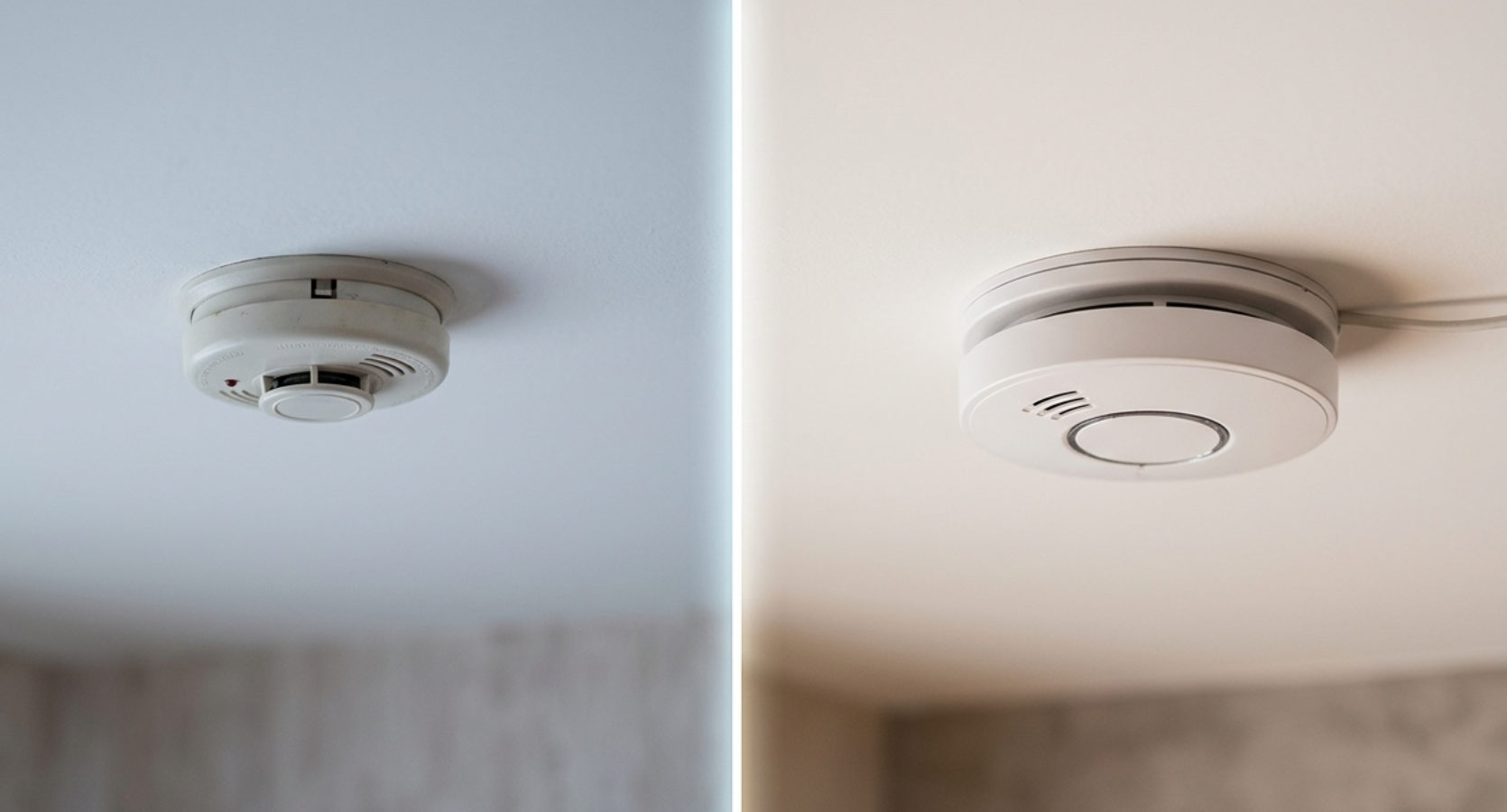
Queensland law doesn't automatically require hardwired smoke alarms in every home, but it does rule out the standard battery alarms most Brisbane households currently have. Here's what the legislation actually says, how hardwired and 10-year battery alarms compare, and how to figure out which option suits your property.
Hardwired vs Battery Smoke Alarms: Which Does Queensland Law Require?
It's one of the first questions Brisbane homeowners ask when they start looking into smoke alarm compliance. Do I need hardwired alarms, or will battery ones do?
The honest answer is: it depends on your property. But the slightly longer answer is what actually helps you make the right call, and avoid spending money on something that still won't pass muster under Queensland law.
Here's a plain-English breakdown of what the legislation says, what the difference actually means in practice, and how to figure out which option makes sense for your home.
What Queensland Law Actually Specifies
The Fire and Emergency Services Act 1990 (Qld) doesn't outright mandate hardwired alarms for every existing home. What it does mandate is that every smoke alarm must be powered by one of two acceptable sources:
Hardwired to mains power with a battery backup, or fitted with a non-removable 10-year lithium battery.
That second option is what gives existing homes some flexibility. The legislation recognises that retrofitting hardwired alarms into older Brisbane properties, particularly timber Queenslanders or homes without ceiling cavities, isn't always straightforward. The 10-year sealed battery alarm was introduced as a practical alternative.
What is absolutely not acceptable under Queensland law is a standard replaceable battery alarm. The ones you pick up at a hardware store and swap a 9-volt battery into every year. Those do not meet the requirements, regardless of whether they're photoelectric or how new they are.
So What's the Actual Difference?
Beyond the legal question, it's worth understanding what separates these two alarm types in real-world performance.
Hardwired Smoke Alarms
Hardwired alarms are connected directly to your home's electrical circuit. They draw power continuously from the mains, with a backup battery that kicks in during a power outage.
Because they're wired in, they're also easier to interconnect reliably. All alarms on the same circuit communicate with each other, so when one triggers, every alarm in the house sounds simultaneously. This is a legal requirement in Queensland, and hardwired interconnection is the most dependable way to achieve it.
The trade-off is installation. Hardwired alarms must be installed by a licensed electrician. There's no DIY pathway here under Queensland law. For older Brisbane homes, running new wiring can involve some ceiling work, though in most cases it's a manageable job for an experienced sparky.
10-Year Sealed Battery Alarms
These alarms run on a non-removable lithium battery with a rated life of ten years. They meet Queensland's power source requirement, and they can be wirelessly interconnected, meaning they communicate with each other via radio frequency rather than physical wiring.
The appeal is obvious. No wiring work required, less disruption to the home, and in theory a homeowner could install battery-powered wireless alarms themselves, provided placement meets QFES standards.
The limitation is reliability over time. Wireless interconnection depends on signal strength between alarms, which can be affected by the layout of the home, building materials, and interference. In a large or multi-storey Brisbane home, getting consistent wireless interconnection across every room requires careful product selection and placement.
There's also the question of monitoring the battery life. While the 10-year rating is genuine, the alarm will begin chirping as the battery approaches end of life, and because the battery is sealed, the entire alarm unit needs to be replaced, not just the battery.
Which Option Is Right for Your Home?
There's no universal answer, but there are some useful rules of thumb.
Hardwired alarms tend to make more sense when: Your home already has hardwired alarms that simply need upgrading to photoelectric. Running new wiring to existing alarm locations is usually straightforward. You're renovating or have work being done anyway, making it a logical time to upgrade the electrical. You want the most reliable long-term interconnection solution. You own a larger home or multi-storey property where wireless signal reliability could be a concern.
10-year battery alarms tend to make more sense when: Your home has no existing wiring infrastructure for alarms. Running new wiring would be significantly disruptive or costly, for example in a heritage Queenslander with limited ceiling access. You're an owner-occupier on a tighter budget looking to meet the 2027 deadline without major electrical work.
In practice, many Brisbane homes end up with a mix. Hardwired alarms in areas where wiring already exists, with battery-powered wireless alarms added to bedrooms that weren't previously covered.
The Installation Question
Regardless of which type you choose, one rule applies consistently: hardwired alarms must be installed by a licensed electrician.
For battery-powered wireless alarms, a homeowner can technically handle installation, but the placement still needs to meet Queensland's specific requirements, every bedroom, every hallway connecting bedrooms to the rest of the home, and every storey of the dwelling. Getting that wrong doesn't just mean a failed compliance check. It means the alarms may not perform as intended in an actual fire.
For most Brisbane homeowners, having a licensed sparky assess the property, recommend the right solution, and handle the installation is the cleaner path. You get correct placement, reliable interconnection, and documentation confirming the work meets QLD standards.
Still Not Sure What Your Home Needs?
That's what we're here for. At Exclusive Electrical & Air, we assess Brisbane homes every day and recommend the most practical, cost-effective path to smoke alarm compliance based on your specific property, whether that's a full hardwired upgrade, a wireless battery solution, or a combination of both.
We're licensed, we know the QLD requirements inside out, and we service all Brisbane suburbs.
Get in touch with Exclusive Electrical & Air today to book a smoke alarm assessment. We'll tell you exactly what your home needs and get it sorted properly.