How Many CCTV Cameras Does a Brisbane Home Actually Need?
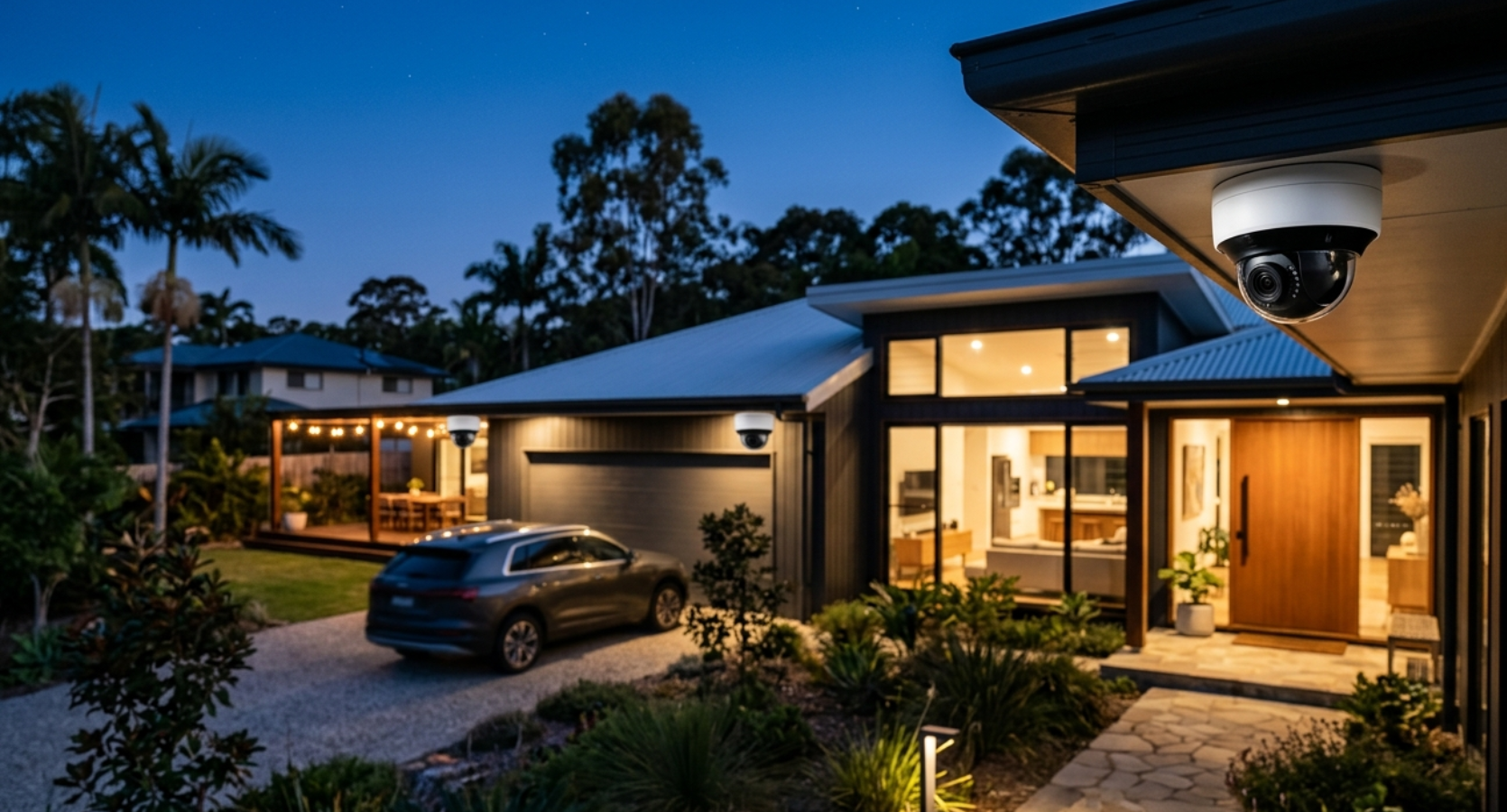
The number of CCTV cameras a Brisbane home needs depends on its layout, entry points, and what's being protected, not on a standard package number. Here's how to work through the right count for your specific property, what a typical Brisbane home requires, and why placement matters as much as quantity.
How Many CCTV Cameras Does a Brisbane Home Actually Need?
It's one of the first questions homeowners ask when they start looking into security cameras, and it's also one of the harder ones to answer without actually looking at the property. The honest answer is that the right number depends entirely on your home's layout, its entry points, and what you're trying to protect.
What's clear is that both extremes tend to create problems. Too few cameras and you've got blind spots that undermine the whole system. Too many, and you're paying for coverage you don't need while the footage management becomes unwieldy. The goal is the right cameras in the right places, not the highest number you can fit on a recorder.
Here's how to think through it for a typical Brisbane home.
Why There's No Universal Answer
A compact townhouse in Newstead with a single-car garage and no yard has fundamentally different security needs than a four-bedroom family home on a corner block in Carindale with side access, a pool area, a detached shed, and a double garage.
Both are Brisbane residential properties. Both need CCTV. The number of cameras required for each is nowhere near the same.
The variables that determine the right camera count include the number of entry points to the property, the size and layout of the yard, whether there are secondary structures like sheds or garages, how many access paths exist along the sides of the home, the presence of a pool or high-value outdoor assets, and whether the property is on a corner block, which typically introduces an additional exposure.
Working through those variables systematically is how you arrive at a number that actually makes sense for your specific situation.
Start With Entry Points, Not Camera Count
The most reliable way to work out how many cameras you need is to start by mapping every point where someone could enter or access your property, and then work backwards from there.
For a typical standalone Brisbane home, those entry points generally include:
The front entry, including the porch and any path from the street
The driveway and garage, particularly if the garage connects to the interior of the home
Side access paths on either side of the property
The back yard, including any rear fence line accessible from a lane or neighbouring property
Secondary entry points such as back doors, side doors, or laundry entries
Any gate providing access to the yard from the street or a shared path
Each of these represents a zone that either needs camera coverage or a deliberate decision that it doesn't. The camera count follows from that assessment, not the other way around.
What a Typical Brisbane Home Actually Needs
With that framework in mind, here's how the numbers tend to break down across common Brisbane property types.
Compact Single-Storey Home or Townhouse
For a smaller property with limited yard space, a single driveway, and straightforward access, a four-camera system is typically sufficient. A well-planned setup for this property type might cover:
Front entry and approach from the street
Driveway and garage
One side access path
Rear of the property or back door
Four cameras covering these zones gives you visibility over every meaningful entry point without redundancy.
Standard Three or Four-Bedroom Suburban Home
This is the most common property type across Brisbane suburbs like Stafford, Mansfield, and Mitchelton. A standard suburban block with front and rear yards, side access on both sides, and a garage typically needs between four and six cameras.
A six-camera layout for this property type might look like:
Front entry and street approach
Driveway and garage door
Left side access
Right side access
Rear yard and back fence line
Back door or secondary entry
Some properties in this category can be covered with five cameras if the layout allows one camera to cover two zones effectively, for example a wide-angle camera at the rear corner that captures both the back fence line and one side access path.
Larger Home With Secondary Structures
Properties with a detached garage, workshop, shed, or pool area introduce additional zones that need coverage. A home in this category realistically needs six to eight cameras, with dedicated coverage for any structure that contains high-value equipment or provides concealed access to the main dwelling.
Corner block properties also fall into this category. A corner block exposes two street-facing sides of the property rather than one, which typically adds at least one camera to the count.
Two-Storey Homes
The storey count doesn't dramatically change the camera number in most cases, because CCTV cameras are primarily monitoring ground-level access points rather than upper levels. A two-storey home on a standard Brisbane block typically needs the same number of cameras as a single-storey home with the same footprint and entry points.
Where a second storey does add complexity is in camera mounting height. Cameras mounted higher can cover a wider field of view, but need to be positioned carefully to avoid capturing only the tops of heads rather than usable facial detail.
Camera Placement Matters as Much as Camera Count
Getting the number right is one part of the equation. Getting the placement right within each zone is where the system either earns its keep or falls short.
A few placement principles that apply across most Brisbane residential installations:
Position cameras to capture faces where possible, not just the back of heads or wide-area movement. A camera aimed directly down from a high mounting point captures movement but rarely captures identifiable detail.
Cover the approach to an entry point, not just the entry point itself. A camera aimed at your front door captures someone who has already reached it. A camera covering the path from the street gives you earlier warning and better identification.
Account for night-time lighting conditions. Brisbane's darker suburban streets mean infrared night vision capability is important, and camera placement should consider what ambient lighting exists and where shadows fall.
Avoid positioning cameras where they capture significant areas of neighbouring properties or public spaces beyond your boundary, both for privacy reasons and to reduce false motion triggers from passing pedestrians or traffic.
The Deterrence Argument for Visible Cameras
One factor that sometimes influences the camera count decision is visibility. A camera that's clearly visible at a property's entry points serves a deterrence function that a hidden camera does not.
Most professional residential installations in Brisbane strike a balance: visible cameras at the primary entry points where deterrence is the priority, and less conspicuous placement at secondary access points where capturing footage is the primary goal.
If deterrence is a significant driver for your installation, that may justify cameras at additional locations beyond what pure coverage logic would suggest.
When to Reassess Your Camera Count
A CCTV system isn't necessarily a set-and-forget installation. There are circumstances that warrant revisiting the number and placement of cameras on a property:
A renovation that changes the property's layout or adds new entry points
The addition of a shed, garage, or other secondary structure
A change in the surrounding environment, such as a neighbouring property becoming vacant or a new development affecting sight lines
A security incident on or near the property that reveals a gap in existing coverage
FAQ
How many security cameras do I need for a 4-bedroom house in Brisbane? Most four-bedroom homes on a standard Brisbane suburban block are well covered by five to six cameras, depending on the layout, number of side access paths, and whether there are secondary structures like a shed or detached garage. A licensed installer can assess your specific property and confirm the right number.
Is 4 cameras enough for a house? For a compact home or townhouse with straightforward access, four well-placed cameras can provide solid coverage. For larger homes with multiple access paths, a backyard, or secondary structures, four cameras will likely leave gaps.
Where should security cameras be placed on a Brisbane home? The priority locations are the front entry and street approach, the driveway and garage, side access paths, the rear of the property, and any secondary entry points such as back or side doors. Every meaningful access point should have coverage or a deliberate reason why it doesn't.
Do I need cameras at the back of my house? Yes, in most cases. Rear access is one of the most common entry points for opportunistic break-ins precisely because it's less visible from the street. A rear yard camera covering the back fence line and any back door is a standard part of most Brisbane residential CCTV installations.
Can one camera cover multiple areas? Wide-angle and varifocal cameras can cover broader fields of view, and a well-positioned camera can sometimes cover two zones effectively. However, wider coverage often comes at the cost of detail, which affects the usefulness of footage for identification purposes.
Does a two-storey home need more cameras than a single-storey home? Not necessarily. Camera count is driven by entry points and access zones rather than the number of floors. A two-storey home on the same block with the same entry points as a single-storey home typically needs a similar number of cameras, though mounting height and angle will differ.
Who can install CCTV cameras in Queensland? Consumer-grade wireless cameras can be self-installed, but any electrical work associated with a wired CCTV system must be carried out by a licensed electrician under Queensland law. Professionally installed systems are generally more reliable, better positioned, and more likely to capture usable footage when it's needed.
Get the Right System for Your Property
The number of cameras your Brisbane home needs isn't something that should be guessed at or based on a generic package. A system with the wrong coverage, regardless of how many cameras it has, isn't doing the job it's supposed to do.
At Exclusive Electrical & Air, we assess Brisbane residential and commercial properties across all suburbs, design camera systems around the actual layout and access points of each property, and carry out professional installations to a standard that holds up when it matters. Whether your home needs four cameras or eight, we'll tell you what's right for your situation and back it up with a proper installation.
Get in touch with Exclusive Electrical & Air today to book a security camera assessment for your Brisbane home.