How Many Smoke Alarms Does Your Brisbane Home Actually Need?
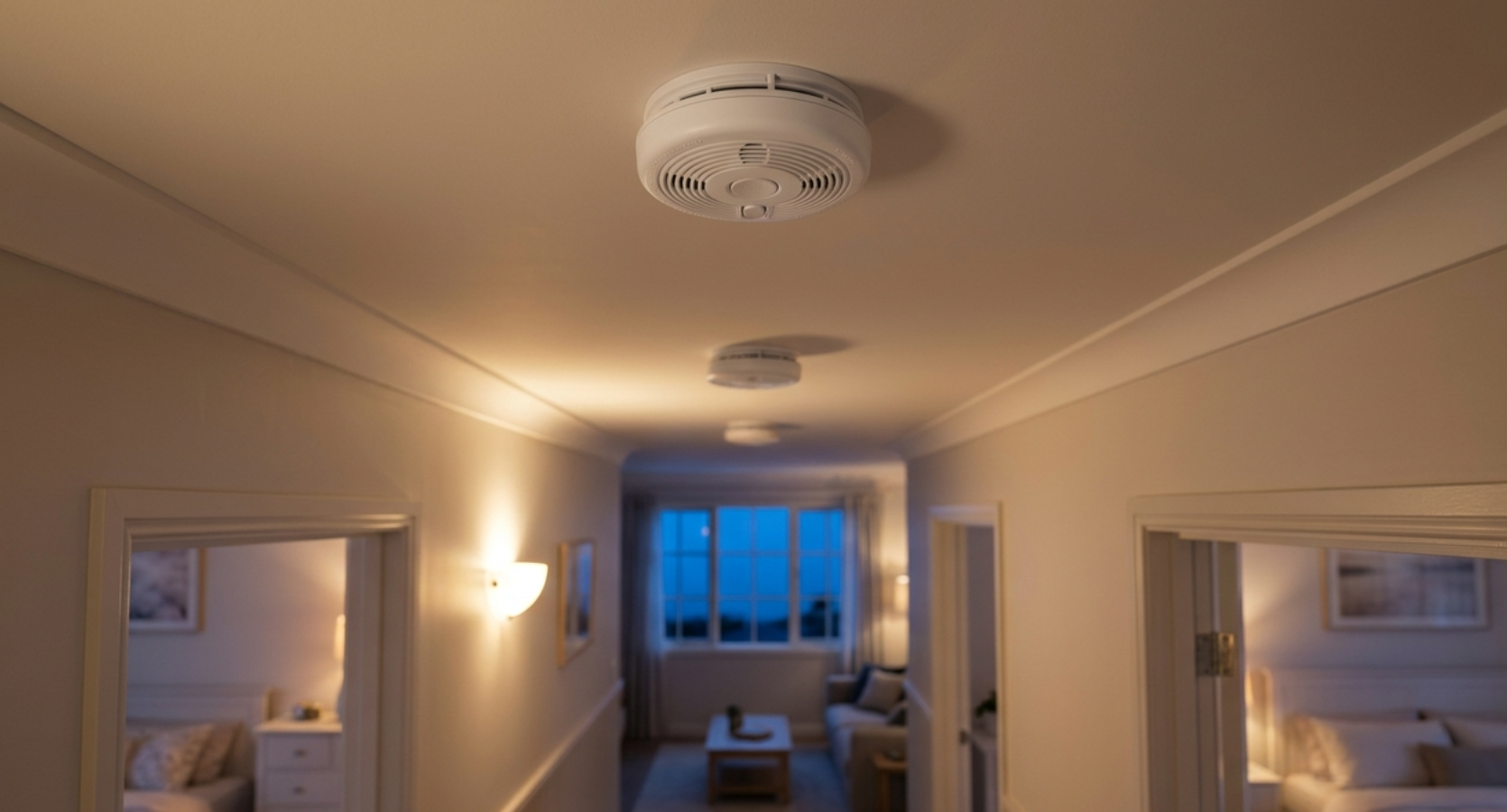
One smoke alarm in the hallway hasn't been enough since Queensland updated its laws. The number your Brisbane home actually needs depends on its layout, bedroom count, and number of storeys, and most homeowners are surprised how quickly that number adds up. Here's how to work it out.
How Many Smoke Alarms Does Your Brisbane Home Actually Need?
Most Brisbane homeowners assume they're covered. There's an alarm in the hallway, it beeps when it needs a new battery, job done. The problem is that Queensland's smoke alarm laws changed significantly in 2017, and the placement requirements that came with those changes are catching people off guard right across the city.
Under the updated legislation, the number of alarms your home needs isn't a fixed number. It depends on your floor plan, your bedroom count, and how many levels your home has. For most Brisbane houses, the minimum is higher than people expect, and the 1 January 2027 deadline for owner-occupied homes is closer than it feels.
Here's how to work out exactly what your home needs.
Why the Old "One in the Hallway" Approach No Longer Works
For years, a single alarm positioned somewhere near the bedrooms was considered adequate. It satisfied the old requirements, it was inexpensive, and most homeowners never questioned it.
Queensland Fire and Emergency Services (QFES) reviewed the data on residential fire fatalities and found a consistent pattern. Smouldering fires starting in other parts of the home at night weren't triggering hallway alarms quickly enough to wake sleeping occupants. By the time the alarm sounded, escape routes were already compromised.
The updated laws under the Fire and Emergency Services Act 1990 (Qld) addressed this directly. The requirement for alarms inside every bedroom was introduced specifically to give people the earliest possible warning while they're asleep, which is when residential fires are most deadly.
If your home has three bedrooms and zero alarms inside any of them, you're already three alarms short before you've counted anything else.
What Queensland Law Requires: The Placement Rules
The legislation is specific. Under Queensland's current smoke alarm laws, alarms must be installed in all of the following locations:
Every bedroom in the home
Every hallway that connects bedrooms to the rest of the dwelling
On every storey of the property, including any level containing a bedroom or forming part of the living space
Where there is no hallway, between the bedroom and the main living area
Every alarm must also be interconnected. When one activates, all alarms in the home sound simultaneously. This applies whether alarms are hardwired or wirelessly connected, and it is a non-negotiable requirement under QLD law.
Working Out the Number for Your Home
There's no single number that fits every Brisbane property. The count depends entirely on your floor plan. Here's how the most common layouts break down.
Standard Three or Four-Bedroom Single-Storey Home
This is the most common setup across suburbs like Chermside, Wynnum, and Stafford. The calculation is straightforward: one alarm per bedroom, plus one for the hallway.
Three-bedroom home with one hallway: minimum 4 alarms
Four-bedroom home with one hallway: minimum 5 alarms
Four-bedroom home with two separate hallways: minimum 6 alarms
Homes With No Hallway
Some older Queenslanders and contemporary open-plan builds have bedrooms that open directly onto a living area. In this case, the alarm goes on the ceiling between the bedroom doorway and the living space, on the living area side.
Two-Storey and Multi-Level Homes
Every storey of the dwelling needs coverage, in addition to every bedroom and hallway. For a typical two-storey Brisbane home with three upstairs bedrooms and a lower level living area or study, you're looking at a minimum of five to six alarms. Larger two-storey homes can reach seven or eight without much effort.
Converted or Non-Traditional Spaces
Any storey containing a bedroom or forming part of the living space must be covered. This includes converted lower levels, granny flats attached to the main dwelling, and habitable basement spaces, which are becoming more common in hillside Brisbane suburbs like Bardon and Keperra.
Placement Within Each Room
Getting the count right is half the job. Getting the positioning right within each room is the other half, and it affects real-world performance.
QFES recommends the following for alarm placement:
Mount on the ceiling, as close to the centre of the room as practical
If wall mounting is necessary, position between 300mm and 500mm below the ceiling
Keep at least 300mm away from any corner
Avoid positioning near ceiling fans, air conditioning vents, or high-airflow areas
That last point is worth paying attention to in Brisbane, where ceiling fans run for the better part of the year. An alarm sitting directly in a fan's airflow can experience delayed detection because moving air disperses smoke before it reaches the sensor. It's a small detail that makes a real difference.
The 2027 Deadline: Why Sorting This Now Makes Sense
Owner-occupied homes in Queensland have until 1 January 2027 to reach full compliance. That's still a couple of years away, but Brisbane electricians are already seeing a steady increase in smoke alarm enquiries as the deadline gets closer.
There are two practical reasons to get ahead of it now. First, booking availability tightens as demand builds, and prices tend to follow. Second, if your circumstances change and you decide to sell or lease the property before 2027, the compliance requirement moves immediately. Properties being sold or leased have been required to comply since 1 January 2022, meaning a change in plans could shift your deadline by several years overnight.
Getting the assessment and installation done now removes that risk entirely.
FAQ
How many smoke alarms do I need in a 3-bedroom house in Queensland? At minimum, four. One in each bedroom and one in the hallway connecting them to the rest of the home. If your home has additional hallways, a second storey, or bedrooms that open directly onto a living area, the number goes up.
Do I need a smoke alarm inside every bedroom in Queensland? Yes. Under Queensland's current laws, every bedroom must have its own smoke alarm. This requirement has applied to new builds since 2017, to properties being sold or leased since 2022, and applies to all owner-occupied homes from 1 January 2027.
Can I just have one smoke alarm in the hallway? No. A single hallway alarm does not meet Queensland's requirements. You need alarms in every bedroom, every connecting hallway, and on every storey of the dwelling.
Does a two-storey Brisbane home need smoke alarms on both levels? Yes. Queensland law requires alarms on every storey of a dwelling, regardless of whether bedrooms are located on that level. Both floors need to be covered.
Where exactly should a smoke alarm be positioned in a room? On the ceiling, as close to the centre of the room as practical. If wall mounting is necessary, it must sit between 300mm and 500mm below the ceiling and at least 300mm from any corner. Keep alarms away from ceiling fans and air conditioning vents.
Who is allowed to install smoke alarms in Queensland? Hardwired smoke alarms must be installed by a licensed electrician. Some battery-powered wireless alarms can be owner-installed, but placement still needs to meet QFES standards. For most homeowners, a licensed sparky handling the full job is the cleaner, safer option.
Get the Right Number, In the Right Places
Guessing at the count or assuming your current setup is close enough isn't a great position to be in when you're preparing a property for sale, starting a new tenancy, or simply want to know your home is genuinely protected.
At Exclusive Electrical & Air, our licensed electricians assess Brisbane homes every day. We work out the exact alarm count and placement required under Queensland law, and handle the full installation to QFES standards with proper documentation. With the 2027 deadline approaching and demand across Brisbane already building, earlier is better.
Get in touch with Exclusive Electrical & Air today to book your smoke alarm assessment. We'll work out exactly what your home needs and get it sorted properly.