If Your Switchboard Is Warm, That’s Not Normal (Overheating Breakers in Brisbane Heat)
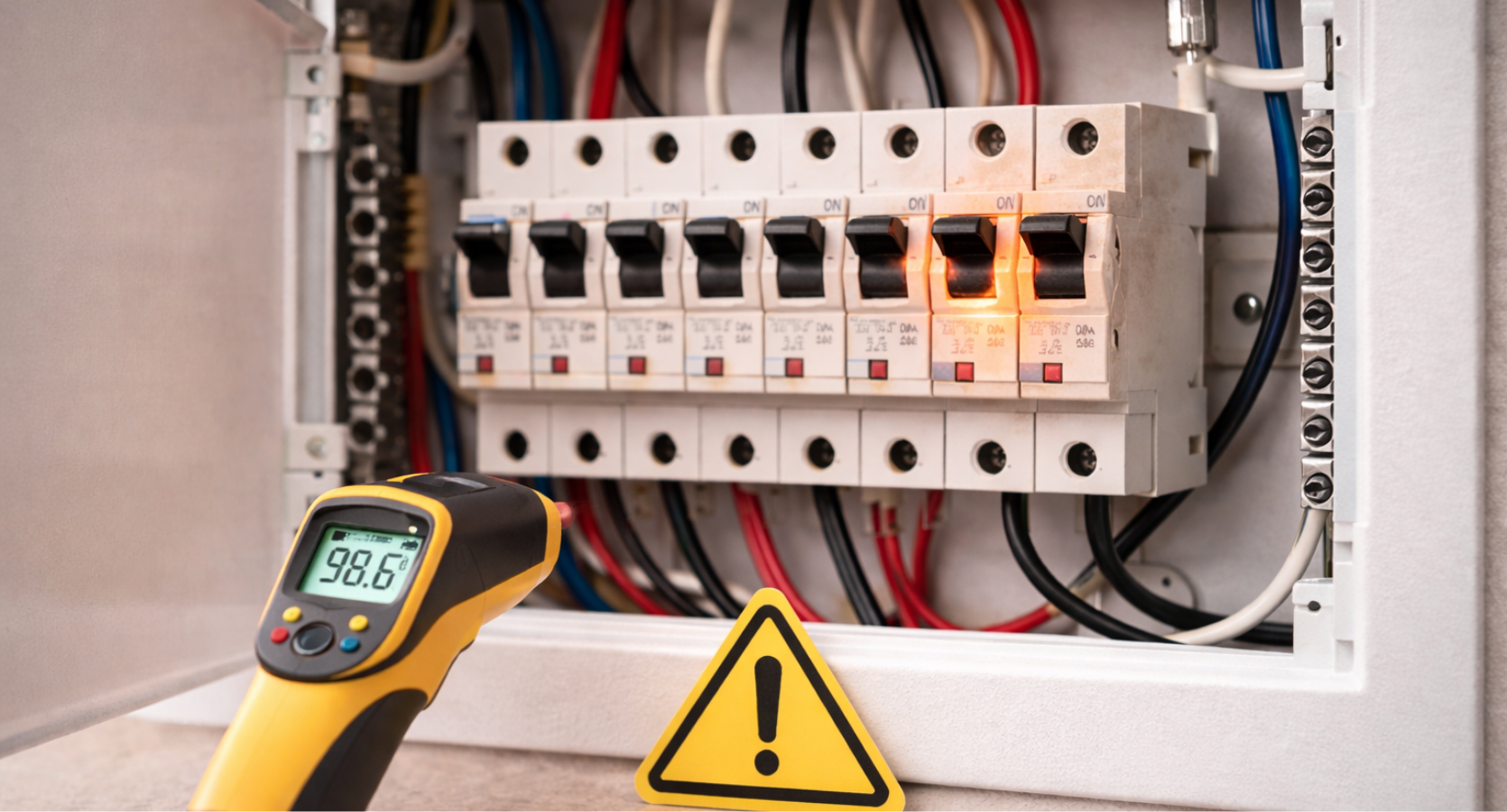
If your switchboard feels warm to the touch, that’s not normal. In Brisbane homes, this is a clear warning sign of overheating breakers, loose connections, or circuits under stress; especially after summer heat.
If your switchboard feels warm, that’s not normal.
Switchboards are designed to dissipate heat safely.
They should never feel warm to the touch.
Warmth means electrical energy is being lost as heat, inside breakers, terminals, or wiring.
That’s a warning sign.
Why this is common in Brisbane
Brisbane conditions place heavy stress on switchboards:
Extended summer heatwaves
High humidity affecting insulation and terminals
Air conditioners running for long hours
Modern homes drawing higher peak loads
Older switchboards not designed for today’s demand
Voltage dips on hot afternoons increasing current draw
Heat doesn’t disappear when summer ends.
Damage shows up weeks later.
March is when these problems surface.
Risks if ignored
A warm switchboard is already under stress.
Ignoring it can lead to:
Breakers overheating and failing
Melted insulation inside the board
Electrical fires starting behind covers
Sudden loss of power to parts of the home
Nuisance tripping that worsens over time
Insurance complications after an incident
Switchboard fires don’t start loudly.
They start slowly.
Quick Diagnosis Checklist
You don’t need to open anything.
Check safely:
Does the switchboard feel warm or hot externally?
Is the warmth localised to one breaker area?
Does it worsen late afternoon or early evening?
Any buzzing, crackling, or faint burning smell?
Breakers tripping more often than before?
Recent increase in air conditioning or appliance use?
Any yes means the system needs assessment.
Causes (Electrical Only)
1. Loose breaker or terminal connections
Loose terminals increase electrical resistance
Resistance converts power into heat
Common in older boards and heat-cycled wiring
This is the most common cause electricians find.
2. Overloaded circuits
Circuits drawing more current than designed
Heat builds up at breakers and busbars
Common after years of added appliances
Modern living stresses older electrical infrastructure.
3. Ageing or undersized switchboard components
Older breakers degrade internally
Heat dissipation becomes inefficient
Brisbane heat accelerates wear
The board may still “work”, but unsafely.
4. Heat stress from voltage dips
Hot afternoons cause grid voltage drops
Appliances draw higher current to compensate
Higher current equals more heat at breakers
This is common during Brisbane heatwaves.
5. Moisture and humidity exposure
Humidity affects internal contacts over time
Leads to corrosion and resistance
Heat follows resistance
Especially common in garages and older homes.
What NOT to do
Don’t ignore a warm switchboard
Don’t open the board yourself
Don’t tighten breakers without training
Don’t assume warmth is “normal in summer”
Don’t wait for a trip or outage
By the time breakers trip, damage is already advanced.
When it’s a safety emergency
Call immediately if:
The switchboard is hot to touch
You smell burning plastic
You hear buzzing or crackling
Breakers won’t stay set
Lights flicker when loads turn on
You see any scorch marks
This is fire-risk territory.
A warm switchboard is never normal.
It’s a clear sign the electrical system is under stress.
March is when Brisbane homes reveal summer damage.
Catching it early prevents serious failure.
If your switchboard feels warm, have it checked by a licensed Brisbane electrician.
At Exclusive Electrical & Air, we assess breaker load, connections, and heat stress, and address the real electrical cause before it escalates.
Book a professional inspection with electricians who understand Brisbane heat, humidity, and real-world electrical demand.