Lights dim when appliances run? Brisbane causes explained
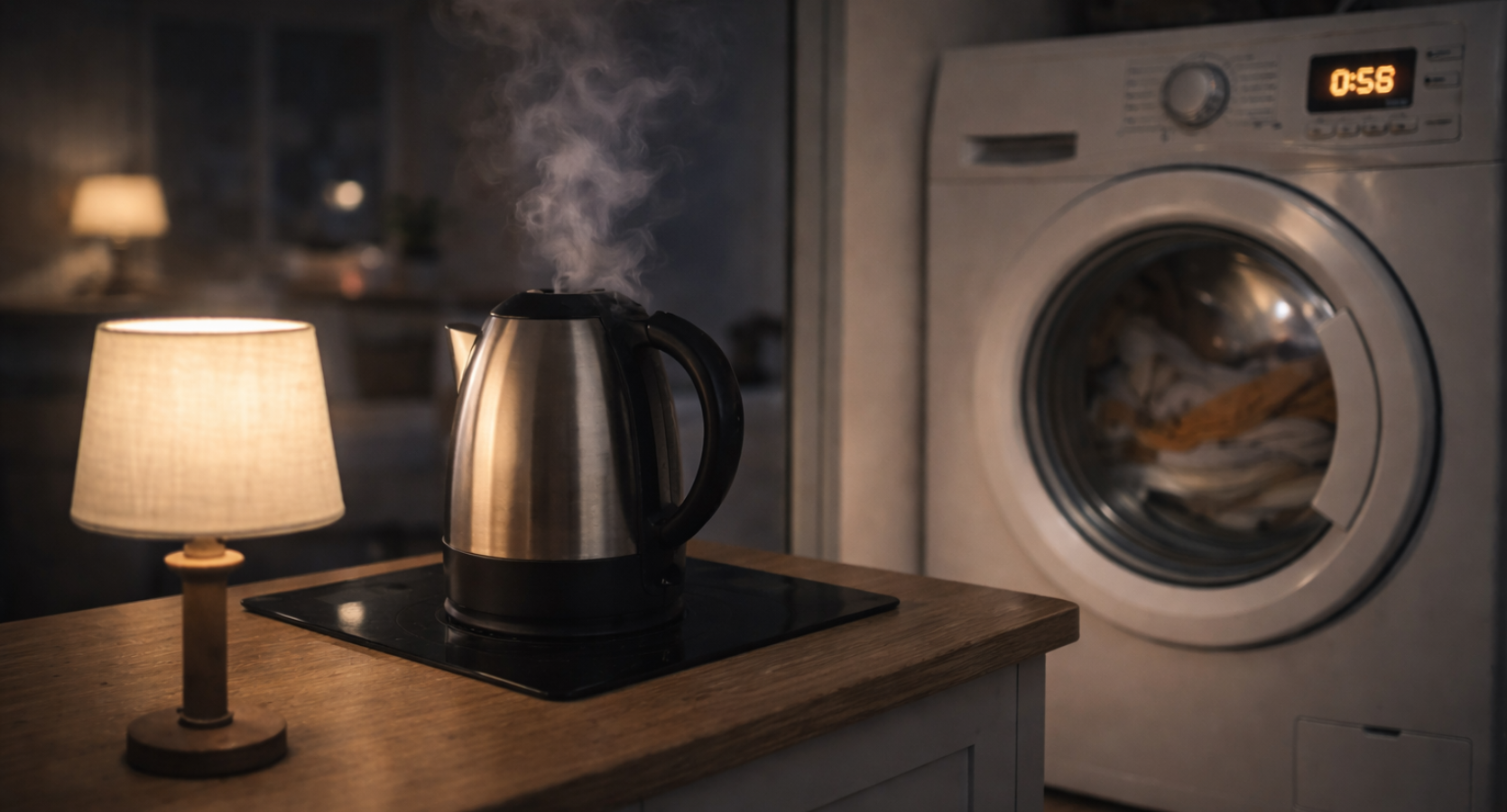
If your lights look fine until you switch on the kettle, that’s not normal. In Brisbane homes, that usually means voltage drop or a weak connection. Here’s what’s going on and when to call a licensed electrician.
If your lights look fine until you use the kettle, microwave or vacuum, that’s not normal. It’s your wiring telling you the voltage is sagging under load. In Brisbane, heatwaves, humidity, and peak-demand evenings make this show up fast. Queenslander homes with long runs and older cables feel it more. Bayside suburbs cop salty air that corrodes connections, then every appliance start makes lights dip or flicker.
You’re not imagining it. LEDs are sensitive and will flicker where old globes just glowed dull. If the oven clock resets or the TV blips when you plug in a heater, you’ve got a voltage or connection problem. Let’s talk about why it happens here in Brisbane, and when to get it checked.
Your lights are a live report on voltage quality, not just the bulb.
Big appliances expose weak joints, undersized wiring, and supply dips in a second.
We diagnose this at the switchboard first, then move through the circuits. The pattern when appliances run tells us exactly where to look.
1. Appliance start-up surge pulling voltage down
Kettles, microwaves and toasters hit hard the moment they start. Aircon (air conditioner) compressors do it too, with a short, heavy surge. If a circuit is marginal, that surge drags the voltage down and your lights react.
In Brisbane, this is common on hot evenings when everyone’s cooking with the aircon on. It’s worse on circuits that already run warm or have too many loads. The surge exposes the weak spot every time.
At this point, you may see:
Lights dip for one to three seconds when the kettle starts
LED downlights flicker or briefly go out, then recover
Ceiling fans slow for a moment, then speed back up
Dimmers buzz during appliance use
TV picture blips when the microwave runs
2. Loose or high-resistance neutral at the switchboard
A loose neutral doesn’t shout until a load unbalances the circuits. Then the neutral “floats” and voltage across lighting changes. One room may dim while another brightens. That’s a classic neutral issue.
Heat cycles and Brisbane humidity loosen screws over time. Storm season vibration and thermal expansion make it worse. This fault is dangerous because it can over-volt some circuits.
At this point, you may see:
Lights brighten in one area while others dim when an appliance runs
Intermittent flicker that changes as different loads switch on
Occasional buzzing from the switchboard cover
Smart lights drop off Wi‑Fi during appliance use
Occasional faint burning smell near the board
3. Corroded or cooked terminals in the main switch or breakers
When a terminal isn’t tight, it overheats under load. Add Brisbane humidity and salty bayside air, and corrosion sets in. The contact becomes resistive. Under appliance load, voltage drops across that hot joint and lights dip.
You might not notice until summer peak or a heatwave. Then every microwave cycle gives you a light show. Thermal imaging often finds these hot spots quickly.
At this point, you may see:
Light dips aligned with heavy appliance use
Warm or discoloured breaker toggles
Crackling or a faint “sizzle” from the switchboard under load
A smell of hot plastic after dinner time
Occasional nuisance trips as heat builds
4. Lighting and power sharing a circuit that’s overloaded
Some renovations leave lights and power points (GPOs) on the same circuit. Or an old circuit was never split properly. When a toaster or vacuum pulls current on that circuit, the lights on it see the volt drop and flicker.
This shows up fast in older Queenslanders upgraded in stages. The fix is design and load separation, not a different globe. The symptom tells us which circuit needs attention.
At this point, you may see:
Only the lights on one breaker dip when a specific power point is used
Vacuum cleaner causes flicker in one room only
Microwave makes the adjacent kitchen lights pulse
Exhaust fan start makes downlights blink
Dimmer lights get “wavy” while the appliance runs
5. Long cable runs or undersized cable in high-set homes
Queenslanders often have long cable runs to upstairs lighting. If the cable is undersized, volt drop shows up when nearby power points feed a heater or portable aircon. The lights aren’t at fault, the wiring length and size are.
Add heat in summer and cable resistance rises slightly. That increases drop right when you need stable light the most. Design matters here.
At this point, you may see:
Dimming mostly upstairs when a downstairs appliance starts
The furthest room flickers, closer rooms stay steady
Slight delay or “breathing” brightness under steady appliance load
Multiple LEDs on one circuit blinking together
Fans hum under load, then settle
6. Moisture in fittings or junctions causing arcing under load
After heavy rain or a humid week, moisture can creep into roof junctions or outdoor fittings. It may not trip a safety switch (RCBO) but it can create tiny arcs as voltage spikes and sags with load. That arc adds noise and drop that LEDs hate.
Condensation inside downlight connectors is common here. Over time, corrosion raises resistance and the flicker becomes routine whenever an appliance runs.
At this point, you may see:
Flicker worse after rain or on humid mornings
Occasional single “flash” when a big load starts
Random blink from one fitting more than others
Crackle from a damp exterior light when other loads start
Rust marks or green crust on outdoor terminals
7. Supply-side voltage dips or a tired street connection
Sometimes the problem starts outside. Peak-demand voltage dips in heatwaves are real in Brisbane. A weak service neutral at the point of attachment or a corroded pillar connection will exaggerate every appliance start.
You’ll notice it across multiple circuits, not just one. We test at the switchboard under load and, if needed, liaise with the network to remedy supply issues.
At this point, you may see:
Whole-house dim when the oven or aircon starts
Dips worse at dinner time, better late at night
Neighbours mention similar flicker
Multiple clocks reset during storms
No single breaker area is to blame
Is This Normal?
A tiny dip when a big motor starts can be normal.
Regular, obvious dimming is not.
If it’s getting worse in heatwaves, something is loosening or heating.
If one area brightens while another dims, that’s a red flag neutral issue.
If you hear crackle or smell hot plastic, that’s not normal, ever.
If LEDs reset or smart lights drop offline, voltage quality is poor.
If flicker follows humidity or rain, moisture is in the system.
If the whole house sags at peak times, supply may be dipping.
When You Should Call an Electrician
Call sooner, not later, if any of this matches your home. Early fixes prevent heat damage and nuisance trips.
Lights dim or flicker whenever kettles, microwaves, vacuums or heaters run
One room brightens while another dims under load
Warm breakers, discoloured switches, or any burning smell
Flicker worse after rain, or in bayside humidity
TV or smart lights reset during appliance use
You’ve got a Queenslander with long runs and staged renovations
Dimming is worse in heatwaves or early evenings
You’re unsure, turn the affected circuit off at the switchboard and call
Lights reacting to appliances is your home telling you the voltage and connections need attention. In Brisbane, we see this after storm season, during heatwaves, and in older homes with long runs or mixed renovations. The fix could be as simple as tightening and re-terminating, or as involved as splitting circuits, replacing damaged gear, or addressing a neutral or supply fault. We measure volt drop under load, thermal-scan your switchboard, check neutrals and earths, and verify each circuit’s condition. That way, your lights stay steady when you cook, clean, and cool the place, no surprises.
👉 If your lights dip when the kettle, microwave or aircon starts, we can diagnose it properly.
👉 Exclusive Electrical & Air tests under real load, checks neutrals, and isolates whether it’s in your wiring or the supply.
👉 Book a licensed Brisbane electrician today and get your lighting stable across all suburbs, from Queenslanders to new builds.