Power Point Sparks When Plugging Something In (Is It Dangerous in Brisbane Homes?)
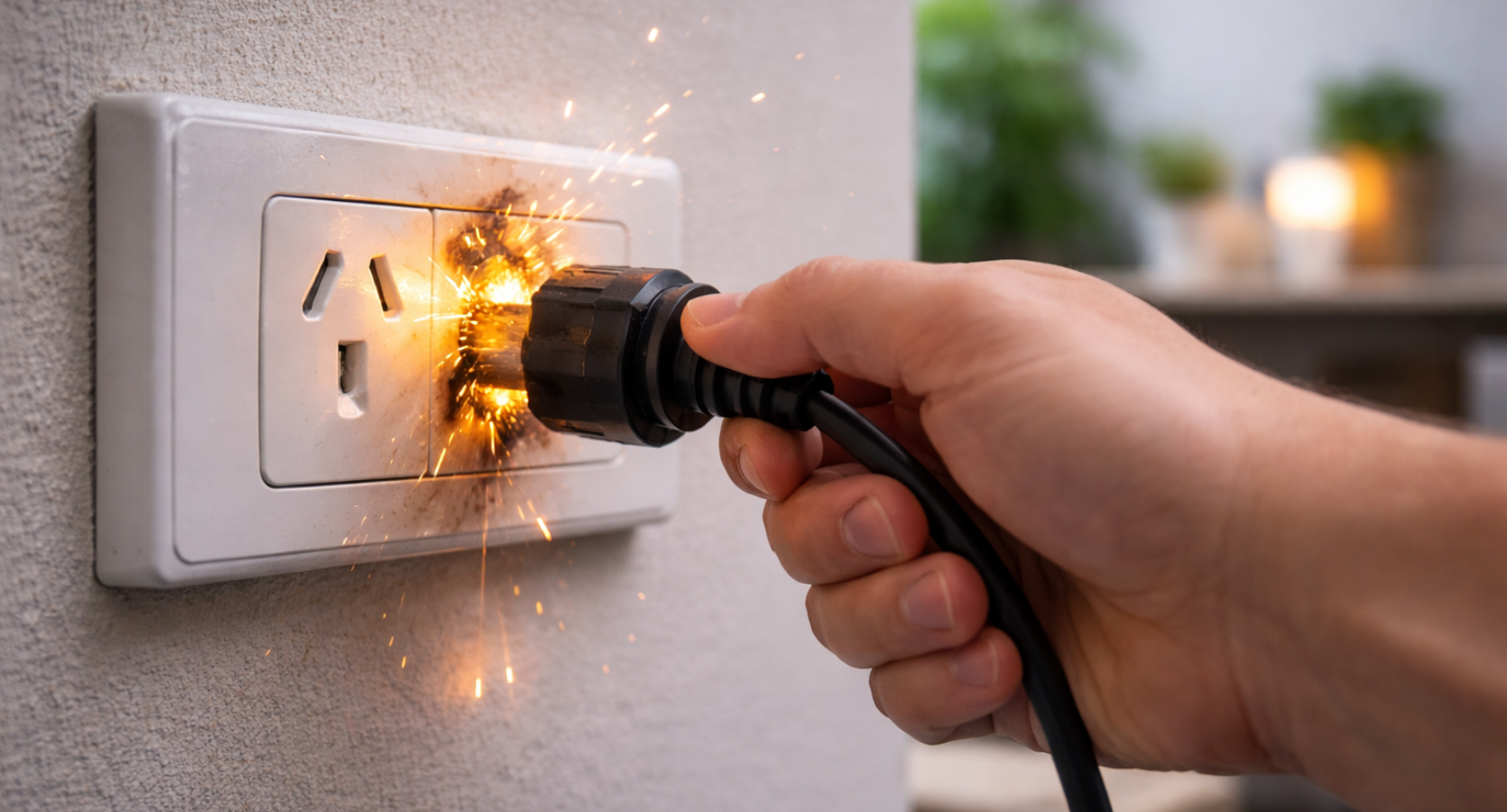
A Brisbane-focused safety guide explaining why a power point sparks when you plug something in, what causes it, when it’s normal vs dangerous, and the warning signs homeowners should never ignore.
If your power point sparks when you plug something in, it gets your attention fast, and it should.
In Brisbane homes, a small spark can sometimes be normal.
But it can also be the early warning sign of a serious electrical fault.
And the difference matters because sparking can lead to:
electrical shock
damaged appliances
burnt wiring behind the wall
melted power points
electrical fire risk
So here’s the rule:
If it sparks once lightly and never again, it may be harmless.
But if it sparks repeatedly, makes noise, smells, or the outlet feels warm; that’s a problem.
Let’s break down what causes sparking, what’s normal, what’s dangerous, and what to do next.
Quick Diagnosis Checklist (What to Observe Immediately)
Before you plug anything else in, check these:
Was the spark tiny (a single flash) or big and loud?
Did it happen only once or every time you plug in?
Is it happening on one outlet or multiple?
Is there a burning smell, crackling, or buzzing?
Does the plug feel loose or sloppy in the socket?
Is the outlet warm to touch?
Did the safety switch or breaker trip?
If there’s heat, smell, repeated sparks, or tripping, treat it as urgent.
1. Small Spark on Plug-In (Sometimes Normal)
Sometimes you’ll see a tiny spark when plugging in high-load appliances like:
kettles
heaters
vacuum cleaners
hair dryers
air fryers
microwaves
This can happen when the appliance draws power immediately and there’s a brief arc as the pins connect.
This type of spark is usually:
small
silent
happens once
not accompanied by smell or heat
If that’s all it is, it’s usually not dangerous.
But if it sparks repeatedly or looks aggressive, don’t ignore it.
2. Loose Power Point Contacts (Very Common in Older Brisbane Homes)
A very common cause of sparking is loose internal contacts.
Over time, the metal contacts inside the power point wear and lose tension.
Loose contacts cause:
poor connection
arcing (electrical jumping)
heat buildup
repeated sparking
Signs:
plug feels loose or wobbly
you see sparks more than once
the outlet feels warm
appliances cut in and out
crackling sound when the plug moves
This can become a fire risk because arcing creates heat behind the wall.
3. Burnt or Damaged Wiring Behind the Outlet
If wiring connections are loose or damaged behind the power point, they can spark internally when load is applied.
Causes include:
loose terminal screws
degraded insulation from heat
incorrect wiring connection
older wiring that’s become brittle
rodent damage in wall cavities
Signs:
burning smell
buzzing or crackling from the wall
power point feels warm or hot
sparks are larger or more frequent
black marks around the outlet
This should be checked immediately by a licensed electrician.
4. Overloaded Circuit or High-Draw Appliance
Sometimes the outlet isn’t the only issue; the circuit is overloaded.
This happens when multiple high-load appliances share the same circuit, especially in older Brisbane homes.
Common scenarios:
kettle + toaster + air fryer in the same kitchen circuit
portable heater + power board in winter
aircon + multiple appliances during summer evenings
Overload can cause:
arcing under load
heat buildup at the outlet
breaker or safety switch trips
Signs:
sparks appear when heavy appliances are used
power point feels warm under load
breaker trips occasionally
lights dim when appliances start
This usually means a load assessment is needed.
5. Water or Moisture (Outdoor and Patio Outlets)
In Brisbane, sparking outdoor power points after rain is common.
Moisture can enter through:
worn seals
cracked covers
insect build-up inside the outlet
water tracking along cable entries
Signs:
sparking happens after rain
outdoor outlet trips the safety switch
moisture visible inside the cover
sparking occurs with outdoor appliances
Moisture + sparking is dangerous. Stop using it until checked.
6. Faulty Appliance Plug or Damaged Power Cord
Sometimes the power point is fine, but the appliance plug is damaged.
Common signs:
sparking happens only with one specific appliance
the plug pins are discoloured
cord is cracked or bent near the plug
appliance causes heat or smell at the plug
If sparking happens only with one device, stop using that appliance.
What You Should NOT Do
Avoid these common mistakes:
don’t keep plugging things in to “test it”
don’t ignore sparking if it happens more than once
don’t use power boards to get around a faulty outlet
don’t spray anything into the outlet
don’t open the power point yourself
Sparking is often the early sign of overheating connections.
When It’s a Safety Emergency (Call Immediately)
Stop using the outlet and call a licensed electrician urgently if you notice:
repeated sparks
crackling, buzzing, or sizzling sounds
burning smell
outlet feels warm or hot
black marks around the power point
power points cutting in and out
safety switch or breaker trips
sparks happen even with low-load appliances
These signs can indicate arcing, burnt wiring, or an overheating connection behind the wall.
One Tiny Spark Can Be Normal. Repeated Sparking Is Not
If the spark was small and happened once, it may simply be normal appliance current draw.
But if you’re seeing repeated sparks or signs of heat, smell, noise, or looseness; it’s not normal, and it can become unsafe quickly.
In Brisbane homes, this is especially common with:
older power points
worn internal contacts
overloaded circuits
moisture exposure in outdoor outlets
The sooner it’s inspected, the safer and cheaper the fix.
👉 Need a licensed electrician in Brisbane to inspect a sparking power point?
Contact Exclusive Electrical & Air to test the outlet safely, check for wiring damage, and repair or replace the power point before it becomes a serious hazard.