Signs Your Switchboard Is Overheating (Before It Catches Fire)
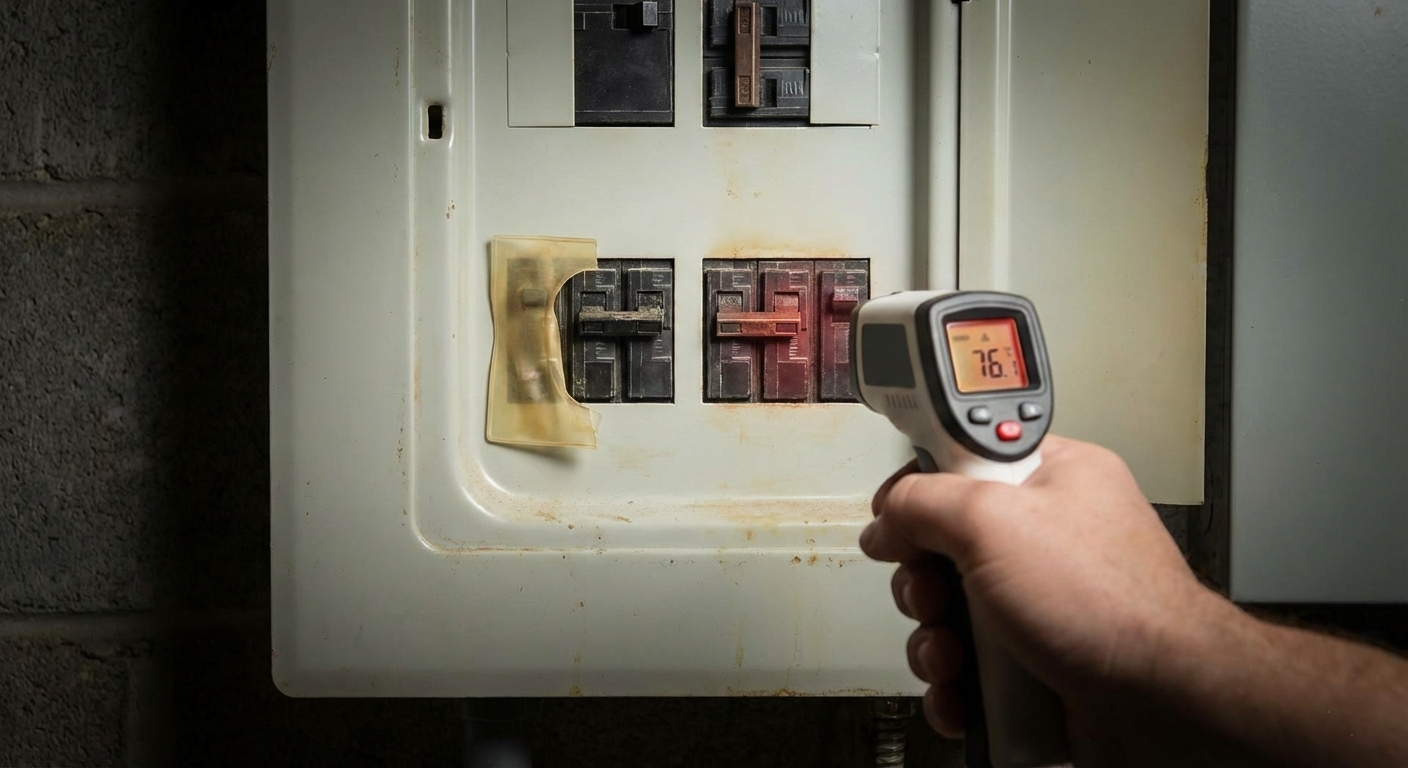
A practical Brisbane homeowner guide explaining the early warning signs of an overheating switchboard, why it happens, and when it becomes a serious fire risk.
Your switchboard is designed to manage electricity safely, not to run hot.
When a switchboard starts overheating, it’s a clear warning that something is wrong. In Brisbane homes, overheating switchboards are one of the most common causes of electrical fires, especially during summer when air conditioners, solar systems, and appliances are under heavy load.
The most dangerous part
Overheating usually starts quietly; long before smoke or flames appear.
Here are the key warning signs every homeowner should know.
1. The Switchboard Feels Warm or Hot to Touch
A switchboard should never feel hot.
If the cover or breakers feel warm, it usually means:
Excessive electrical load
Loose internal connections
Failing breakers
Old wiring struggling with demand
Heat buildup is one of the earliest indicators of fire risk.
2. Burning or Plastic Smell Near the Switchboard
A burning smell is never normal.
Common causes include:
Melting insulation
Overheated wiring
Arcing connections
Breakers failing internally
This smell often appears before visible damage, making it a critical early warning.
If you smell burning plastic, turn off power if safe to do so and get the system checked immediately.
3. Frequent Tripping During Hot Weather
If circuits trip more often during Brisbane’s heatwaves, overheating may be the reason.
Heat increases electrical resistance. Combined with heavy appliance use, this causes:
Breakers to trip repeatedly
Internal components to overheat
Wiring insulation to degrade faster
Repeated tripping is not “just annoying” , it's protective behaviour trying to stop damage.
4. Buzzing, Crackling, or Humming Sounds
Switchboards should be silent.
Unusual noises can indicate:
Loose terminals
Electrical arcing
Failing circuit breakers
Overloaded circuits
These sounds mean electricity is no longer flowing smoothly, a condition that generates intense heat.
5. Discoloured Breakers or Switchboard Cover
Look for:
Yellowing plastic
Brown or black marks
Warped or brittle breaker housings
Discolouration usually means prolonged overheating has already occurred.
At this stage, components may be close to failure.
6. Lights Flickering or Power Fluctuating
Overheating affects current flow.
Common symptoms include:
Lights dimming when appliances start
Flickering on hot days
Inconsistent power to certain areas
These issues often point back to stressed circuits or deteriorating switchboard components.
7. Old or Outdated Switchboard Design
Many Brisbane homes still use:
Ceramic fuses
Early-generation breakers
No RCD protection
No surge protection
Limited circuit separation
These systems were never designed for:
Modern air conditioning loads
Solar systems
EV chargers
Today’s appliance-heavy homes
Old switchboards overheat far more easily.
Why Overheating Leads to Electrical Fires
Electrical fires usually start when:
Heat breaks down insulation
Exposed conductors arc
Flammable materials ignite inside walls or enclosures
Because switchboards concentrate electrical connections in one place, overheating here is especially dangerous.
Many switchboard fires start without warning flames or sparks.
What Causes Switchboard Overheating in Brisbane Homes
Common contributors include:
Overloaded circuits
Loose or corroded connections
Aging wiring
Failing breakers or RCDs
Solar system integration issues
High summer demand
Poor ventilation around the switchboard
Often, more than one issue is present.
What To Do If You Suspect Overheating
Do not ignore it.
Do not keep resetting breakers.
Do not attempt DIY repairs.
The safest next step is a professional electrical inspection to:
Identify heat sources
Check load balance
Test breakers and RCDs
Assess wiring condition
Confirm compliance
Overheating Is the Warning. Fire Is the Consequence
Electrical fires rarely happen without signs.
An overheating switchboard is your system indicating that something is no longer operating safely.
Identifying the issue early can help reduce the risk of:
Electrical fires
Appliance damage
Insurance complications
Emergency power loss during extreme weather
👉 If you’re concerned about switchboard overheating, consider booking an electrical safety inspection with Exclusive Electrical & Air in Brisbane.
A professional inspection can help identify potential risks and advise on appropriate next steps.