How to Choose the Right CCTV System for a Small Brisbane Business
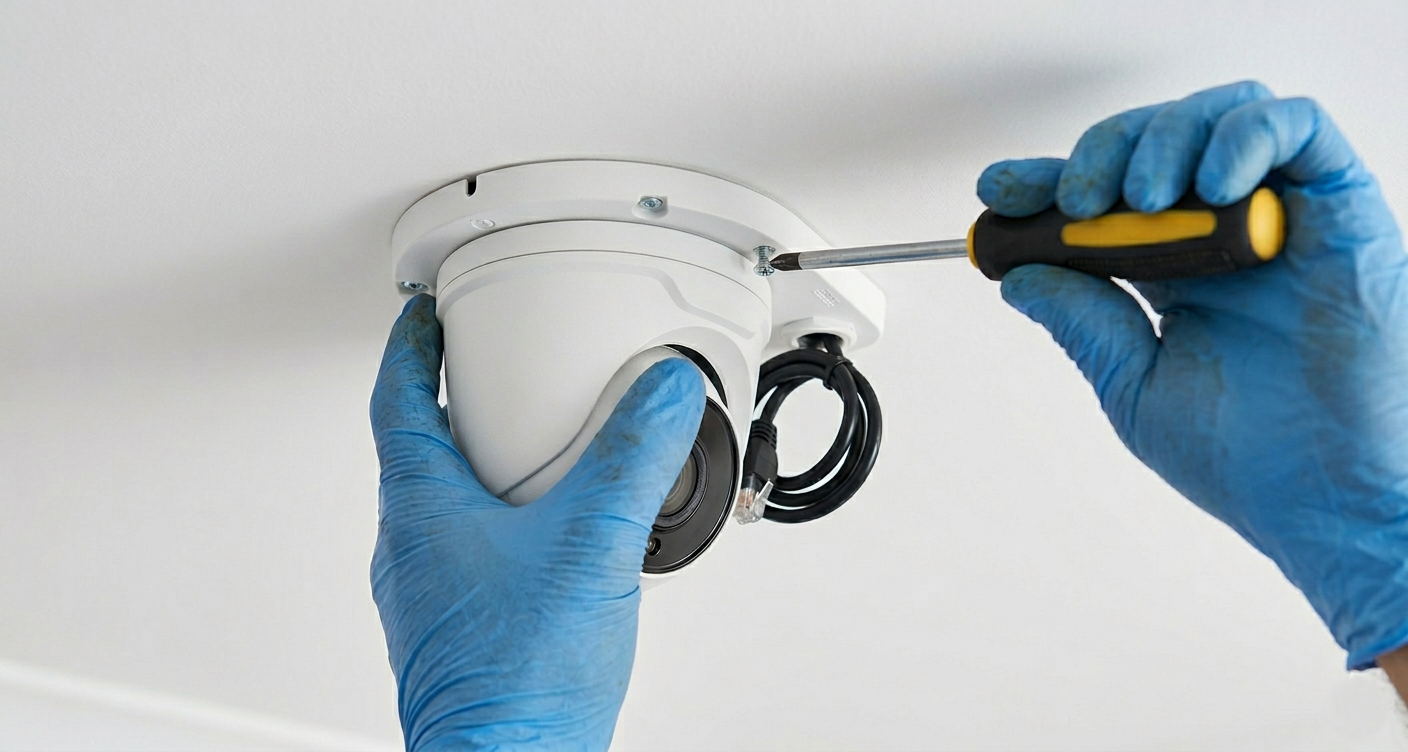
Choosing the right CCTV system for a small Brisbane business means understanding your risk profile, mapping your premises properly, and matching the system to what you actually need — not to a standard package. Here's a practical guide to getting that decision right from the start.
How to Choose the Right CCTV System for a Small Brisbane Business
Earlier this year, we assessed a small retail tenancy in Chermside that had been running on a four-camera wireless system the owner had installed himself two years prior. He'd come to us because stock had been going missing from the stockroom and he needed footage to act on it. When we reviewed the system, two of the four cameras had dropped off the network months earlier — he hadn't noticed — and the remaining two had never covered the stockroom at all. The system had given him confidence he didn't have reason to have, and cost him nothing in equipment but significantly more in undetected losses.
That's the most common mistake we see with commercial CCTV in Brisbane: not the absence of cameras, but the presence of the wrong ones, in the wrong places, with no one having thought through what the business actually needed to protect.
With over 10 years of experience and more than 2,000 customers across Brisbane — residential and commercial — here's what we've learned about getting this decision right from the start.
What CCTV System Does a Small Brisbane Business Actually Need?
For most small Brisbane businesses operating from permanent premises, a wired NVR (Network Video Recorder) system with IP cameras is the most reliable and cost-effective long-term solution. The right camera count, resolution, and storage configuration depends on your premises layout, business type, and specific risk profile — not on a standard package. A site assessment with a licensed installer is the most reliable way to match a system to your actual needs.
Start With Your Risk Profile — Not the Spec Sheet
Before comparing cameras or calling an installer, it's worth being clear about what you're actually trying to protect against. A café in West End has different exposures than a tradie's workshop in Rocklea or a boutique in Paddington. The system needs to match the business.
The most common reasons small Brisbane businesses invest in commercial CCTV are:
Deterring and detecting break-ins and after-hours intrusion
Monitoring staff and customer areas to reduce internal theft
Protecting against fraudulent liability claims, particularly slip-and-fall incidents
Providing evidence in disputes with staff, customers, or contractors
Meeting insurance requirements or negotiating lower premiums
Monitoring remote premises the owner isn't always physically present at
Most small businesses are dealing with more than one of these concerns at once, and the system design needs to reflect that. A system built purely around perimeter security will miss internal theft. A system covering only entry points won't capture what happens at the point of sale or in a stockroom.
In our experience assessing commercial properties across Brisbane — from Indooroopilly shopping tenancies to Hamilton industrial premises — the businesses that get the most out of their CCTV investment are the ones who are specific about their priorities before the first camera is mounted.
Ready to work through your coverage priorities with a licensed installer? 📞 +61 468 813 833 | Book Your Commercial CCTV Assessment →
Key Locations That Need Coverage in a Small Business
Once you're clear on your priorities, the next step is mapping the physical spaces that need camera coverage. For most small Brisbane businesses, the core locations are:
External perimeter: Entry and exit points, car parks, loading areas, and external storage. After-hours break-ins almost always involve an external entry point — cameras here are both a deterrent and a source of evidence.
Point of sale: The counter or register area is a priority for any retail or hospitality business. Footage of transactions protects against both customer disputes and internal discrepancies.
Stockroom and storage areas: High-value stock in a back room is a common target for internal theft. A camera covering access to these spaces creates accountability without being intrusive.
Staff areas: Cameras in break rooms or bathrooms are not permitted under Queensland privacy law. Cameras covering entry and exit points to staff areas, or workspaces where business assets are handled, are generally appropriate.
Reception and public areas: For businesses that receive clients or customers, a camera covering the reception or waiting area provides a record of who entered and when — relevant in a range of dispute scenarios.
The specific combination will differ by business type. A Toowong office building has different priorities than a Chermside retail strip. The point is to map your own premises against these categories rather than starting with a standard package and working backwards.
Wired vs Wireless CCTV for Brisbane Commercial Premises
The wired versus wireless question applies to small businesses as much as it does to residential properties — with some additional commercial considerations.
Wired NVR systems remain the standard for most permanent commercial installations. Reliability, consistency, and footage integrity are the reasons. A business environment introduces additional risks to wireless systems: denser Wi-Fi networks, more devices competing for bandwidth, and higher security requirements around footage that may need to hold up as evidence.
For small businesses operating out of leased premises, the installation question gets more complex. Significant cabling work in a leased space typically requires landlord approval, and the question of what happens to the installed system at lease end needs to be addressed upfront. Some business owners in this position opt for a hybrid approach: wired cameras at permanent locations like entry points and the point of sale, supplemented by wireless cameras in internal areas where running cable would require landlord negotiation.
For business owners who own their premises outright, a fully wired system is almost always the better long-term investment — lower maintenance, higher reliability, and no dependency on Wi-Fi stability.
We also regularly assess whether a new commercial CCTV installation can integrate with an existing alarm system. In many cases it can — and a licensed electrician handling your CCTV installation is best placed to manage that electrical integration properly, rather than having two separate trades attempting to connect systems they didn't both install.
CCTV Installation in a Leased Brisbane Business Premises
This deserves its own section because it's one of the most common situations we navigate with small business clients — and one of the most frequently mishandled.
Before any cabling work begins in a leased commercial space, you need written landlord approval. Most leases require this for any structural or electrical modifications, and cabling through walls or ceilings qualifies. Getting this in writing protects you and clarifies the landlord's expectations about what happens when the lease ends.
Key questions to resolve before committing to an installation in a leased space:
Does your lease explicitly permit electrical modifications? If not, does your landlord?
Who owns the equipment at lease end — does it stay with the premises or leave with you?
If you take the system with you, what reinstatement obligations does that create (patching walls, making good cable penetrations)?
Is there an existing comms rack or data infrastructure you can tie into, reducing the need for new cabling?
In our experience working with tenants in inner-city Brisbane commercial premises and suburban retail strips from Aspley to Acacia Ridge, these questions are much easier to resolve before installation than after. A short conversation with your landlord and a clear scope of works from your installer is all it takes.
Resolution and Storage: Getting the Specifications Right
For a small business, camera resolution and storage capacity are worth thinking through more carefully than they often are for residential installations — because footage may need to serve as evidence.
Resolution
Standard HD cameras at 1080p are adequate for most small business applications — clear enough to identify faces, read number plates at close range, and document incidents. Higher resolution cameras at 4K are worth considering for specific locations where detail is critical, such as a point-of-sale camera where you need to clearly read transaction details. Running every camera at 4K significantly increases storage requirements, so a targeted approach is more practical than blanket high-resolution coverage.
How Much Storage Does a Small Business CCTV System Need?
Most small Brisbane businesses should retain footage for a minimum of 30 days. Some industries or contexts warrant longer retention. The practical consideration is matching your NVR's hard drive capacity to your camera count, resolution settings, and retention requirement.
As a rough guide for 30 days of storage:
4 cameras at 1080p — around 1–2TB
8 cameras at 1080p — around 2–4TB
4 cameras at 4K — around 4–6TB
8 cameras at 4K — around 8–12TB
These are approximate figures based on standard compression and continuous recording. Motion-triggered recording reduces storage requirements significantly. An installer can calculate your specific requirements based on the system design.
Remote Access and Monitoring
For small business owners who aren't always on premises, remote access to live and recorded footage via a smartphone app is a genuinely useful feature. Most modern NVR systems support it, and setting it up is standard practice as part of installation.
The more important question is whether you need active monitoring or passive recording. Most small Brisbane businesses operate on a passive model: cameras record continuously or on motion trigger, and footage is reviewed after an incident. Active monitoring — where footage is watched in real time by a security operator — is typically reserved for higher-risk commercial premises and carries an ongoing cost.
For most small businesses, passive recording with remote access is the right balance between cost and capability.
Queensland Privacy and Compliance Rules for Business CCTV
Operating a CCTV system on commercial premises in Queensland comes with obligations that are worth understanding before the system goes live.
The Privacy Act 1988 (Cth) applies to businesses with an annual turnover above $3 million, and to some smaller businesses in specific sectors regardless of turnover. The Information Privacy Act 2009 (Qld) and general Australian Privacy Principles apply to how footage is collected, stored, and disclosed — regardless of business size.
In practice, this means:
Signage notifying customers and staff that CCTV is in operation is strongly recommended and in many contexts required
Footage should be stored securely with access limited to authorised personnel
Retention periods should be defined as policy, with footage deleted when no longer needed for a legitimate purpose
Footage should not be disclosed to third parties except in specific circumstances, such as a law enforcement request
On the electrical compliance side: under the Electrical Safety Act 2002 (Qld), all electrical work associated with a CCTV installation must be carried out by a licensed electrician. This includes connecting power to cameras, running cabling, and any circuit or switchboard work. The installation must be covered by a Certificate of Testing and Compliance (CTC) — the official Queensland safety record confirming the work meets the required standard.
For most small businesses, compliance with both the privacy and electrical requirements is straightforward. Clear signage, a defined retention policy, sensible access controls, and a licensed installer covering a compliant CTC covers the basics without significant administrative burden.
How Much Does a Small Business CCTV System Cost in Brisbane?
Small business owners often approach CCTV with either a lower budget than the job requires or a higher one than necessary. Here are realistic installed price ranges for professionally completed commercial CCTV installations in Brisbane:
Entry level: 4-camera wired NVR system: $1,500–$2,500 installed Covers core entry points and point of sale. Appropriate for a compact single-room premises with straightforward coverage requirements.
Mid-range: 6–8 camera system: $2,500–$4,500 installed Mix of internal and external coverage, higher resolution cameras at key locations, and expanded storage. Right for most small Brisbane businesses with multiple zones to cover.
Higher end: larger system with 4K and extended storage: $4,500–$7,000+ installed Businesses with more complex premises, higher-value assets, or specific evidentiary or insurance requirements — think a Rocklea warehouse, a Hamilton industrial facility, or a multi-tenancy inner-city commercial building.
Exact pricing depends on premises layout, camera count, cable run complexity, and scope. A site assessment produces a fixed quote before any work starts.
📞 +61 468 813 833 | Get a Fixed Quote for Your Brisbane Business →
Frequently Asked Questions
What type of CCTV system is best for a small business in Brisbane? For most small Brisbane businesses operating from permanent premises, a wired NVR system with IP cameras is the most reliable and cost-effective long-term solution. The right camera count, resolution, and storage configuration depends on your premises layout, business type, and coverage priorities. Learn more about our commercial CCTV installation Brisbane service →
How many cameras does a small business need? It depends on the premises. A compact single-room retail space might be adequately covered by four cameras. A business with a shopfront, stockroom, staff area, and external car park could need six to eight or more. A site assessment is the most reliable way to determine the right number.
Do I need to display signage if I have CCTV in my Brisbane business? Yes, in most cases. Notifying staff and customers that CCTV is in operation is both a consideration under Australian privacy principles and standard practice for any business operating a surveillance system. Signage at all entry points is the standard approach.
Can I install CCTV in a leased commercial premises in Brisbane? You can, but significant installation work typically requires landlord approval. Clarify the terms of your lease and obtain written consent before committing to a wired installation. Resolve what happens to the system at the end of the lease upfront — it's a much easier conversation before installation than after.
How long should a small business retain CCTV footage? A minimum of 30 days is appropriate for most small businesses. Some industries or contexts warrant longer retention. Define your retention period as a written policy and apply it consistently, deleting footage when it is no longer needed for a legitimate purpose.
Does a small business CCTV installation need to be done by a licensed electrician in Queensland? Yes. Under the Electrical Safety Act 2002 (Qld), any electrical work associated with the installation — connecting power to cameras, running cabling, switchboard work — must be carried out by a licensed electrician and covered by a Certificate of Testing and Compliance. A licensed electrician who handles commercial CCTV installations can complete the full job under one licence. See how we handle the full installation →
Will CCTV affect my business insurance premium? It may. Some insurers factor professionally installed security systems into their assessment of a business's risk profile, which can influence premiums for contents, theft, and public liability cover. Contact your insurer before committing to a system to understand how they treat security upgrades.
Get a System That Actually Fits Your Business
A generic residential CCTV package is not the right answer for a Brisbane business. Neither is an enterprise-level system that costs more than the risk warrants. The right system is the one designed around your specific premises, your specific risks, and your specific budget.
At Exclusive Electrical & Air, we're a licensed Queensland electrical contractor with over 10 years of experience and more than 2,000 customers across Brisbane. We work with small business owners to assess their premises, design systems that address their actual coverage needs, and carry out professional installations that meet Queensland's electrical and privacy standards — from a compact retail setup in the inner suburbs to a larger commercial premises in Rocklea or Acacia Ridge.
And while we're on-site, we can also assess your smoke alarm compliance ahead of Queensland's 1 January 2027 deadline — no second visit needed.
📞 +61 468 813 833 | Book Your Commercial CCTV Assessment →
10+ years experience. 2,000+ Brisbane customers. Licensed Queensland Electrical Contractor. Workmanship warranty on every installation. Most Brisbane installations booked within 3–5 business days.