Smoke Alarm Rental Compliance in Brisbane: What Property Managers Need to Know
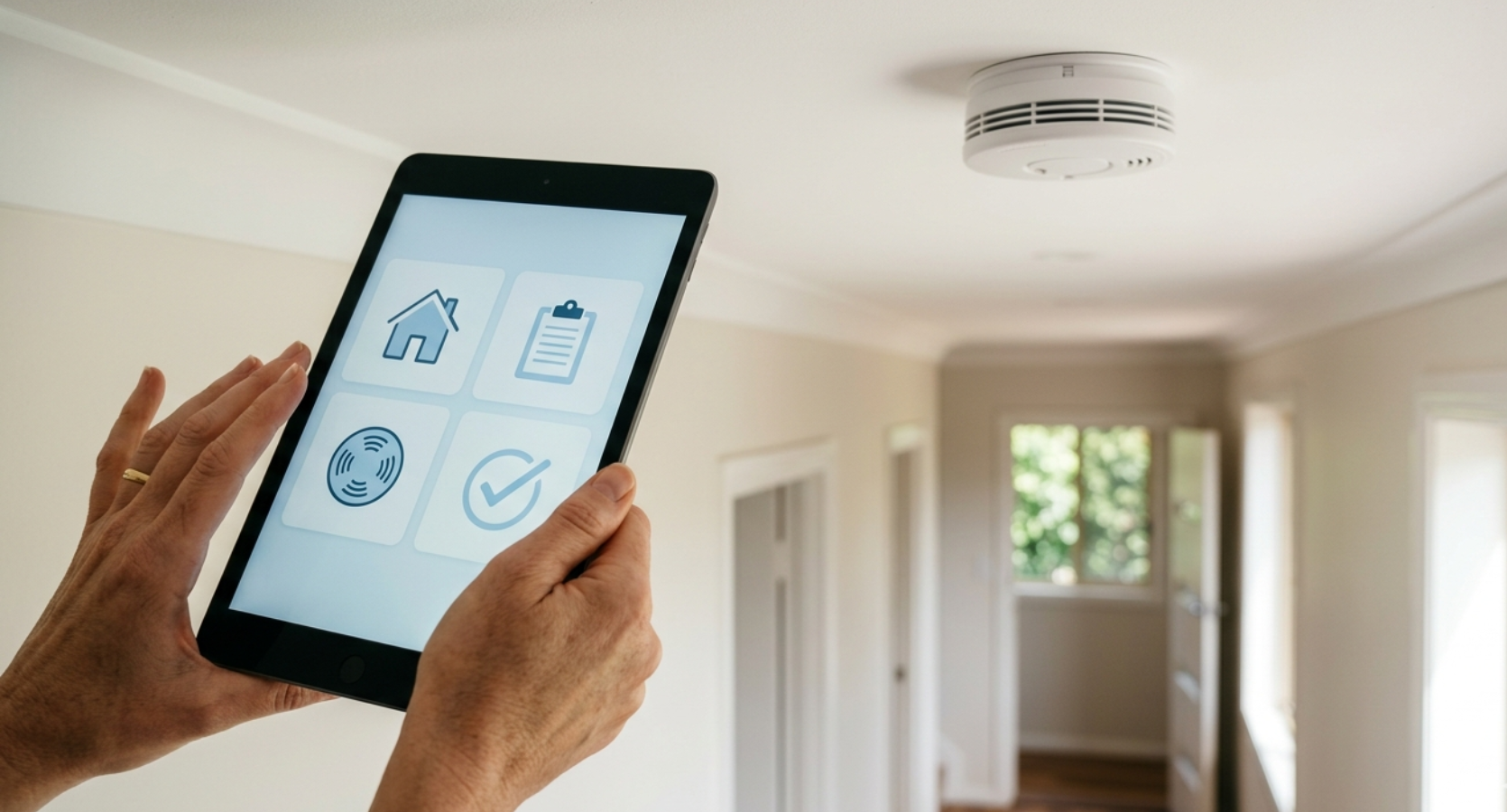
Queensland's smoke alarm compliance deadline for rental properties passed on 1 January 2022, and every Brisbane property manager needs to know exactly what that means in practice. From pre-tenancy obligations and split responsibilities during a tenancy, to the consequences of getting it wrong, here's a clear guide to managing smoke alarm compliance across a rental portfolio.
Smoke Alarm Rental Compliance in Brisbane: What Property Managers Need to Know
Property managers in Brisbane are operating in one of the most compliance-heavy environments the Queensland rental market has seen in decades. Between legislative updates, tightening tenancy laws, and landlords who don't always keep up with their obligations, smoke alarm compliance has become one of the areas where things can go wrong quietly and consequentially.
The risks aren't abstract. A non-compliant rental property exposes the landlord to financial liability, gives tenants legal grounds to terminate their lease, and in the worst-case scenario, contributes to an outcome no one wants to be responsible for. As the property manager, you're the one on the ground, which means compliance sits largely in your hands.
Here's a clear breakdown of what Queensland law requires, what your obligations look like in practice, and how to manage it across a rental portfolio without it becoming a constant headache.
The Legislative Framework You're Working Within
Queensland's smoke alarm laws sit under two pieces of legislation that property managers need to understand together rather than in isolation.
The Fire and Emergency Services Act 1990 (Qld) sets the technical standards for smoke alarm type, placement, power source, and interconnection. This is the legislation that defines what a compliant alarm actually looks like.
The Residential Tenancies and Rooming Accommodation Act 2008 (Qld) sets the obligations for landlords and property managers around installation, maintenance, and pre-tenancy checks. This is the legislation that governs what you're required to do and when.
Understanding both matters because one tells you what to install, and the other tells you when and how to manage it across a tenancy lifecycle.
What Constitutes a Compliant Smoke Alarm in a Queensland Rental
Before managing compliance, it helps to be clear on what compliance actually looks like. Under Queensland law, every smoke alarm in a rental property must meet all of the following criteria:
Photoelectric detection technology — ionisation alarms do not meet current QLD requirements
Powered by mains electricity with a battery backup, or fitted with a sealed non-removable 10-year lithium battery
Interconnected with all other alarms in the dwelling, so that when one activates, all alarms sound simultaneously
Positioned in every bedroom, in every hallway connecting bedrooms to the rest of the home, and on every storey of the dwelling
Within its service life — most alarms carry a ten-year lifespan from the manufacture date, which is printed on the unit itself
A property that has photoelectric alarms but no bedroom coverage is not compliant. A property with interconnected alarms that are past their manufacture date is not compliant. Partial compliance is not compliance.
The January 2022 Deadline and What It Means for Your Portfolio
The compliance deadline that matters most for property managers arrived on 1 January 2022. From that date, all Queensland rental properties must have fully compliant smoke alarms installed before a new tenancy agreement is signed or an existing lease is renewed.
This isn't a transitional arrangement or a soft target. It is the current legal standard, and it applies to every property in your portfolio that is being leased or re-leased right now.
For context, the broader QLD smoke alarm rollout has three stages. New builds and substantially renovated homes were required to comply from 1 January 2017. Rental properties and properties being sold came under the new rules from 1 January 2022. All remaining owner-occupied homes must comply by 1 January 2027. As a property manager, your entire portfolio is already in the mandatory compliance window.
Pre-Tenancy Obligations: What Must Happen Before a Tenant Moves In
This is where property managers carry the most direct responsibility. Under Queensland tenancy legislation, the following must be completed within 30 days before a new tenancy begins:
Test every smoke alarm in the property to confirm it activates correctly
Clean each alarm to remove dust and debris that can affect sensor performance
Replace any battery that is flat or approaching end of life
Replace any alarm that has reached the end of its ten-year service life
Confirm that placement meets current QFES requirements, including bedroom coverage
These aren't optional steps. They form part of the landlord's legal obligation under the tenancy legislation, and as the managing agent, fulfilling them on the landlord's behalf is standard practice. Keeping written records of each check, including the date, what was done, and who carried it out, is strongly advisable even where not explicitly mandated.
During the Tenancy: Understanding the Split Responsibility
Once a tenancy is underway, smoke alarm obligations are shared between the landlord and the tenant, and understanding that split is important for managing disputes.
Landlords, through their property manager, are responsible for:
Repairing or replacing a smoke alarm within five business days of being notified it is not working
Replacing any alarm that reaches end of life during the tenancy
Ensuring the property remains compliant if a new fixed-term agreement is entered
Tenants are responsible for:
Testing and cleaning alarms at least once per year during the tenancy
Replacing removable batteries as needed during the tenancy
Notifying the property manager promptly if an alarm is not working
Not removing, tampering with, or disconnecting any alarm
Where a dispute arises about whether an obligation was met, documentation becomes critical. A pre-tenancy compliance record and a clear paper trail of any fault notifications and responses will protect both the landlord and the agency if a matter proceeds to the Queensland Civil and Administrative Tribunal (QCAT).
What Happens When a Property Isn't Compliant
The consequences of non-compliance are worth understanding clearly, because they extend beyond a fine.
Under Queensland tenancy legislation, a tenant who moves into a property with non-compliant smoke alarms has grounds to issue a notice to remedy the breach. If the landlord fails to remedy it within the required timeframe, the tenant can apply to QCAT or, in some circumstances, terminate the tenancy.
For properties being sold, buyers can claim compensation of up to 0.15% of the purchase price if alarms are non-compliant at settlement. On a $750,000 Brisbane property, that's over $1,100 in direct compensation, separate from any legal costs.
The most serious exposure sits with insurance. A fire occurring in a rental property that was not smoke alarm compliant at the time of the incident can give an insurer grounds to reduce or deny a claim. That outcome, while not guaranteed, is the kind of risk that no landlord or property manager should be comfortable carrying.
Managing Compliance Across a Portfolio
For property managers overseeing multiple Brisbane rentals, across suburbs like Coorparoo, Nundah, or anywhere else in the city, managing smoke alarm compliance property by property can become genuinely complex without a system behind it.
A practical approach for portfolio-level compliance includes:
Auditing every property in the portfolio against current QLD requirements, starting with alarm type, placement, and manufacture dates
Flagging any property with alarms approaching ten years from manufacture for proactive replacement rather than waiting for end-of-life chirping to prompt action
Building pre-tenancy smoke alarm checks into the standard condition report and handover process as a non-negotiable step
Partnering with a licensed electrician for portfolio-level installations and inspections rather than managing individual jobs ad hoc
Maintaining a compliance record for each property that documents installation dates, alarm types, test results, and any remediation work carried out
Systematising compliance removes the risk of it slipping through the cracks during a busy leasing period, and it gives landlords confidence that their managing agent is across the detail.
FAQ
Who is legally responsible for smoke alarm compliance in a Queensland rental property? The legal obligation sits with the landlord as the property owner. In practice, property managers acting on the landlord's behalf carry out the pre-tenancy checks and maintenance obligations. The agency's management agreement should clearly define the scope of those responsibilities.
Can a tenant terminate their lease if smoke alarms aren't compliant? Yes. Under Queensland tenancy legislation, a tenant can issue a notice to remedy a breach if the property is not compliant at the start of a tenancy. If the breach isn't remedied within the required timeframe, the tenant may apply to QCAT or terminate the tenancy in some circumstances.
How often do smoke alarms need to be tested in a Queensland rental? The landlord must test and clean all alarms within 30 days before a new tenancy begins. During the tenancy, the tenant is responsible for testing and cleaning alarms at least once per year and for replacing removable batteries as needed.
What type of smoke alarm is required in Queensland rental properties? Photoelectric alarms only. They must be powered by mains electricity with battery backup, or a sealed non-removable 10-year lithium battery. All alarms must be interconnected.
Do smoke alarms need to be in every bedroom of a Brisbane rental property? Yes. Queensland law requires alarms in every bedroom, in every hallway connecting bedrooms to the rest of the home, and on every storey of the dwelling.
How long do smoke alarms last before they need to be replaced? Most photoelectric smoke alarms have a ten-year service life from the date of manufacture, which is printed on the unit. An alarm at or past that date must be replaced, regardless of whether it still appears to be functioning.
Can a property manager arrange smoke alarm installation without a licensed electrician? Hardwired alarms must be installed by a licensed electrician. Some battery-powered wireless alarms can be owner or agent arranged without an electrician, but placement must still meet QFES standards. For portfolio-level compliance, working with a licensed electrician for both installation and verification is the most defensible approach.
Keep Your Portfolio Compliant With Exclusive Electrical & Air
Queensland's smoke alarm laws are not going to get simpler, and the compliance window for rental properties is already well open. Every new tenancy signed without a compliant setup in place is a liability your landlords, and your agency, are carrying unnecessarily.
At Exclusive Electrical & Air, we work with property managers and landlords across Brisbane to audit existing alarms, carry out compliant installations, and provide the documentation that backs up your compliance records. Whether you're managing five properties or fifty, we can help you build a straightforward process that keeps every tenancy protected and every landlord covered.
Get in touch with Exclusive Electrical & Air today to discuss a smoke alarm compliance solution for your rental portfolio.