How Much Can a Solar Battery Actually Save You in Brisbane? (2026 Numbers)
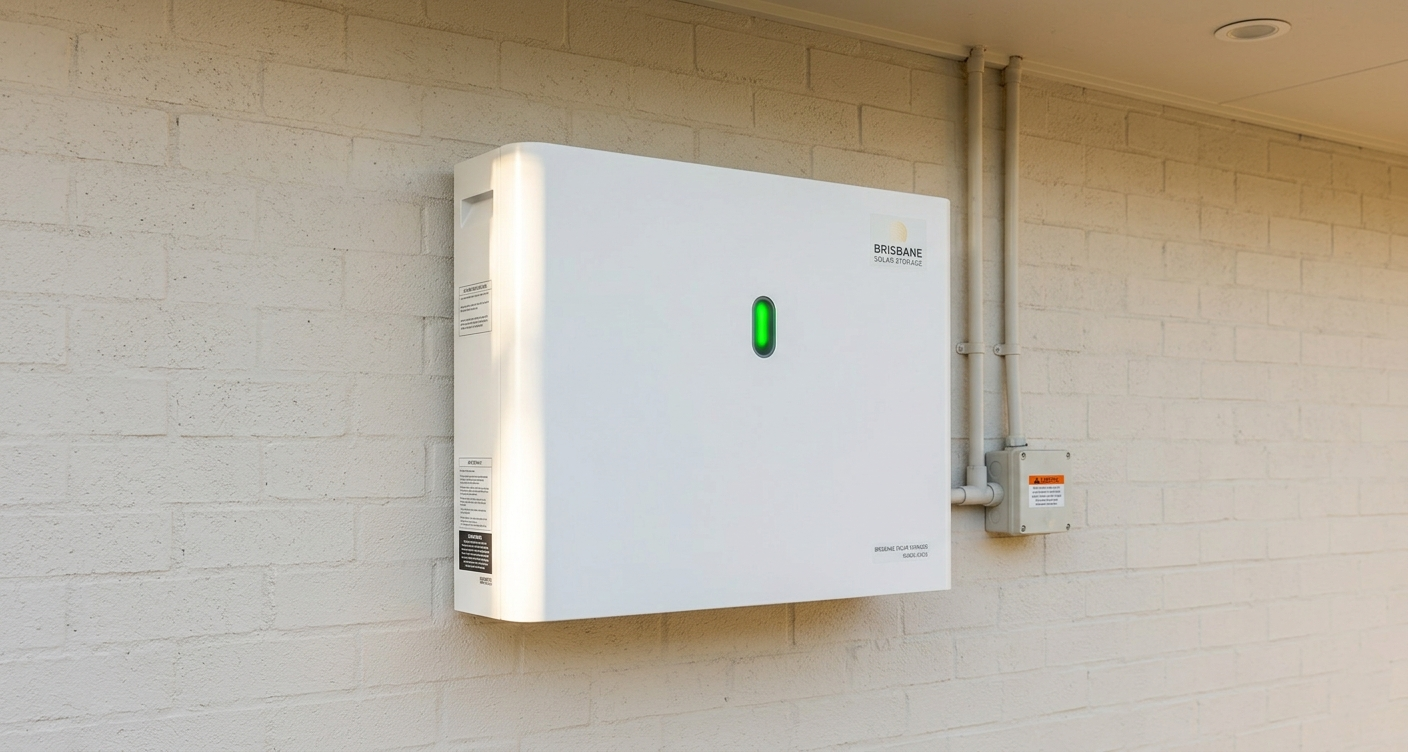
Solar batteries can generate meaningful savings for Brisbane homeowners in 2026, but the numbers vary significantly depending on household consumption, tariff structure, and system size. Brisbane households can expect to save approximately $730 to $2,000 per year depending on their situation, with payback periods ranging from 8 to 19 years. Here's an honest breakdown of what a battery actually saves across three representative household scenarios, what improves the return, and how to assess whether the investment stacks up for your situation.
Solar Battery Savings Brisbane: The Honest 2026 Numbers
Solar battery savings in Brisbane in 2026 range from approximately $730 to $2,000 per year depending on household size, evening electricity consumption, and tariff structure. That's a wide range, and the reason it's wide is that the savings a battery generates are specific to your household, not a marketing average.
With over 10 years of experience and 2,000-plus electrical and solar jobs completed across Brisbane, Exclusive Electrical & Air holds both a Queensland electrical contractor licence and Clean Energy Council accreditation, meaning the full battery installation is handled by one team under one standard. We recently installed a 13.5kWh battery system for a family in The Gap with an existing 10kW solar system. Based on their evening consumption profile and time-of-use tariff, the projected annual saving is $1,400, with payback expected within 10 years.
We'd rather tell you upfront if the numbers don't stack up for your household than sell you a $15,000 system that takes 20 years to pay back. Here's the honest breakdown.
How Much Can a Solar Battery Save in Brisbane?
A Brisbane household can save approximately $730 to $2,000 per year from solar battery storage depending on system size, evening electricity consumption, and tariff structure. Households on time-of-use tariffs with high evening usage sit at the upper end. The scenarios below cover three representative Brisbane household types with real numbers for each.
How Does a Solar Battery Work for Brisbane Homes?
Before getting into savings figures, it helps to be precise about what a home battery does and doesn't do, because misunderstanding this is where inflated expectations come from.
A solar battery stores excess solar energy generated by your panels during daylight hours that would otherwise be exported to the grid. Instead of sending that energy to the grid for a feed-in tariff credit, you store it in the battery and draw on it in the evening and overnight when your panels aren't producing.
What a battery does not do is generate additional solar energy. It doesn't make your panels more productive. It doesn't reduce your daytime energy consumption. It simply shifts energy you're already generating from a time when you don't need it to a time when you do.
Brisbane averages approximately 5.2 peak sun hours per day, one of the highest figures in Australia, which is why Queensland households are among the best positioned in the country to benefit from battery storage. The solar generation is there. The question is how much of it is currently being wasted on low-value grid exports.
As a starting point, size a battery to cover your typical evening consumption rather than your total daily consumption. A household using 10 to 12kWh per evening typically suits a 10 to 13.5kWh battery. A solar battery installation Brisbane assessment will give you the right sizing recommendation based on your actual consumption data.
Queensland Feed-In Tariff vs Grid Rates: The 2026 Savings Gap
This is the core of the battery savings calculation, and Queensland's current energy pricing environment makes it worth understanding clearly.
Queensland's feed-in tariff, the rate retailers pay for solar energy exported to the grid, has declined steadily as solar adoption has grown. In 2026, most Queensland households receive between 5 and 10 cents per kilowatt-hour for exported solar energy depending on their retailer and plan. The days of premium feed-in tariffs above 20 cents are well behind us for most households.
The rate Queensland households pay to import energy from the grid tells a different story. Standard grid electricity in Queensland in 2026 sits in the range of 28 to 35 cents per kilowatt-hour depending on the retailer, plan, and network tariff structure. Time-of-use tariffs, which charge different rates depending on the time of day, typically apply higher rates during peak evening hours between 4pm and 9pm and lower rates overnight and on weekends. On a time-of-use plan, peak evening rates can push above 40 cents per kilowatt-hour.
The arbitrage opportunity for a battery is the difference between those two numbers. Every kilowatt-hour stored in a battery instead of being exported at 6 to 8 cents, then used in the evening instead of buying at 30 to 33 cents, generates a saving of roughly 22 to 27 cents per kilowatt-hour. Across a year of daily cycling, that adds up to a meaningful annual figure. Current Queensland tariff rates can be reviewed through the Queensland Competition Authority electricity price monitoring.
Solar Battery Savings by Household Type
Small Household (Flat Tariff)
Battery Size: 10kWh
Estimated Annual Savings: ~$730
Typical Payback Period: 16 to 19 years
Family Household (Flat Tariff)
Battery Size: 13.5kWh
Estimated Annual Savings: ~$1,095
Typical Payback Period: 13 to 16 years
High-Consumption Household (Time-of-Use Tariff)
Battery Size: 15kWh
Estimated Annual Savings: ~$1,600 to $2,000
Typical Payback Period: 8 to 11 years
Scenario One: Small Household, 6.6kW Solar System, 10kWh Battery
A two-person household in a three-bedroom home in Everton Park with a 6.6kW solar system currently exports an average of 15 to 20 kilowatt-hours per day. Evening grid consumption runs at around 8 to 10 kilowatt-hours per day.
A 10kWh battery, such as a Sungrow SBR system at 9.6kWh or an equivalent BYD Battery-Box unit, covers the majority of that evening consumption. Assuming an average of 8kWh of usable storage cycled daily at a saving of 25 cents per kilowatt-hour, annual savings sit at approximately $730 per year.
On a battery system costing $12,000 to $14,000 installed, the payback period at this saving rate is approximately 16 to 19 years, which exceeds the warranted life of most batteries on the market today.
Scenario Two: Family Household, 10kW Solar System, 13.5kWh Battery
A four-person household in a four-bedroom home in Carindale with a 10kW solar system and high daytime generation. Current exports average 25 to 35 kilowatt-hours per day. Evening grid consumption runs at 12 to 15 kilowatt-hours per day.
A 13.5kWh Tesla Powerwall 2 or equivalent covers the majority of evening consumption. With 12kWh of usable storage cycled daily at 25 cents per kilowatt-hour saving, annual savings sit at approximately $1,095 per year. A battery system in this configuration typically costs $14,000 to $17,000 installed.
Payback period at this rate is approximately 13 to 16 years. For a battery with a 10-year performance warranty and a real-world life expectancy of 12 to 15 years, the financial case is marginal without additional factors improving the return.
Scenario Three: High-Consumption Household With Time-of-Use Tariff
A large family household in Kenmore on a time-of-use electricity tariff, with peak rates above 40 cents per kilowatt-hour between 4pm and 9pm. Evening consumption runs at 15 to 18 kilowatt-hours per day, almost entirely falling within the peak rate window.
A 15kWh battery system, such as an Alpha-ESS Storion or BYD Battery-Box Premium HVS, covering evening peak consumption generates savings of 32 to 35 cents per kilowatt-hour rather than the 25 cents applicable to a flat-rate tariff household. Annual savings in this scenario can reach $1,600 to $2,000. On a battery system costing $15,000 to $18,000 installed, the payback period improves to approximately 8 to 11 years, which sits within the warranted battery life.
This is the scenario where the financial case for a battery is strongest in Brisbane in 2026.
If you found your household type in those scenarios, the next step is getting the specific numbers for your home rather than an industry average.
📞 0468 813 833 | Book Your Solar Battery Assessment
Free on-site assessment. No obligation. We'll tell you honestly whether the numbers work for your household. Clean Energy Council accredited. Licensed Queensland Electrical Contractor.
How to Improve Your Solar Battery ROI in Brisbane
Higher Evening Consumption
A household that runs air conditioning through Brisbane's long summer evenings has more grid energy to displace with stored solar than one with modest evening usage. Higher evening consumption directly improves the battery return.
Time-of-Use Tariff
Switching to a time-of-use tariff when installing a battery is one of the most effective ways to improve return on investment. The higher per-kilowatt-hour saving during peak evening hours significantly improves the annual saving figure. Homes across Mitchelton, Pullenvale, and outer western suburbs where evening consumption tends to run higher benefit most from this combination.
Virtual Power Plant Participation
Virtual power plant programs are available through some Queensland retailers and battery manufacturers. A virtual power plant aggregates home batteries and dispatches them collectively into the grid during high-demand periods, paying the homeowner a participation fee or energy credit. For eligible systems, virtual power plant participation can add $200 to $500 or more to annual returns depending on the program.
Battery Monitoring
Modern battery systems include smartphone monitoring apps that show real-time generation, consumption, and battery state, letting you track the savings as they accumulate. For a financially motivated buyer, being able to see the numbers in real time is both practically useful and motivating for optimising usage patterns.
Avoiding Battery Degradation
Correct system sizing and avoiding consistent full charge and deep discharge cycles extends the effective life of the battery, improving the long-term financial outcome. A properly sized and managed battery that reaches 15 years of useful life significantly improves the overall return compared to one that degrades to 70 percent capacity within 10 years.
Solar Battery Payback Period Brisbane: The Honest Numbers
Most solar battery installers won't show you these numbers. Here they are anyway.
At current Queensland electricity prices and feed-in tariffs in 2026, the financial payback period for a standalone battery installation in most Brisbane households sits between 10 and 18 years. Given that most battery warranties run for 10 years and real-world battery life expectancy is 12 to 15 years before significant capacity degradation, many standalone battery installations are marginal purely on financial return.
That doesn't mean batteries are a bad investment. It means the financial case needs to be considered alongside non-financial factors, including energy independence, protection against future electricity price increases, backup power capability during outages, and the environmental value of reducing grid energy consumption. For many Brisbane homeowners in suburbs like Ashgrove, Taringa, and Paddington where energy-conscious households are making long-term property decisions, those factors genuinely matter and are worth paying for.
It also means the financial case varies significantly depending on household circumstances. Anyone quoting a simple payback period without knowing your specific consumption profile, tariff structure, and existing solar system output is working with incomplete information.
You've just read the honest version of the payback conversation. That's the kind of assessment you'll get from us before any money changes hands.
📞 0468 813 833 | Book Your Solar Battery Assessment
Queensland electricity prices rose again in 2026. Every quarter without a battery is a quarter of savings your system isn't generating. Most Brisbane installations are completed within two to three weeks of assessment. 10+ years experience. 2,000+ Brisbane customers.
Solar Battery Cost Brisbane 2026: What to Expect to Pay
For context on the investment side of the equation, here's what Brisbane homeowners should expect to pay for a solar battery system in 2026.
Entry-level lithium iron phosphate battery systems in the 5 to 10kWh range typically cost between $8,000 and $13,000 fully installed, including the battery, inverter or hybrid inverter where required, and installation by a licensed electrician and Clean Energy Council accredited installer.
Mid-range systems in the 10 to 15kWh range, which suit most Brisbane family households in suburbs like Carindale, Stretton, and Kenmore, typically cost between $12,000 and $18,000 installed. Premium systems or installations with backup power capability, which requires additional hardware to isolate the home from the grid during an outage, add $2,000 to $5,000 to the base cost.
Solar battery installation in Queensland must be carried out by a licensed electrician as well as a Clean Energy Council accredited installer. A Clean Energy Council accredited installer has met the training and compliance standards required to install solar and battery systems in Australia and is a prerequisite for government incentive eligibility and manufacturer warranty validity. At Exclusive Electrical & Air, we hold both credentials, meaning the full installation is handled by one team under one standard.
Regarding government incentives: the federal Small-scale Renewable Energy Scheme applies to eligible battery installations in conjunction with solar panels. State-level battery incentive programs have changed frequently in Queensland, and the current availability and value of any programs should be confirmed with an accredited installer at the time of assessment rather than relying on information that may be out of date.
FAQ
Is a solar battery worth it in Brisbane in 2026?
It depends on your household's evening electricity consumption, your current tariff structure, and what you value beyond pure financial return. For high-consumption households on time-of-use tariffs, the financial case is meaningful with payback periods of 8 to 11 years. For smaller households on flat-rate tariffs, the payback period may exceed the battery's warranted life, and the decision involves weighing non-financial factors like energy independence and backup power capability.
How much does a solar battery cost in Brisbane in 2026?
A fully installed solar battery system in Brisbane in 2026 typically costs between $8,000 and $18,000 depending on battery capacity, brand, inverter requirements, and whether backup power capability is included. Larger or premium systems can exceed that range. Find out more about solar battery installation Brisbane.
What is the payback period for a solar battery in Queensland?
At current Queensland electricity prices and feed-in tariffs, the financial payback period for most Brisbane households sits between 10 and 18 years for a standalone battery installation. Households on time-of-use tariffs with high evening consumption can achieve payback periods closer to 8 to 11 years.
Do solar batteries work during a power outage in Brisbane?
Not automatically. A standard solar battery system will shut down during a grid outage for safety reasons. A battery system with blackout protection or backup capability, which requires additional hardware and configuration, can continue to power selected circuits during an outage. This capability adds cost to the system but is a meaningful consideration for Brisbane households in areas prone to storm-related outages.
Can I add a battery to my existing solar system in Brisbane?
In most cases, yes. Whether a battery can be added to an existing solar panel installation Brisbane depends on the inverter type currently installed. Systems with a compatible hybrid inverter can typically integrate a battery more straightforwardly. Systems with a standard string inverter may require an additional AC-coupled battery inverter, which adds cost. A licensed installer can assess your existing system and advise on the most appropriate integration approach.
What solar battery brands are available in Brisbane in 2026?
The Brisbane market in 2026 includes Tesla Powerwall, Sungrow, BYD, Enphase, and Alpha-ESS among others. Brand choice involves considering warranty terms, local service and support availability, compatibility with your existing solar system, and the track record of the specific product in the Australian market. A Clean Energy Council accredited installer can advise on appropriate options for your specific situation.
What is a time-of-use tariff and does it affect battery savings?
A time-of-use tariff charges different rates depending on the time of day, typically higher rates during peak evening hours between 4pm and 9pm and lower rates overnight and on weekends. For a household with a solar battery, switching to a time-of-use tariff significantly increases the per-kilowatt-hour saving the battery generates during peak hours, improving the overall return on investment.
Find Out What a Solar Battery Actually Saves for Your Brisbane Household
The savings a solar battery generates are specific to your household, your solar system, your tariff, and how you use energy. Generic figures give you a useful starting framework, but the number that matters is the one based on your actual situation.
At Exclusive Electrical & Air, we design and install solar battery systems across and provide honest assessments of what the investment is likely to deliver based on your specific circumstances. We'll assess your existing solar system, your consumption profile, and your tariff structure, and give you an honest projection, not a sales pitch. If the numbers don't stack up for your household, we'll tell you that too.
📞 0468 813 833 | Book Your Solar Battery Assessment
Rated 5 stars by Brisbane homeowners on Google. Clean Energy Council accredited. Licensed Queensland Electrical Contractor. 10+ years experience. 2,000+ Brisbane customers. Honest advice on whether a battery stacks up for your situation.