Is a Solar Battery Worth It in Brisbane in 2026? (Real Numbers)
Battery prices have come down, a federal rebate is now live, and Queensland electricity rates are not going anywhere but up. The question of whether a home battery is worth it in Brisbane finally has a reasonably clear answer for most households, provided you are working from accurate numbers rather than best-case projections.
Is a Solar Battery Worth It in Brisbane in 2026? (Real Numbers)
For several years, the honest answer to the solar battery question in Brisbane was a qualified maybe. The technology was sound, the solar resource was excellent, but the installed cost of battery storage was high enough that payback periods stretched into territory that made the investment difficult to justify for most households on a purely financial basis.
That calculation has shifted. Battery prices in Australia have fallen substantially over recent years, a federal rebate program is now reducing upfront costs at the point of installation, and Queensland electricity rates have continued to increase. For Brisbane homeowners with an existing solar system and meaningful evening electricity consumption, the numbers in 2026 are meaningfully different from what they were even two years ago.
This guide works through the actual costs, the rebate available right now, what realistic savings look like for a Brisbane household, and the circumstances under which a battery investment makes strong financial sense versus those where the case is weaker. The goal is an accurate picture, not a sales case.
Exclusive Electrical & Air is a Clean Energy Council accredited solar and battery installer serving Brisbane homeowners across suburbs including Kenmore, Toowong, Hamilton, Chermside, and Aspley, with over a decade of experience, more than 2,000 residential and commercial customers, and a 5 star rating on Google. 📞 0468 813 833.
What a Home Battery Actually Does
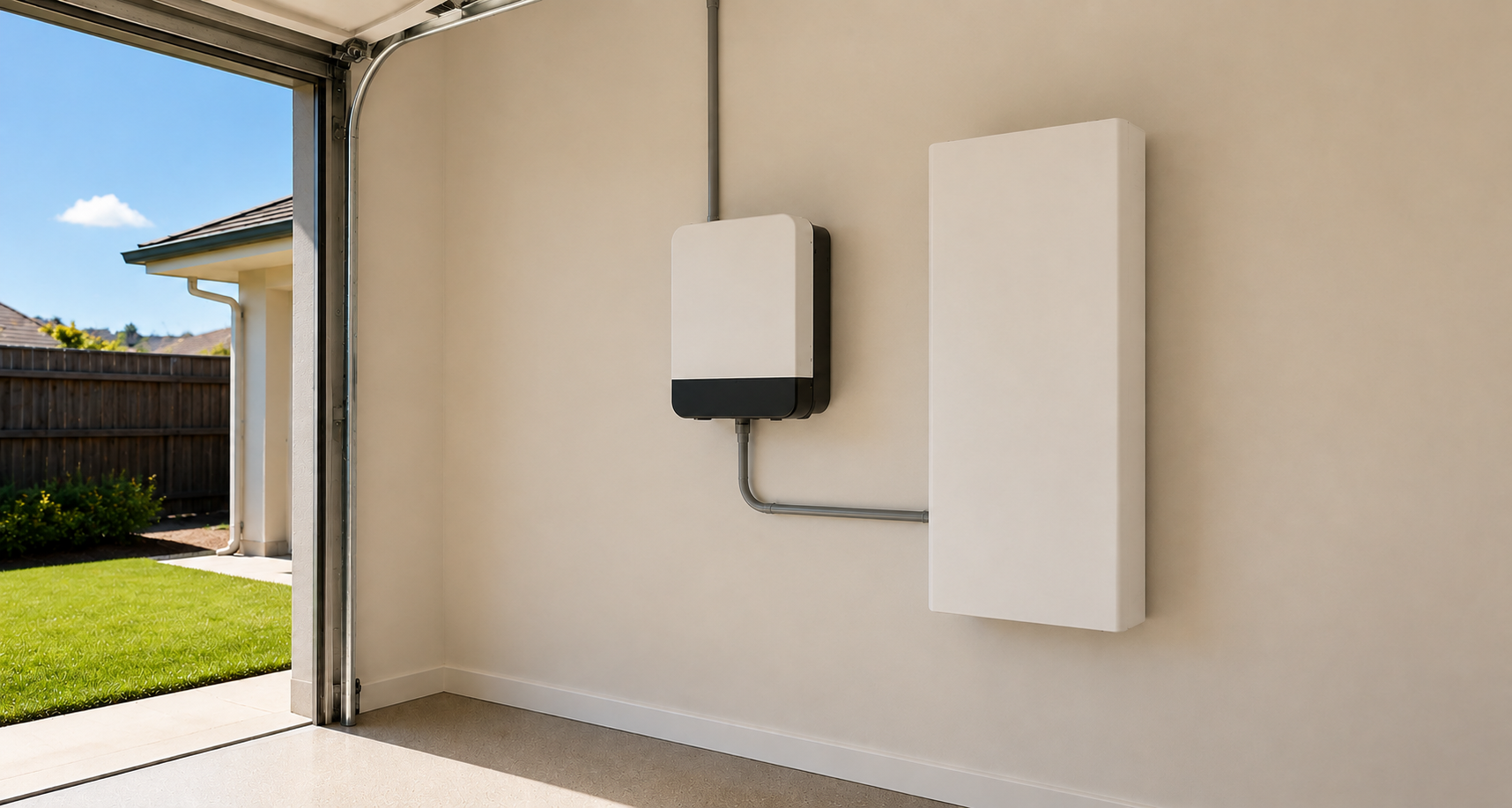
A home battery stores electricity generated by your solar panels during the day and makes it available to the household in the evening, when the sun is no longer generating and the grid is typically at its most expensive. Without a battery, surplus daytime solar generation is exported to the grid and earns a feed-in credit. With a battery, that surplus is stored and consumed by the household instead, at a value equal to the grid electricity rate it displaces.
The financial logic is simple: if you are buying grid electricity in the evening at 30 to 35 cents per kilowatt-hour and your feed-in tariff is significantly lower than that, storing and self-consuming your solar surplus is worth more than exporting it. The size of that gap is the core variable in the battery payback calculation, and in Brisbane it varies considerably depending on which electricity plan you are on.
What Batteries Actually Cost in Brisbane Right Now
Home battery prices in Australia range from roughly $7,500 to $17,000 installed in 2026, depending on brand and capacity. Entry-level systems around 12-13kWh sit at the lower end, while premium units at similar capacity from higher-end brands sit toward the top of that range before any rebate.
The federal Cheaper Home Batteries Program, which began on 1 July 2025, reduces those costs at the point of installation with no homeowner paperwork required. As of the current settings, the program provides roughly $250 to $300 per usable kilowatt-hour for the first 14kWh of battery capacity, tapering to a reduced rate for capacity between 14 and 28kWh, and a further reduced rate above that. A 10kWh system currently receives somewhere in the vicinity of $2,500 to $3,000 in upfront savings. The rate steps down periodically, with the next scheduled reduction in January 2027, so the amount available today is higher than it will be later.
Queensland's old state Battery Booster program closed to new applications on 8 May 2024, so the federal Cheaper Home Batteries Program is the relevant incentive for Brisbane homeowners in 2026. It applies in every Queensland postcode, has no means testing, and the discount comes off your invoice directly when installed by a Clean Energy Council accredited installer.
After applying the current rebate, net installed costs for a quality residential battery system in Brisbane sit broadly in the range of $5,000 for a modest entry-level system to $13,000 or more for a premium large-capacity unit. The right size for your household depends on your solar system output, your evening consumption, and whether you are also charging an EV at home. See our solar panel installation Brisbane guide.
Want to know what the rebate is actually worth for your specific battery choice right now, before the next step-down? That's exactly what a site assessment settles. 📞 0468 813 833 | Book Your solar and battery assessment.
The Savings Calculation: What Brisbane Households Actually See
The annual saving from a home battery depends on four variables: how much energy the battery cycles per day, how many days per year it completes a meaningful cycle, what grid electricity rate it displaces, and what feed-in tariff is foregone by storing rather than exporting that generation.
A 13kWh battery, fully cycled most days of the year, can plausibly store somewhere in the order of 3,000 to 4,000 kilowatt-hours annually. At current Brisbane grid rates, that translates to a genuine annual saving, though the real-world range for most households is broader than a single headline number suggests: typically $800 to $1,500 per year, and higher again, up to roughly $1,500 to $2,300, for households on time-of-use tariffs with heavy evening demand.
The feed-in tariff your current plan pays is the variable that most significantly affects whether those figures apply to your household. Some retailers currently offer the most competitive feed-in tariffs available in South East Queensland, and if you're on a plan paying a genuinely strong export rate, the financial case for a battery is considerably weaker than for a household on a standard plan paying a low feed-in rate. Storing generation that would have earned a higher export rate to displace grid power provides a smaller net benefit per kilowatt-hour than storing generation that would only have earned a low export rate.
This is the honest nuance in the battery question that not every installer will volunteer. Before committing to a battery, check what your current feed-in tariff actually is. If you are already on a genuinely competitive export rate, the payback period on a battery extends materially compared to households on low feed-in plans.
Payback Period: What the Numbers Produce
Working from current costs and realistic savings, a household in a suburb like Kenmore with a 6.6kW solar system and moderate evening consumption might look at a mid-range 10 to 13kWh battery at a net installed cost of roughly $7,000 to $9,000 after rebate. Saving somewhere around $1,000 to $1,200 per year on a standard, lower feed-in plan produces a payback period of roughly seven to nine years. Battery warranties from reputable brands are typically ten years, meaning a well-chosen system can return its cost within the warranty period on this basis. That's a general illustration of the maths, not a guaranteed outcome, since actual figures depend on your specific system, tariff, and usage.
The payback is not uniform. Households with heavy evening consumption, those with an EV charging at night, and those on time-of-use electricity plans with higher peak rates all achieve faster payback than households with low evening loads. If your annual saving sits below that $800 to $1,500 range, the payback period extends accordingly and the financial case weakens.
Virtual Power Plants: An Additional Revenue Stream
Many quality battery systems on the market are capable of participating in a virtual power plant, or VPP. A VPP connects enrolled home batteries across a network and allows the network operator to draw small amounts of stored energy during high-demand grid events, compensating battery owners for the contribution.
VPP participation is optional and can provide an additional annual credit on top of direct household savings. For Brisbane homeowners interested in this, confirming VPP capability of the battery system before purchase is straightforward. The federal rebate program requires that eligible batteries be VPP-capable, though joining a VPP is not compulsory. See the Clean Energy Council accredited battery installers directory.
Backup Power: A Value That Does Not Show Up in the Payback Calculation
The payback analysis above covers only the financial return from energy arbitrage. It does not assign a value to backup power, which is a genuine consideration for Brisbane households given the city's storm season.
A battery system with backup capability keeps a household's essential circuits running during a grid outage for eight to twelve hours or longer, depending on battery capacity and consumption. For homes in suburbs that experience extended outages during severe storm events, the practical value of that capability is real, even if it does not appear directly in a savings calculation.
Not all battery systems provide seamless backup. Some require additional switchboard configuration, a step covered in more detail in our switchboard upgrade guide. Confirming backup capability and understanding what it covers is an important step in the selection process.
Curious whether backup capability changes the case for your household? It's worth raising as part of the same assessment. 📞 0468 813 833 | Book Your solar and battery assessment.
FAQ
Q: Does my existing solar system need to be upgraded to add a battery?
A: Not necessarily. Many existing solar systems in Brisbane are compatible with battery storage, though the specific inverter model determines whether a DC-coupled or AC-coupled battery configuration is used. An accredited installer assesses your existing system as part of the battery consultation. Some older inverters require replacement or the addition of a hybrid inverter to support battery integration, which adds to the total project cost.
Q: Is the federal battery rebate applied automatically or do I need to claim it?
A: The rebate is applied as an upfront discount at the point of installation by the accredited installer. There is no separate application or claim process for homeowners. The installer manages the Small-scale Technology Certificate process and passes the saving through on the invoice.
Q: Does a home battery require any ongoing maintenance?
A: Modern lithium iron phosphate batteries, now standard across major residential brands, require minimal maintenance. The battery management system monitors cell health and performance automatically. An accredited installer can confirm the maintenance requirements for your specific system at the time of installation.
Q: Can I add a battery to my home if I do not have solar panels?
A: Battery storage without solar is technically possible but does not make strong financial sense under current Queensland tariffs, as the battery would be charged from the grid rather than from surplus solar generation. The combination of solar and battery is where the financial case for storage is built. The federal rebate also requires the battery to be installed alongside new or existing solar.
Q: What size battery is right for a typical Brisbane home?
A: For a household with a 6.6kW solar system, average evening consumption, and no EV charging, a 10 to 13kWh battery typically covers the majority of evening load through to the following morning. Households with higher evening consumption or EV charging benefit from larger capacity. An accredited installer assesses your actual consumption data before recommending a system size.
The battery question in Brisbane now has a clearer answer than it did two or three years ago, but the right answer still depends on your specific setup, your current electricity plan, and your household's usage pattern. A proper assessment gives you numbers specific to your property rather than industry averages.
Exclusive Electrical & Air is a Clean Energy Council accredited solar and battery installer serving all Brisbane suburbs, from Kenmore and Indooroopilly in the west to Hamilton, Chermside, and Aspley in the north. All installations are carried out by licensed and accredited installers, fully certified upon completion, and backed by a workmanship warranty. Rated 5 stars on Google. 10+ years experience. 2,000+ Brisbane customers. Licensed Queensland Electrical Contractor.
Call 0468 813 833 or book online at https://www.exclusiveqld.com.au/connect to arrange a solar and battery assessment for your property.