Solar Inverter Error Codes Explained (Brisbane Guide 2026)
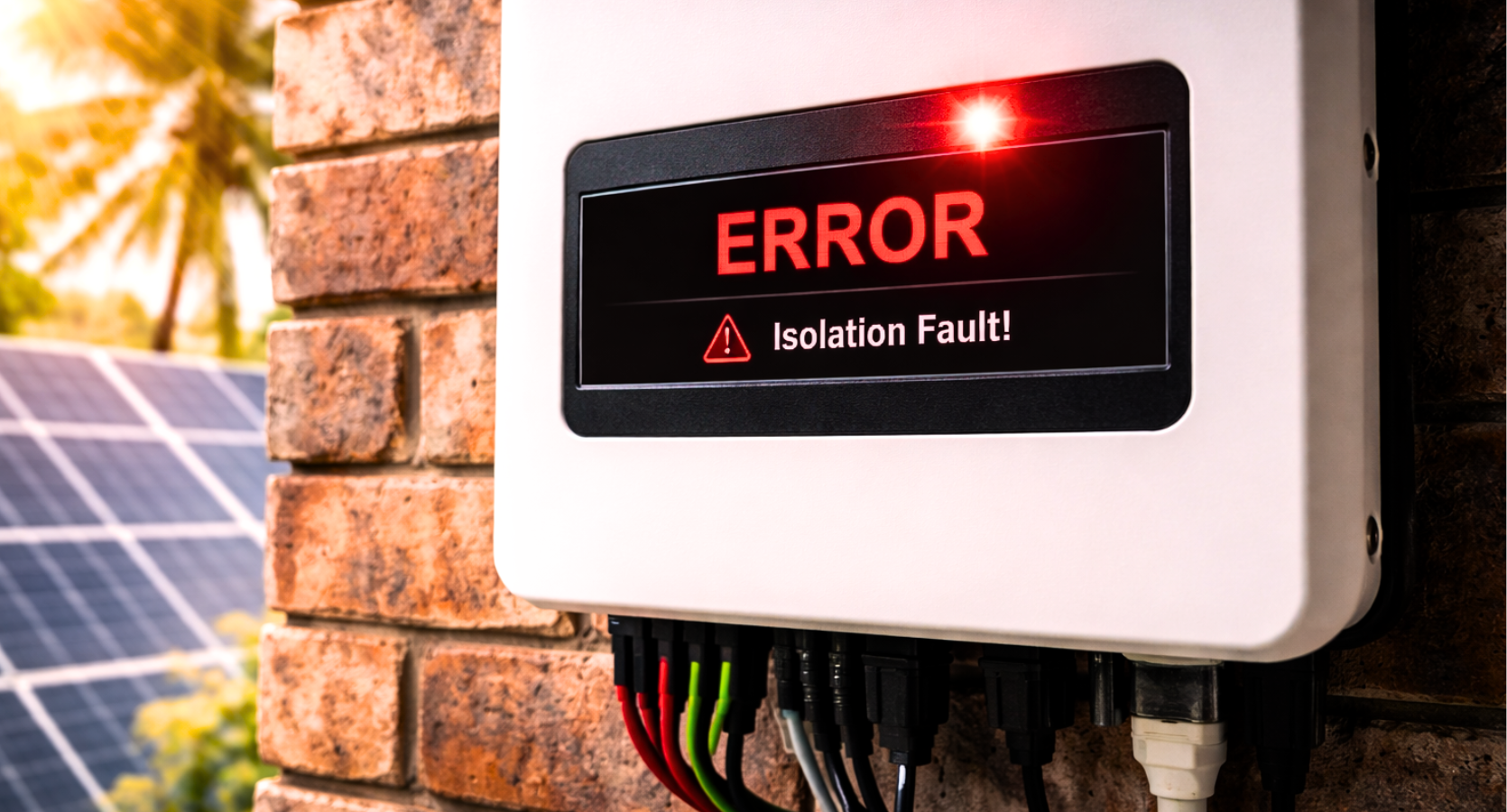
A clear Brisbane homeowner guide explaining what common solar inverter error codes mean, which ones are dangerous, and what to do before your inverter shuts down completely.
If your solar inverter is showing an error code, flashing red lights, or sending fault messages in the app, it’s not something you should ignore.
Solar systems don’t usually fail instantly.
They give warning signs first, and error codes are one of the clearest signals that something is wrong.
Some codes are minor and clear themselves.
But others can mean fire risk, isolation faults, damaged wiring, or inverter shutdown, especially during Brisbane’s heat and storm season.
This guide explains what the most common solar error codes mean, and which ones require urgent action.
First: What an Error Code Actually Means
Your inverter constantly checks:
solar panel voltage
grid voltage
insulation resistance
temperature levels
safety isolators
internal electrical components
When something goes outside the safe range, it shows an error code and may shut down to protect itself.
So the inverter isn’t “being annoying”, it’s trying to stop damage.
The Most Common Solar Error Codes (And What They Mean)
Below are the most common fault categories Brisbane homeowners see.
1. Isolation Fault / Earth Fault (DANGEROUS)
This is one of the most serious solar faults.
What it means:
Electricity may be leaking from the system into wiring, roof structures, or moisture.
Common causes:
damaged DC cable
water ingress in rooftop connections
cracked insulation
faulty solar panels
rodents chewing cables
Why it’s dangerous:
Isolation faults can cause electric shock risks and potential fire hazards.
What to do now:
Turn the solar system off and call a licensed solar electrician.
2. Grid Overvoltage (COMMON IN BRISBANE)
This is one of the most common solar shutdown reasons.
What it means:
The inverter is detecting too-high voltage from the grid and shuts down to stay safe.
Common causes:
too much solar feeding into the grid in your area
voltage spikes during hot afternoons
weak or overloaded local network supply
What to do:
If it happens repeatedly, you may need voltage testing and compliance adjustment.
3. Grid Undervoltage / Grid Loss
What it means:
The inverter is not detecting stable grid power.
Common causes:
street power interruptions
loose neutral connections
storm-related outages
unstable grid during peak demand
What to do:
If it happens once, it may just be the grid.
If it happens regularly, an electrician should check your supply.
4. Overtemperature / Inverter Too Hot (VERY COMMON IN SUMMER)
What it means:
Your inverter is overheating and shutting down to protect itself.
Common causes:
inverter installed in direct sun
poor ventilation
Brisbane heat waves
blocked fan or airflow
What to do:
Check airflow, shade, and placement.
If it keeps happening, you may need relocation or cooling protection.
5. PV Overvoltage
What it means:
The solar input voltage is too high.
Common causes:
incorrect panel string design
wrong inverter sizing
faulty MPPT tracker
wiring fault
What to do:
This is a professional inspection issue. Don’t ignore it.
6. DC Overcurrent / DC Fault
What it means:
The inverter detected dangerous current flow on the solar DC side.
Common causes:
panel fault
short circuit in DC wiring
isolator breakdown
cable damage
What to do:
Turn the system off and book a licensed technician.
7. Relay Fault / Internal Fault
What it means:
Internal inverter components are failing.
Common causes:
aging inverter
damaged internal electronics
lightning strike or surge
worn out capacitors
What to do:
If your system is older than 7–10 years, this could mean replacement is approaching.
8. Arc Fault / AFDD Error (DANGEROUS)
What it means:
There may be arcing in solar wiring. Sparks occurring inside a connection.
Common causes:
loose connectors
damaged wiring
moisture inside junctions
Why it’s dangerous:
Arcing is one of the biggest causes of solar fires.
What to do immediately:
Turn off the solar and get an urgent inspection.
9. Communication Error / Wi-Fi Drop
What it means:
Your inverter can’t communicate with your monitoring system.
Common causes:
Wi-Fi down
router change
faulty inverter comms module
What to do:
If solar production is still normal, this may only be monitoring-related.
If production drops too, it may indicate inverter instability.
The Solar Error Codes That Should NEVER Be Ignored
If you see any of these, treat it as urgent:
Isolation fault
Arc fault
Burning smell
Red flashing light
Inverter overheating repeatedly
System shutting down daily
Melted isolator or discolouration
These faults can lead to:
total solar shutdown
electrical fire risk
voided warranties
damage to household appliances
power bill increases
Error Codes Are Your Solar System’s Warning System
Solar systems rarely fail without warning.
Error codes exist so you can fix the issue early before it turns into:
expensive repairs
full inverter replacement
dangerous electrical faults
If your inverter is showing faults repeatedly, it’s worth getting checked early.
👉 Need solar fault testing or inverter diagnostics in Brisbane?
Call Exclusive Electrical & Air for a licensed inspection.