Solar Inverter Faults: The Early Warning Signs Homeowners Must Never Ignore
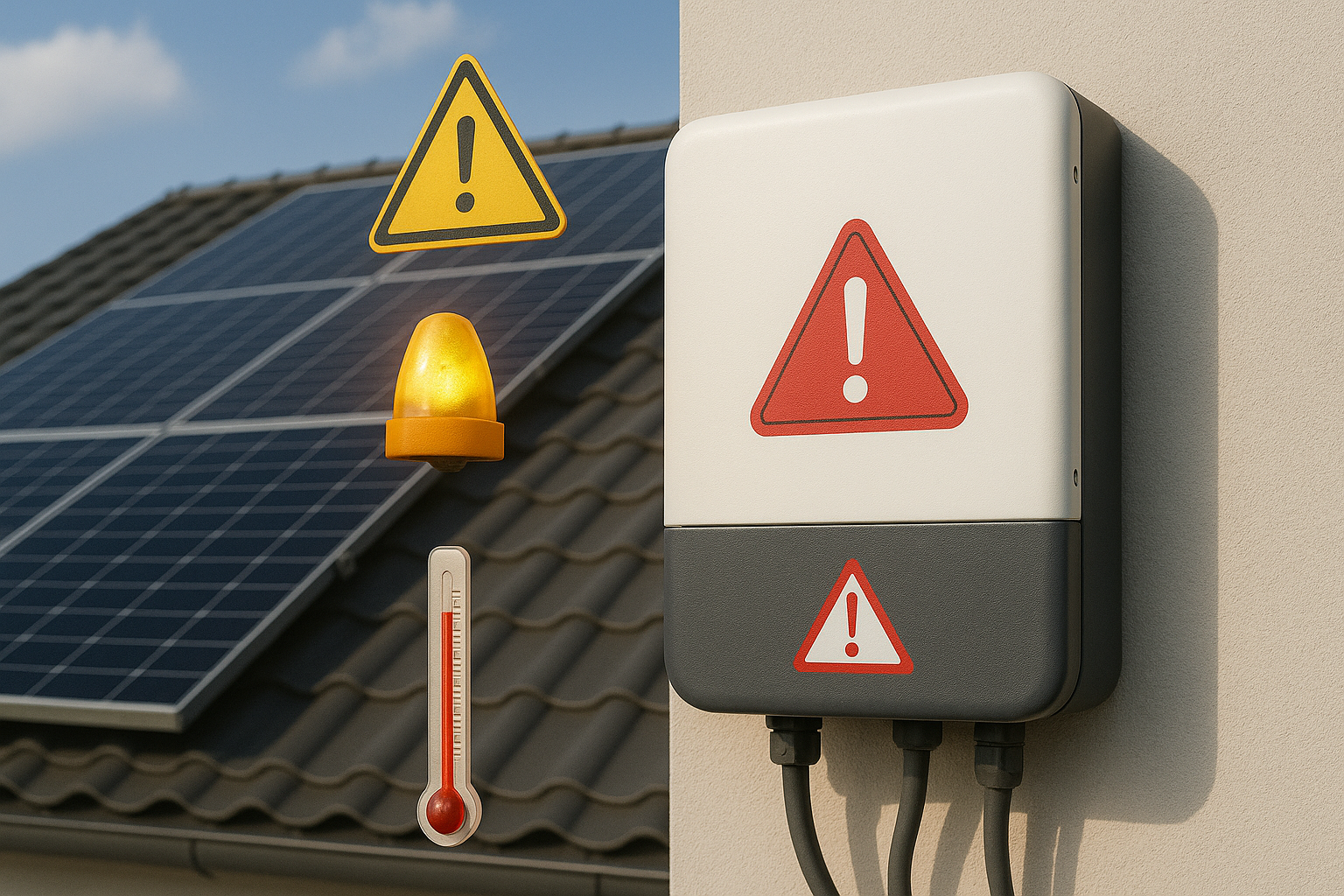
A clear, practical guide to the most common solar inverter warning signs that homeowners should never ignore. Including performance drops, strange noises, error codes, and safety risks.
Your solar inverter is the brain of your entire solar system.
It converts the DC power from your panels into usable AC power for your home, and without it, your solar system simply won’t work.
But here’s the problem:
Most inverter failures don’t happen overnight.
They show early warning signs that many homeowners overlook, until it becomes a full system shutdown.
This guide will help you identify inverter problems early, avoid expensive repairs, and protect your solar investment.
1. Flashing or Red Warning Lights
Solar inverters use light indicators to tell you what’s happening.
Warning lights to take seriously:
Solid red: Critical fault
Flashing red: Major issue or shutdown
Orange/amber: Warning or reduced performance
Flashing constantly: Internal diagnostics failing
If your inverter isn’t showing a solid green light, something isn’t right.
2. Sudden Drop in Solar Power Output
If your solar system normally generates a certain amount and suddenly drops:
From 5 kW to 1–2 kW, or
From normal daily output to almost nothing
It’s often an inverter fault.
Common causes include:
Cooling fan failure
Faulty MPPT tracker
Internal component wear
Overheating
Software malfunction
Even a small performance dip is worth checking early.
3. Strange Noises Coming From the Inverter
Solar inverters should be quiet.
If you hear:
Clicking
Buzzing
Humming
Ticking
High-pitched whines
It means internal components are struggling.
This is usually an early sign of:
Capacitor failure
Overheating
Loose internal connections
Fan or cooling system malfunction
Ignoring unusual sounds often leads to full failure.
4. Overheating or Hot to Touch
Your inverter needs airflow to stay cool.
If the unit is:
Hotter than normal
Overheating and shutting down
Located in direct sun
Near a BBQ, heater, or hot surface
It will eventually fail.
Modern inverters shut down themselves when heat levels become unsafe. Frequent overheating is a major red flag.
5. Intermittent Shutdowns or Random Reboots
If your inverter turns off and on throughout the day, it indicates:
Voltage fluctuations
Connection issues
Bad wiring
A failing DC isolator
An internal fault
Even if it restarts and works again, this should never be ignored.
6. Error Codes on the Display Screen
Most homeowners ignore error codes — but they are direct clues.
Common inverter errors:
Isolation fault
Grid overvoltage
DC overcurrent
Ground fault
Relay failure
PV overvoltage
Some are simple fixes…
but others indicate serious safety risks.
A licensed solar electrician should always check any error code.
7. Wi-Fi Monitoring Showing Irregular Data
More solar systems now have Wi-Fi monitoring apps.
Warning signs include:
Zero production during sunny hours
Output dropping randomly
“System fault” notifications
Inverter not communicating at all
If the data looks suspicious, your inverter may be the cause.
8. Burning Smell or Discolouration Around the Unit
This is an urgent safety risk.
Burning smells usually mean:
Component overheating
Melted wiring
Internal fire risk
Failed surge protection inside the inverter
If you ever smell burning:
Turn the system off immediately and call a professional.
Why Inverter Problems Should Never Be Ignored
A faulty inverter can cause:
Total solar system shutdown
Expensive component failure
Loss of solar savings
Fire hazards
Voided warranties
Safety risks for your home
Most inverter issues start small, and fixing them early prevents major damage.
Final Word: Protect Your Solar Investment Before It Fails
A healthy inverter keeps your entire solar system running smoothly and safely. If you notice any of the warning signs above, get it checked immediately.
Need a solar inverter inspection or repair? Call us today for fast, reliable, and professional service. Keep your solar system performing at its best.