Solar Panel Maintenance in Brisbane: What You Need to Do Each Year
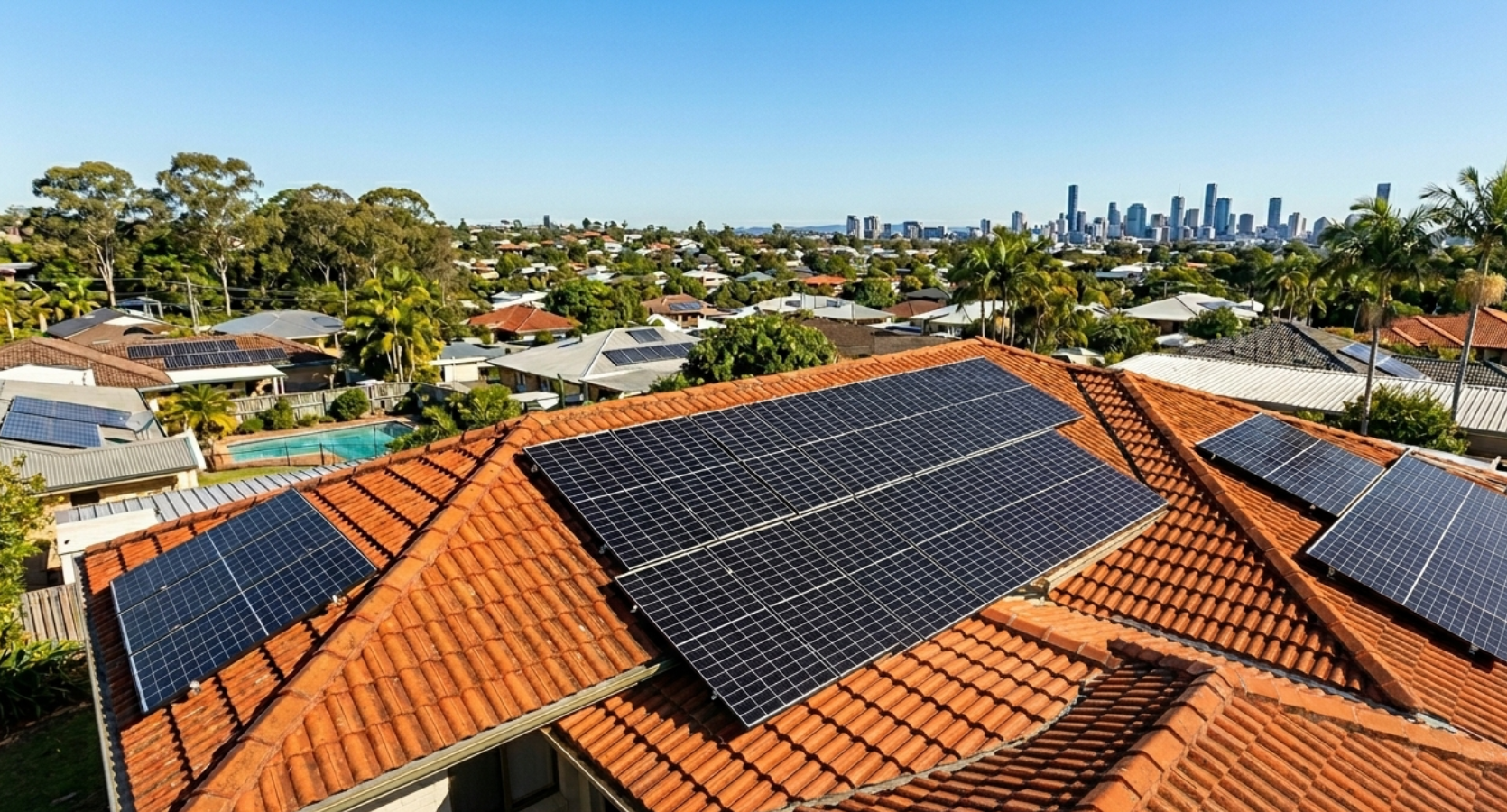
Brisbane's climate is excellent for solar generation but also creates specific maintenance demands that compound quietly if they're not addressed. A 6.6kW system generating 10% below its rated output costs approximately $200 to $300 per year in lost value. Here's a clear annual maintenance checklist for Queensland homeowners covering panel cleaning, visual inspection, performance monitoring, and electrical component checks including DC isolator safety, and what each task actually involves.
Solar Panel Maintenance in Brisbane: Your Annual Checklist
Solar panel maintenance in Brisbane is not the same job as maintaining panels in cooler, drier climates, and the difference matters more than most homeowners realise. Last summer we inspected a 6.6kW system in Aspley installed in 2012 that had never been serviced. Output had declined 22% below the benchmark, a combination of panel soiling, a degraded DC isolator, and shading from a Jacaranda that had grown significantly since the original installation. The homeowner had no idea.
With over 10 years of experience and 2,000-plus solar and electrical jobs completed across Brisbane, Exclusive Electrical & Air carries out annual solar inspections and maintenance for Queensland homeowners as Clean Energy Council accredited installers and licensed electricians.
Brisbane homeowners with solar panels tend to fall into one of two camps. The first installs a system, watches the power bills drop, and assumes the panels will keep doing their job indefinitely without any attention. The second worries constantly, cleans obsessively, and books inspections more often than necessary. Neither approach is quite right. Here's what the routine should actually look like.
How Often Should Solar Panels Be Maintained in Brisbane?
Brisbane solar systems should be cleaned one to two times per year and receive a professional electrical inspection at least annually or biennially. Brisbane's UV exposure, summer storm season, dust and pollen loads, and bird activity create conditions that compound quietly over time. A structured annual maintenance routine keeps a system performing close to its rated output and catches faults before they become significant losses.
Why Brisbane's Climate Makes Solar Panel Maintenance Non-Negotiable
Solar panels in Brisbane face a more demanding environment than panels in cooler, drier climates, and understanding why helps clarify what maintenance actually needs to happen.
Queensland's subtropical climate delivers high annual UV exposure, which affects the rate at which panel components age. Sustained heat, particularly in roof spaces where ambient temperatures can reach extreme levels over summer, accelerates degradation of inverter components and cabling. Brisbane's storm season, running from approximately November through March, brings heavy rainfall that cleans panels naturally but also deposits debris and in hail-affected years creates surface damage that reduces output.
Dust and pollen loads in Brisbane are significant, particularly during dry periods when westerly winds carry fine particles across the city. Homes in outer western suburbs like Kenmore, The Gap, and Pullenvale tend to accumulate dust soiling faster than inner suburbs during these periods. Organic material including bird droppings, leaf debris, and lichen in shaded areas accumulates on panel surfaces and creates localised shading that reduces output disproportionately to the area covered.
The combination of these factors means a Brisbane solar system left entirely unattended will typically underperform its rated output by a measurable margin within a few years. For a 6.6kW system generating 10% below its rated output in Brisbane, the annual cost of that underperformance is approximately $200 to $300 in lost self-consumption value and reduced feed-in tariff revenue. Multiply that across several years and the case for a basic annual routine becomes straightforward.
Some panel and inverter warranties specify minimum maintenance requirements. Failing to meet these can affect warranty claim eligibility. Checking your warranty documentation before establishing your maintenance routine is worth doing.
Brisbane Solar Panel Maintenance Checklist: What to Do Each Year
A well-structured annual maintenance routine covers four distinct areas: panel cleaning, visual inspection, system performance review, and electrical component inspection.
Panel Cleaning
For most Brisbane locations, one to two cleans per year is appropriate. Homes near major roads, construction sites, or in areas with high bird activity may benefit from more frequent cleaning. Inner Brisbane suburbs like Woolloongabba and Morningside, where traffic-related particulate matter is higher, tend to accumulate soiling faster than outer suburbs. Storm-prone northern suburbs like Aspley, Chermside, and Bracken Ridge benefit from a post-storm-season clean each year.
The right approach to panel cleaning matters as much as the frequency:
Use deionised or low-mineral water where possible. Tap water leaves mineral deposits as it dries, which reduce panel transparency over time with repeated cleaning.
Use a soft brush or squeegee rather than abrasive materials. Panel glass is durable but not impervious to scratching.
Clean panels in the early morning or late afternoon, not at midday when panels are hot. Thermal shock from cold water on hot glass can stress panel surfaces.
Never use high-pressure water. Pressure washers can drive water into panel junction boxes and cabling connections, creating moisture damage and corrosion.
Do not use detergents, cleaning chemicals, or abrasive compounds unless specifically approved by the panel manufacturer.
For homeowners uncomfortable working on a roof, professional panel cleaning services are available across Brisbane and typically cost between $150 and $350 depending on system size and roof access. Many solar servicing companies include cleaning as part of an annual inspection package.
Visual Inspection
A visual inspection of panels and visible system components should accompany or follow any cleaning. From the roof level or a suitable vantage point, check for:
Physical damage to panel glass, including cracks, chips, or delamination of the panel surface
Discolouration or yellowing of the panel backing material, which can indicate moisture ingress or advanced UV degradation
Hotspots — small dark areas on a panel surface that indicate a localised cell failure, more easily identified with a thermal imaging camera but sometimes visible as discolouration
Debris accumulation in the gaps between panels or around the mounting frame
Bird nesting material under or around panels, which is common in Brisbane suburbs like Paddington, Ashgrove, and Bardon and can cause cabling damage as well as shading. Bird mesh installed around the panel perimeter prevents nesting material accumulation and protects cabling from rodent damage. If bird activity under your panels is visible, pest proofing is worth discussing at the annual inspection.
Condition of mounting frames and fasteners, particularly after storm season
From ground level or at the inverter location, also check for any error codes or warning indicators on the inverter display, condition of visible cabling and conduit runs, and any signs of moisture ingress around conduit entry points or the inverter enclosure.
System Performance Review
This is the maintenance task most commonly skipped by Brisbane homeowners, and it's arguably the most valuable one. Monitoring your solar system's output against its expected performance is how you identify underperformance before it becomes a significant loss.
Most modern solar inverters provide production data accessible via a smartphone app or web portal. For older inverters without built-in monitoring, third-party platforms such as Solar Analytics can be retrofitted to provide detailed performance data and automated alerts for performance drops. Reviewing output data annually, or ideally quarterly, allows you to identify gradual decline, sudden drops from specific panels or strings, or periods of unexplained zero output.
Solar panels degrade in output at approximately 0.5% per year under normal conditions. After 10 years, a panel may produce around 95% of its original rated output. Brisbane's high UV environment may accelerate this slightly, making performance monitoring against benchmarks more important here than in cooler climates.
Here are indicative annual output benchmarks for well-maintained Brisbane systems with unobstructed north-facing panels:Expected Annual Solar Output by System Size
5kW System
Expected Annual Output: 6,800 to 8,000 kWh/year
Suitable for: Smaller households with moderate electricity use.
6.6kW System
Expected Annual Output: 9,000 to 10,500 kWh/year
Suitable for: Average Brisbane households.
10kW System
Expected Annual Output: 13,500 to 16,000 kWh/year
Suitable for: Larger households or homes with high daytime electricity consumption.
Significant deviation below these ranges warrants investigation. The Clean Energy Council provides additional indicative output figures for solar systems by location and system size.
Tree growth is one of the most commonly overlooked causes of performance decline in Brisbane suburban systems. Trees planted when the system was installed may now be casting shade on panels they didn't affect five or ten years ago. If your output has declined gradually, check whether vegetation growth is a factor before assuming a technical fault.
Systems with microinverters or DC optimisers installed on each panel behave differently to string inverter systems in maintenance terms. A single panel fault in these systems doesn't affect overall string output in the same way, but individual panel performance can still be monitored and faults identified through the system's monitoring platform.
Electrical Component Inspection
This is the component of annual maintenance that requires a licensed electrician and Clean Energy Council accredited installer. The Clean Energy Council is Australia's peak body for the clean energy industry and sets the accreditation standards for solar installers. A CEC accredited installer is a prerequisite for eligible government incentives and valid manufacturer warranties.
An annual or biennial electrical inspection of a Brisbane solar panel installation Brisbane should include testing of DC isolators, inspection of all electrical connections for signs of corrosion or heat damage, inverter performance testing and firmware review, inspection of cabling condition particularly at roof penetrations, review of earthing and lightning protection where applicable, and testing of the battery system and connections where a solar battery storage Brisbane is installed.
DC isolator failures in particular have been a documented safety issue in Queensland. The Clean Energy Regulator has investigated incidents involving DC isolator fires, and some older isolator models installed in Brisbane systems in the late 2000s and early 2010s have been subject to safety notices. The https://www.electricalsafety.qld.gov.au has also investigated residential incidents involving DC isolator failures. An electrician inspecting an older system will identify whether any recalled or flagged components are present.
DC isolator failures have caused residential fires in Queensland. If your system was installed before 2015 and hasn't been inspected recently, this is worth prioritising before another summer season passes.
📞 0468 813 833 | Book Your Solar Inspection
Most Brisbane solar inspections are completed within one visit. Bookings available within the week. From $200 for a standard 6.6kW residential system. Licensed Queensland Electrical Contractor. Clean Energy Council accredited.
After a Brisbane Storm: Solar Panel Inspection Checklist
Brisbane's storm season deserves specific attention. After any significant storm event involving large hail, high winds, or lightning in the vicinity of the property, a targeted inspection is warranted before the regular annual schedule.
Following a major storm, check for:
Visible physical damage to panel glass or frames
Dislodged panels or damaged mounting hardware
Damage to visible cabling or conduit runs
Any error codes or unusual behaviour from the inverter
Evidence of water ingress around roof penetrations or the inverter enclosure
If hail damage is suspected but not clearly visible from the ground, thermal imaging during a professional inspection can identify internal cell damage that isn't apparent to the naked eye. Do not assume panels are undamaged because they look intact after a significant hail event in areas like Manly, Wynnum, or coastal eastern suburbs where storm-related hail events are not uncommon.
Do not attempt to inspect or handle any part of the system if physical damage is visible and the system is still connected. Contact a licensed electrician to assess the system before it is operated again.
Solar Panel Maintenance Cost Brisbane: What to Expect in 2026
For homeowners wanting a professional to handle the full annual maintenance routine, here's what to expect to pay in Brisbane in 2026.
A basic annual inspection and clean for a standard 6.6kW residential system typically costs between $200 and $400. A more comprehensive inspection that includes electrical testing, isolator assessment, and a detailed performance report typically costs between $350 and $600. These figures are indicative and the condition of the existing system affects the scope of work required.
Many solar installation companies offer annual service plans that bundle cleaning, inspection, and minor remediation work at a fixed annual fee. For homeowners who prefer a predictable maintenance cost and a single point of contact, these plans are worth evaluating.
FAQ
How often should solar panels be cleaned in Brisbane?
For most Brisbane locations, one to two cleans per year is appropriate. Properties near major roads, with significant bird activity, or in areas with higher dust loads may benefit from more frequent cleaning. Brisbane's summer storm season provides some natural cleaning, but organic soiling from birds and debris requires manual attention.
Can I clean my solar panels myself in Queensland?
Cleaning panel surfaces is not electrical work and can be done by a homeowner who can safely access the roof. The important considerations are using appropriate cleaning materials, avoiding high-pressure water, cleaning during cooler parts of the day, and following safe roof access practices. For homeowners uncomfortable on a roof, professional cleaning services are widely available in Brisbane.
How do I know if my solar panels are underperforming?
Comparing your system's actual annual output against the expected output for your system size and Brisbane's solar resource is the most reliable method. Most inverters provide production data via an app or web portal. A significant and sustained decline in output, or output figures materially below the benchmark for your system size, warrants investigation. Find out more about solar panel servicing Brisbane.
Do solar inverters need to be replaced?
Most string inverters carry a five to ten-year warranty and a real-world life expectancy of ten to fifteen years. Brisbane's heat conditions can accelerate inverter degradation. An inverter approaching or past ten years of operation should be assessed by a licensed electrician at each annual inspection.
What is a DC isolator and why does it matter for maintenance?
A DC isolator is a safety switch that disconnects the DC power flow from solar panels to the inverter. DC isolator failures have been identified as a fire risk in some Australian solar systems, and certain older models have been subject to safety recalls through the Clean Energy Regulator. Annual inspection of DC isolators by a licensed electrician is an important maintenance step, particularly for systems installed before 2015.
Does my solar warranty cover maintenance costs?
Most solar panel product warranties cover manufacturing defects and performance guarantees but do not cover maintenance costs or damage caused by failure to maintain the system appropriately. Some warranties specify minimum maintenance requirements, and failure to meet them can affect warranty claims. Reviewing your warranty documentation is worth doing before establishing your maintenance routine.
Book Your Annual Brisbane Solar Inspection
A solar system that has been neglected for several years can be losing meaningful output without triggering any obvious alarm. In Brisbane's climate, where panels are working hard year-round, the compounding effect of soiling, minor faults, and ageing components adds up to real money left on the table.
At Exclusive Electrical & Air, we carry out solar system inspections and maintenance across Brisbane for homeowners across all suburbs. We inspect panel condition, test DC isolators, review inverter performance, and give you a clear report on what your system needs and what it doesn't. No upselling. Just an honest assessment of where your system stands.
📞 0468 813 833 | Book Your Solar Inspection
From $200 for a standard 6.6kW residential system. Rated 5 stars by Brisbane homeowners on Google. Clean Energy Council accredited. Licensed Queensland Electrical Contractor. 10+ years experience. 2,000+ Brisbane customers.