Is Your Brisbane Home Solar-Ready? What to Check Before You Install
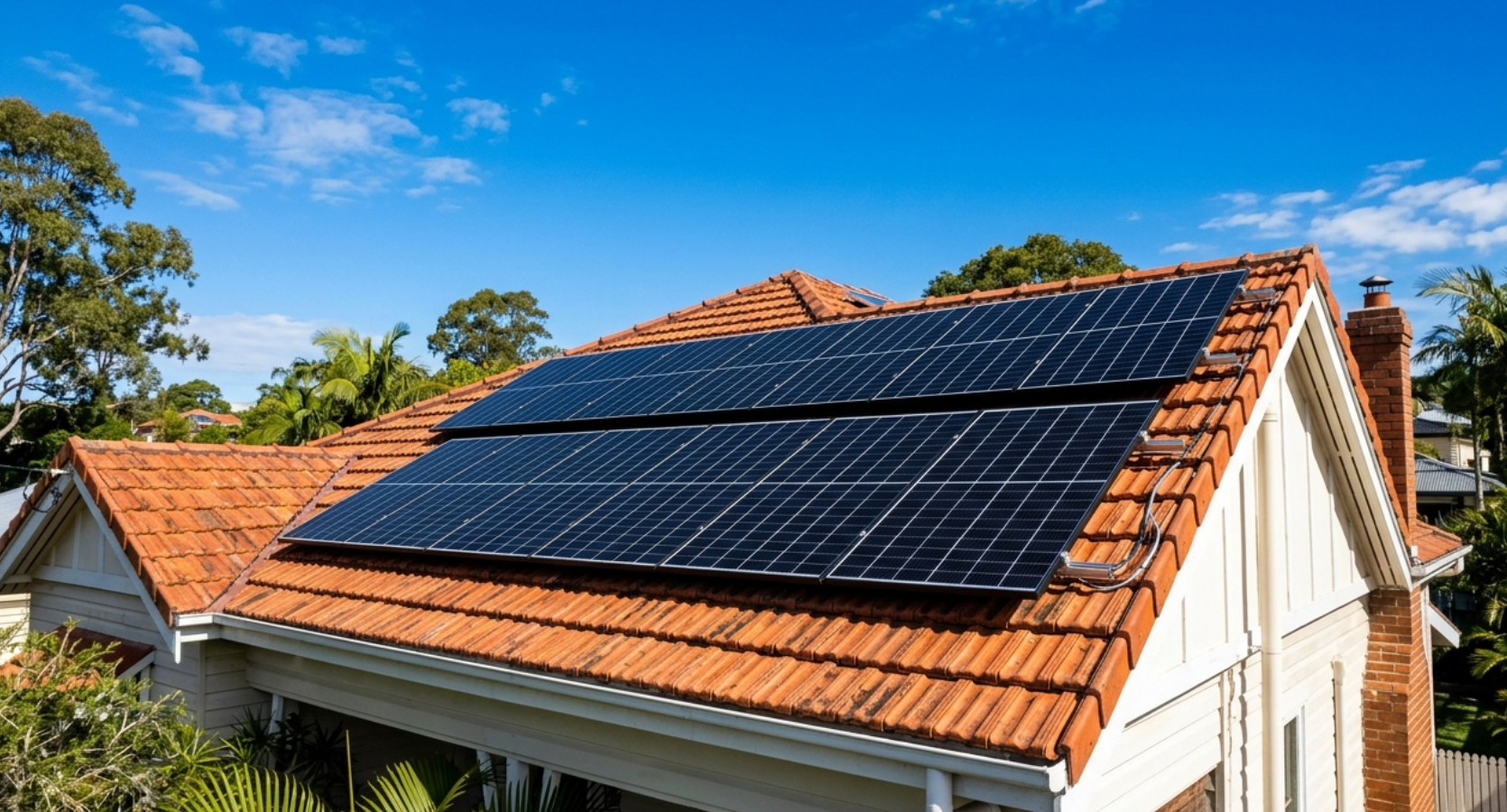
Brisbane is one of the best cities in the world for solar, but not every home is ready for panels without some preparation first. From roof condition and switchboard compliance to Energex export limits and metering requirements, here's a clear checklist of what to assess before signing a solar contract, including a pre-installation cost summary, typical installation timeline, and what might need sorting first.
Is Your Brisbane Home Solar-Ready? What to Check Before You Install
Brisbane consistently ranks among the best cities in the world for solar energy generation, and solar panel installation in Brisbane is one of the most financially compelling home upgrades available to Queensland homeowners right now. But not every Brisbane home is ready to have panels installed without some preparation work first.
We recently assessed a 1970s home in Kelvin Grove for solar readiness. The property needed a full switchboard upgrade, meter box remediation for an asbestos-containing backing board, and a shading analysis that identified a neighbouring property's extension had created winter shading on the proposed north-facing array. The total pre-installation work came to $2,400 — discovered before signing, not on installation day.
With over 10 years of experience and 2,000-plus electrical and solar jobs completed across Brisbane, Exclusive Electrical & Air carries out solar readiness assessments as Clean Energy Council accredited installers and licensed electricians. Here's the checklist that protects you before you commit.
Is My Brisbane Home Solar-Ready?
A Brisbane home's solar readiness comes down to four assessment areas: roof condition and suitability, switchboard compliance and capacity, Energex network connection and export limits, and metering. Each area can be assessed before you sign a contract. The time to find out about a switchboard upgrade requirement, a shading issue, or a network export constraint is before installation day, not on it.
Why a Solar Pre-Installation Assessment Matters in Brisbane
The solar industry in Queensland is competitive. Some installers conduct a thorough site assessment before quoting. Others quote from satellite imagery and discover problems on installation day, at your expense.
A proper pre-installation assessment confirms that your roof, switchboard, and network connection can support the system you're planning, identifies anything that needs to be addressed before or alongside the installation, and gives you an accurate picture of the total cost rather than a headline figure that expands when complications emerge.
Ensure any installer carrying out your assessment is Clean Energy Council accredited. Clean Energy Council accreditation is a prerequisite for valid manufacturer warranties and government incentive eligibility. An accredited installer will also calculate your STC entitlement — the Small-scale Technology Certificates that form the federal rebate reducing your upfront system cost — as part of the quote.
A typical Brisbane solar installation timeline runs 6 to 10 weeks from initial assessment to a commissioned system. Assessment and quote takes one to two weeks. Energex pre-approval for larger systems adds two to four weeks. Installation is typically one to two days. Metering and commissioning through your retailer adds a further one to four weeks depending on the retailer. Starting the readiness assessment now means your system could be generating before your next electricity bill cycle.
Is Your Brisbane Roof Suitable for Solar Panels?
Structural Condition
Solar panels add weight to a roof structure. A standard residential solar panel weighs approximately 18 to 22 kilograms, and a 6.6kW system comprising 16 to 20 panels adds 300 to 400 kilograms to the roof structure distributed across the mounting points.
Most Brisbane homes built to standard construction specifications can accommodate this load without structural reinforcement. However, older homes, particularly pre-war Queenslanders and early post-war homes common across inner Brisbane suburbs like Paddington, Wooloowin, and Ascot, may have timber framing that has experienced deterioration over decades of Queensland's humidity and heat. A roof inspection on any property more than 30 to 40 years old is worth doing before installation planning advances. A professional roof structural assessment in Brisbane typically costs $200 to $400.
Roof Material
Most roofing materials used in Brisbane homes are compatible with solar panel installation:
Corrugated metal (Colorbond): straightforward installation, well-suited to solar mounting systems
Concrete tile: compatible, requires tile hooks that integrate with the tile profile
Terracotta tile: compatible but requires more careful handling during installation due to the fragility of aged tiles
Flat or low-pitch membrane roofs: require specialist ballasted or penetrating mounting systems and are less common in residential Brisbane
Asbestos-containing roofing materials are present in some older Brisbane homes built before the mid-1980s and require specific handling and assessment before any roof work proceeds. A licensed asbestos assessor should confirm the presence or absence of asbestos before installation planning advances on any home of that era. An asbestos assessment in Brisbane typically costs $300 to $600.
Roof Orientation and Pitch
In Brisbane, north-facing roof surfaces generate the most solar energy due to Queensland's position in the southern hemisphere. A north-facing roof at a pitch of 15 to 25 degrees is close to optimal for Brisbane's latitude.
East and west-facing roofs generate meaningfully less, typically 15 to 20 percent less than a north-facing equivalent, but still produce a worthwhile return in Brisbane's high-sunshine environment. Many Brisbane homes have roofs with multiple orientations, allowing panels to be split across north and east or north and west-facing surfaces to increase total generation capacity and spread production across more of the day.
Available Roof Space and Shading
For a standard 6.6kW system, approximately 35 to 40 square metres of usable roof space is required. Larger properties in Kenmore, The Gap, and Pullenvale with substantial roof areas typically have no constraints here. Compact inner-city lots are more likely to require careful design to maximise available space.
Shading is a critical consideration that satellite imagery consistently underestimates. Trees, neighbouring buildings, chimneys, rooftop water tanks, whirlybirds, and air conditioning units all create shading that reduces panel output. Shading that falls on even a small portion of a panel string can disproportionately reduce the output of the entire string.
Our assessment includes software-based shading analysis that models shadow patterns across your roof for different times of day and across seasons, not just a visual estimate on the day. Brisbane's lower winter sun angle creates shading patterns that don't exist in summer, and a system that performs well in December may underperform significantly in June if shading has not been properly evaluated.
Does Your Brisbane Switchboard Need Upgrading for Solar?
This is the area where Brisbane's older housing stock most commonly creates pre-installation work, and it's the area that most commonly catches homeowners off guard when discovered on installation day rather than before.
A solar system connects to your home's electrical infrastructure at the switchboard, and that switchboard needs to meet current Queensland electrical standards to accommodate the connection safely. Switchboards in Brisbane homes more than 20 to 30 years old frequently contain components that don't meet current requirements. The most common issues in older Ashgrove, Red Hill, Taringa, and Kelvin Grove properties include ceramic fuses rather than modern circuit breakers, asbestos-containing meter box backing boards, insufficient capacity for the additional circuits required by a solar system, and absence of a main switch.
A switchboard upgrade Brisbane typically costs between $1,500 and $3,500 depending on the scope of work, and it must be completed before the solar system can be legally connected. All pre-installation electrical work including switchboard upgrades must be covered by a Certificate of Testing and Compliance, confirming the work meets Queensland's electrical safety standards under the Electrical Safety Act 2002.
The solar inverter and associated DC and AC isolators also need to be mounted in an accessible location, typically on an external wall near the switchboard or meter box. The assessment should confirm that suitable mounting space exists and that the cable run from the roof to the inverter location is practical.
Typical Pre-Installation Costs in Brisbane (2026)
Before your solar installation begins, you may need to budget for some preparatory work depending on your home's condition. Typical costs include:
Switchboard upgrade: Generally $1,500 to $3,500, depending on the age of your switchboard and the extent of work required.
Smart meter installation: Usually $0 to $200, depending on your electricity retailer and whether a meter replacement is already included.
Asbestos assessment: Typically $300 to $600 for homes built before the mid-1980s where asbestos-containing materials may be present.
Roof structural assessment: Around $200 to $400 if your roof needs inspection before panels can be safely installed.
Solar pre-installation assessment: Usually included in your installer's quote, although it's worth confirming this before you sign a contract.
If reading through these costs raises questions about what your own home might need, a professional pre-installation assessment will identify any required work before you commit to installation.
📞 0468 813 833 | Book Your Solar Readiness Assessment
Free on-site assessment. No obligation. We'll tell you honestly what your home needs and what it will cost before you sign anything. Licensed Queensland Electrical Contractor. Clean Energy Council accredited.
Energex Solar Connection Rules: What Brisbane Homeowners Need to Know
Before finalising a system size, it's important to understand what your local electricity network operator permits for your property. Energex is the electricity distribution network operator for south-east Queensland including all Brisbane suburbs, and sets the technical rules for how solar systems connect to the grid.
Single-Phase vs Three-Phase Supply
Most Brisbane homes are connected to a single-phase electricity supply, which limits the inverter size that can be connected. Energex currently permits single-phase inverters up to 5kW of export capacity on a standard connection, though larger systems can be installed with the additional panels generating energy consumed within the home rather than exported.
If your single-phase connection limits export to 5kW but your roof space allows a larger array, the right design accounts for both, typically a 5kW inverter paired with a 6.6kW panel array, maximising generation within the export constraint. Adding solar battery storage Brisbane alongside a larger panel array is an effective way to capture generation that would otherwise be lost to export limits by storing it for evening use.
Homes with three-phase supply, more common in larger properties and newer estates like North Lakes, Springfield, and Ripley, can accommodate larger inverter capacities. Confirming your phase supply is part of the pre-installation assessment.
Network Pre-Approval
For systems above certain sizes, network pre-approval from Energex is required before installation proceeds. Your installer is responsible for managing this process, but pre-approval for larger systems can take several weeks and starting early avoids installation delays.
Export Limiting
In some Brisbane areas with high existing solar penetration, Energex may require export limiting as a condition of connection, capping the amount of energy a system can send to the grid at any given time. An installer familiar with the Brisbane network should advise whether export limiting is likely to apply to your property and system size before you finalise your design.
Understanding the Energex rules for your specific property is the kind of detail that separates a good solar assessment from a satellite-imagery quote. Get it confirmed before you sign.
📞 0468 813 833 | Book Your Solar Readiness Assessment
Solar installation timelines in Brisbane typically run 6 to 10 weeks from assessment to commissioned system. Starting now means your system could be generating before your next electricity bill cycle. 10+ years experience. 2,000+ Brisbane customers.
Do You Need a Smart Meter for Solar in Brisbane?
A solar system requires a smart meter, also known as an interval or digital meter, that can measure both energy imported from the grid and energy exported to it. Many older Brisbane homes still have accumulation meters that cannot perform this function.
Meter replacement is arranged through your electricity retailer rather than your solar installer, and it typically needs to be completed before your system can be commissioned and your feed-in tariff activated. Retailer-controlled meter replacement timelines can run four to six weeks with some Brisbane retailers. Initiating the process early avoids a completed installation sitting idle on your roof waiting for metering. Smart meter installation typically costs between $0 and $200 depending on your retailer.
Is Your Brisbane Home's Electrical Installation Solar-Ready?
Beyond the switchboard, the condition of the broader electrical installation in older Brisbane homes is worth considering before solar installation. A system that connects to a home with deteriorating wiring, inadequate earthing, or other electrical deficiencies inherits those risks. A licensed electrician conducting a solar pre-installation assessment should flag any significant concerns with the existing installation that could affect the safety or performance of the solar connection.
Commercial Properties
For commercial premises, the pre-installation picture is more complex. Three-phase supply is common in commercial buildings and allows larger system capacities. Demand tariffs affect how the financial return on solar is calculated. Strata and embedded network rules govern solar connections in multi-tenancy commercial buildings. Larger switchboard requirements for business premises often mean more substantial pre-installation electrical work. An assessment by a licensed commercial electrician is the starting point for any Brisbane business considering solar panel installation Brisbane.
FAQ
How do I know if my roof is suitable for solar panels in Brisbane?
The key factors are roof condition and structural integrity, roofing material, orientation and pitch, available unobstructed space, and shading from trees or neighbouring structures. A site assessment by a qualified solar installer covers all of these. North-facing roofs at 15 to 25 degrees pitch are optimal for Brisbane, but east and west-facing roofs also produce a worthwhile return in Queensland's sunshine conditions.
Do I need to upgrade my switchboard before installing solar in Brisbane?
Not always, but it's common in older Brisbane homes. Switchboards with ceramic fuses, insufficient capacity, or absent main switches typically need upgrading before a solar system can be legally connected. A switchboard upgrade Brisbane typically costs between $1,500 and $3,500. A licensed electrician will assess your switchboard as part of the installation process and advise on what needs to be done.
What is export limiting and will it affect my solar system in Brisbane?
Export limiting is a condition that Energex may apply to solar connections in areas with high existing solar penetration, capping the amount of energy a system can send to the grid at any given time. It affects the financial return on larger systems. Your installer should advise whether export limiting is likely to apply to your property before you finalise a system size.
Can I install solar on a tiled roof in Brisbane?
Yes. Both concrete and terracotta tile roofs are compatible with solar panel installation. Concrete tile is more straightforward. Aged terracotta tile requires more careful handling during installation to avoid breakage. Your installer should inspect the tile condition as part of the site assessment.
How much roof space do I need for a 6.6kW solar system?
A 6.6kW system comprising 16 to 20 panels requires approximately 35 to 40 square metres of usable, unobstructed roof space. The exact requirement depends on the panel dimensions of the specific product being installed.
Do I need a smart meter for solar in Brisbane?
Yes. A smart meter that can measure both imported and exported energy is required to commission a solar system and activate a feed-in tariff. Meter replacement is arranged through your electricity retailer. If your home still has an accumulation meter, initiating the replacement process early avoids delays to your installation timeline.
What happens if my home has asbestos roofing or meter box materials?
Asbestos-containing materials require specific assessment and handling before any roof or electrical work proceeds. A licensed asbestos assessor should confirm the presence or absence of asbestos in any home built before the mid-1980s. Your solar installer and electrician will need this information before work planning is finalised.
Find Out What Your Brisbane Home Needs Before You Commit
The time to find out about a switchboard upgrade requirement, a shading issue, or a network export constraint is before you sign a solar contract, not after. A proper pre-installation assessment by a licensed electrician and accredited solar installer gives you a complete picture of what your home needs and what the installation will actually cost.
Our solar readiness assessment covers a roof inspection including structural condition, orientation, pitch, and software-based shading analysis across different times of day and seasons, a switchboard inspection identifying any upgrade requirements, a review of your Energex network connection and applicable export limits, and a metering check. You get a clear written report and a total installation cost before you sign anything.
At Exclusive Electrical & Air, we carry out solar readiness assessments for Brisbane homeowners across all suburbs. We'll give you a straight answer about what your home needs and what the full cost of installation looks like before you make any commitment. No surprises on the day.
📞 0468 813 833 | Book Your Solar Readiness Assessment
Free on-site solar readiness assessment. No obligation. Rated 5 stars by Brisbane homeowners on Google. Clean Energy Council accredited. Licensed Queensland Electrical Contractor. 10+ years experience. 2,000+ Brisbane customers.