Switching to an Induction Cooktop in Brisbane: What Your Electrician Needs to Do First
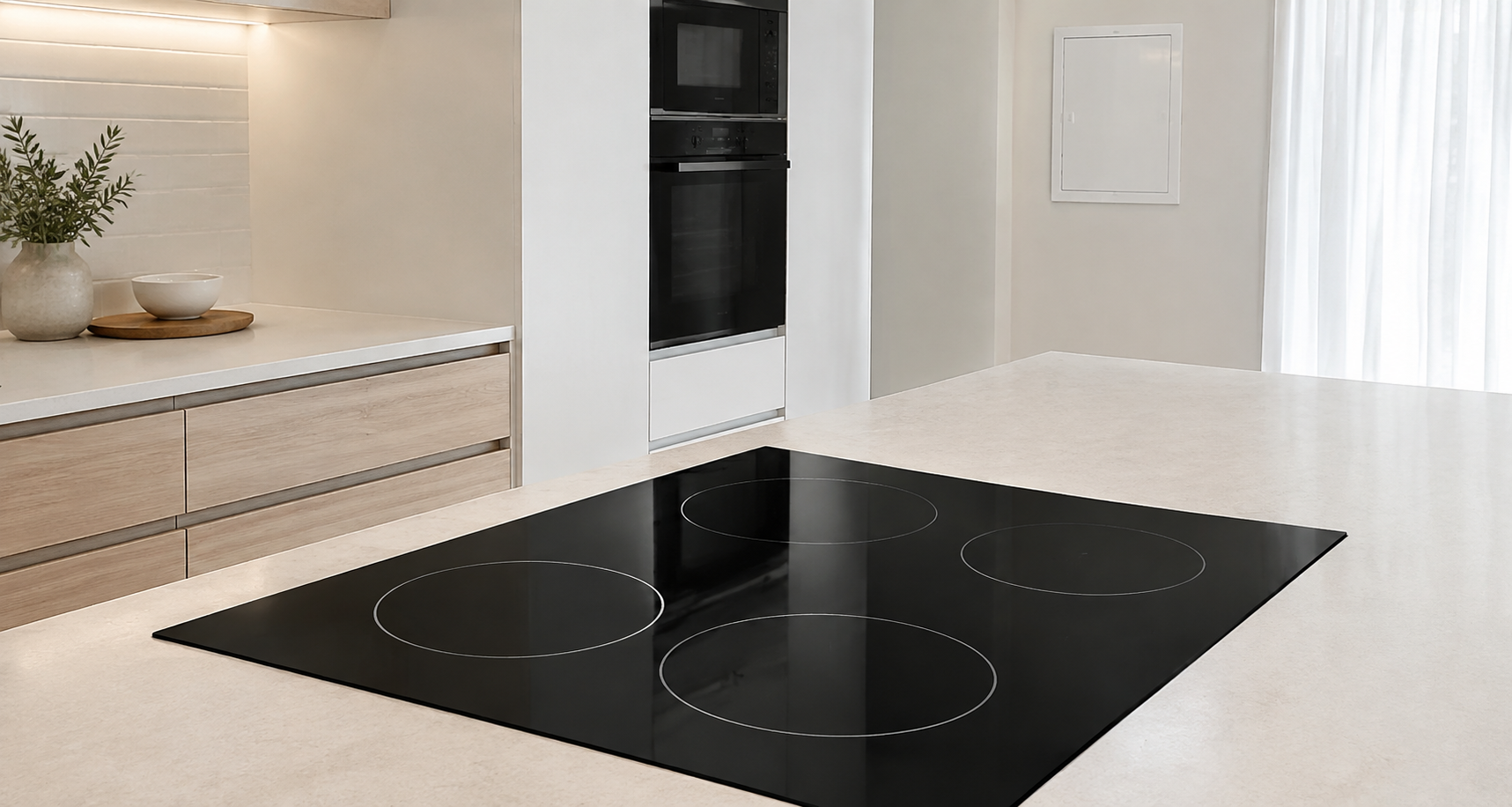
An induction cooktop is not a plug-and-play appliance. Before your new cooktop goes in, a licensed electrician needs to assess your kitchen circuit, your switchboard capacity, and whether a dedicated circuit is required. Here is what that process involves and why skipping it creates problems that are more expensive than the cooktop itself.
Switching to an Induction Cooktop in Brisbane: What Your Electrician Needs to Do First
Induction cooktops have moved from premium kitchen upgrade to mainstream purchase across Brisbane in a relatively short period. The combination of faster cooking times, precise temperature control, easier cleaning, and meaningfully lower energy consumption compared to older electric coil and ceramic glass cooktops has made them a compelling choice for homeowners upgrading a kitchen or converting away from gas. The problem is that a significant number of Brisbane households discover the electrical side of the switch after the cooktop has already been purchased, at which point the conversation with a licensed electrician becomes more pressured than it needs to be.
A common version of this: a household in a suburb like Mitchelton converting from gas discovers, once the electrician actually looks, that there's no existing electrical circuit at the cooktop position at all, since gas was the only service ever run to that spot. A new circuit has to be routed from the switchboard through the ceiling cavity into the kitchen before anything else can happen. Not a disaster, just a step that's a lot less stressful to plan for in advance than to discover the week the new cooktop arrives.
The electrical requirements for an induction cooktop are specific and non-negotiable, and they are different in important ways from what most Brisbane kitchen circuits were originally designed to handle. Getting the electrical assessment done before the appliance arrives is not overcaution. It is the sequence that makes the installation straightforward rather than disruptive.
Exclusive Electrical & Air has been carrying out kitchen electrical installations and circuit upgrades across Brisbane for over a decade, serving more than 2,000 residential and commercial customers in suburbs including Kenmore, Toowong, Hamilton, Aspley, and Mitchelton. Rated 5 stars on Google. 📞 0468 813 833.
Why Induction Cooktops Have Specific Electrical Requirements
An induction cooktop works by generating a rapidly alternating magnetic field beneath its glass surface that induces electrical current directly in compatible cookware, heating the pot or pan rather than the surface beneath it. This process is significantly more energy-efficient than resistive electric heating, but it requires a supply of electrical power that is both adequately rated and reliably delivered to function correctly.
A standard single-zone or compact induction cooktop draws roughly 10 to 15 amps at full power. A full-size 60 or 90 centimetre four-zone induction cooktop with multiple elements operating simultaneously can draw up to roughly 20 to 32 amps, depending on the model's rated power output. That is a substantial and variable electrical load that demands a circuit designed specifically for it, not a shared general-purpose kitchen circuit that also serves the rangehood, microwave, and power points.
The consequences of running a high-draw induction cooktop on an undersized or shared circuit include nuisance tripping of the circuit breaker during cooking, voltage fluctuations affecting cooktop performance, and in older wiring scenarios, sustained overheating at connection points that creates a genuine safety risk. None of these outcomes are acceptable in a kitchen environment, and all of them are avoidable with the correct electrical preparation.
What the Electrician Assesses Before Installation
A licensed electrician from Exclusive Electrical & Air begins any induction cooktop installation with an assessment of the existing kitchen electrical arrangement and the property's switchboard. This assessment determines the scope of work required before the cooktop can be safely and correctly connected.
Existing circuit wiring at the cooktop location is the first item checked. Homes converting from a gas cooktop typically have no existing electrical circuit at the cooktop position at all. The gas supply was the only service to that location, meaning a new circuit must be run from the switchboard to the kitchen for the induction cooktop. This is a defined piece of work that the electrician scopes and quotes based on the cable routing distance and any access constraints between the switchboard and the kitchen.
Homes converting from an older electric coil or ceramic cooktop have an existing circuit at the location, but that circuit requires careful assessment before it is reused. Older electric cooktops were often wired on 20-amp circuits using cable sized for the original appliance. Whether that circuit is appropriate for the new induction cooktop depends on the new appliance's rated draw, the condition and rating of the existing cable, and whether the circuit is dedicated to the cooktop or shared with other kitchen outlets. In many cases the existing circuit is reusable. In others, it requires upgrading before the new appliance connects.
Dedicated circuit requirement is the principle that matters most regardless of the conversion type. An induction cooktop must be served by a dedicated circuit that is not shared with any other outlet or appliance. This is both a safety requirement and a practical one. A circuit shared with a rangehood, microwave, or power points is not capable of reliably supporting the full draw of a high-output induction cooktop without risk of tripping or wiring stress.
Circuit rating is confirmed against the specific cooktop model being installed. A 20-amp dedicated circuit is appropriate for most standard single and dual-zone induction cooktops. A 32-amp dedicated circuit is required for full-size four-zone models rated at higher power outputs. The electrician confirms the required circuit rating from the appliance's installation specifications before any wiring work begins.
Switchboard capacity is assessed alongside the kitchen circuit. Adding a dedicated 20 or 32-amp circuit for an induction cooktop is a meaningful addition to the home's total electrical load, and the switchboard must have both the physical space for an additional circuit breaker and the load headroom to accommodate it. Homes in Brisbane's established suburbs with older switchboards that are already well-populated may require a switchboard upgrade as part of the same project.
Want to know exactly what your kitchen needs before you commit to a specific cooktop model? An assessment gives you the answer, and a fixed-price quote, before you buy anything. 📞 0468 813 833 | Book Your kitchen electrical assessment.
Gas to Induction: Additional Considerations
The conversion from gas to induction is the most significant variation of this installation type, and it involves considerations beyond the electrical scope.
The gas supply line to the existing cooktop must be capped and decommissioned by a licensed gasfitter as a separate piece of work. This work is outside Exclusive Electrical & Air's scope and is not included in the electrical assessment or installation visit — it needs to be booked independently with a licensed gasfitter. Confirm with your gasfitter that the gas line is correctly capped and the work is documented before the induction cooktop installation proceeds.
On the electrical side, a gas to induction conversion requires a new dedicated circuit to be run from the switchboard to the kitchen cooktop position. The cable routing typically passes through the ceiling cavity, down an internal wall, and into the kitchen. The distance, routing complexity, and ceiling cavity accessibility all affect the time and materials involved in the circuit installation.
For Brisbane homes with solar panels, the timing of an induction cooktop installation is worth considering. An induction cooktop drawing power during peak solar generation hours for daytime cooking is one of the more direct ways a Brisbane household can utilise on-site solar generation rather than grid electricity. For households planning both a solar installation and a kitchen upgrade, combining the timing of both projects allows the electrical configuration to be optimised from the outset.
The Compliance Side: Notifiable Work and Certification
Installing a dedicated circuit for an induction cooktop is notifiable electrical work under the Electrical Safety Regulation 2013 QLD. This means the work must be carried out by a licensed electrician and results in a Certificate of Testing and Compliance being issued upon completion.
The compliance certificate records the circuit installed, the testing results, and the electrician's licence details. It is a document that should be retained with your property records and is directly relevant in the context of a future property sale, an insurance claim involving the kitchen circuit, or any subsequent electrical work that builds on the installation.
Connecting an induction cooktop to an incorrectly rated or non-dedicated circuit, or having the electrical work carried out by an unlicensed person, creates liability under the Electrical Safety Act 2002 QLD and may affect the outcome of any insurance claim involving the appliance or associated wiring. See our electrical installations Brisbane service page.
What the Installation Looks Like on the Day
For a standard induction cooktop installation in a Brisbane home where the circuit assessment has been completed and the scope is confirmed, the job typically takes two to four hours. This covers the circuit installation from the switchboard to the kitchen, connection of the cooktop, switchboard circuit labelling, and testing.
Where a switchboard upgrade is required alongside the circuit installation, the combined job takes longer and is scoped as a single project with a single compliance certificate covering both pieces of work. For gas to induction conversions requiring a full new circuit run through the ceiling cavity, the timeline is at the longer end of that range depending on routing complexity.
The cooktop itself is connected and tested as part of the installation. Your electrician confirms correct operation across all zones before the job is signed off.
FAQ
Q: Can I connect my new induction cooktop to an existing power point in the kitchen?
A: No. An induction cooktop must be connected to a dedicated hardwired circuit, not a standard power point. Even high-current power points rated at 15 or 20 amps are not appropriate for a cooktop connection, both because of the shared circuit risk and because induction cooktops are designed for hardwired installation rather than plug-in connection in the Australian market.
Q: My old electric cooktop had a dedicated circuit. Can I reuse it for the new induction cooktop?
A: Possibly, but it requires assessment. The existing circuit's cable rating, circuit breaker rating, and condition must be confirmed as appropriate for the new appliance's specifications. If the existing circuit is rated and sized correctly for the new cooktop and is in good condition, it can often be reused. Your electrician confirms this during the pre-installation assessment.
Q: Does switching to induction increase my electricity bill significantly?
A: Induction cooktops are significantly more energy-efficient than electric coil or ceramic cooktops, converting roughly 85 to 90 percent of electrical energy into heat compared to around 70 percent for ceramic and less for coil. Households converting from gas will see an increase in electricity consumption but a corresponding reduction or elimination of gas costs. For households with solar, scheduling cooking during peak generation hours substantially offsets the grid electricity draw.
Q: How do I know what circuit rating my induction cooktop requires?
A: The required circuit rating is specified in the appliance installation manual and on the data plate on the underside of the cooktop. It is expressed as a maximum current draw in amps. Confirm this figure with your licensed electrician during the pre-installation assessment so the correct circuit is installed for your specific model.
Q: Can a switchboard upgrade and induction cooktop circuit be done in the same visit?
A: Yes, and combining both pieces of work in a single visit is the most efficient approach where a switchboard upgrade is required. The electrician completes both the switchboard upgrade and the dedicated cooktop circuit as a single project, with a single compliance certificate covering the full scope of work.
Still working out whether your existing circuit is reusable or you're starting from scratch? That's exactly what the assessment settles. 📞 0468 813 833 | Book Your kitchen electrical assessment.
An induction cooktop is one of the more satisfying kitchen upgrades a Brisbane home can have, and getting the electrical side sorted before the appliance arrives makes the installation day straightforward rather than complicated.
Exclusive Electrical & Air carries out induction cooktop circuit installations and kitchen electrical assessments across all Brisbane suburbs, from Kenmore and Toowong in the west to Hamilton, Chermside, and Aspley in the north. All work is performed by licensed electricians, fully certified upon completion, and backed by a workmanship warranty. Rated 5 stars on Google. 10+ years experience. 2,000+ Brisbane customers. Licensed Queensland Electrical Contractor.
Call 0468 813 833 or book online at https://www.exclusiveqld.com.au/connect to arrange an assessment before your induction cooktop installation date.