Warm Power Point or Plug Faceplate? Overheating Wiring Warning Signs in Brisbane Homes
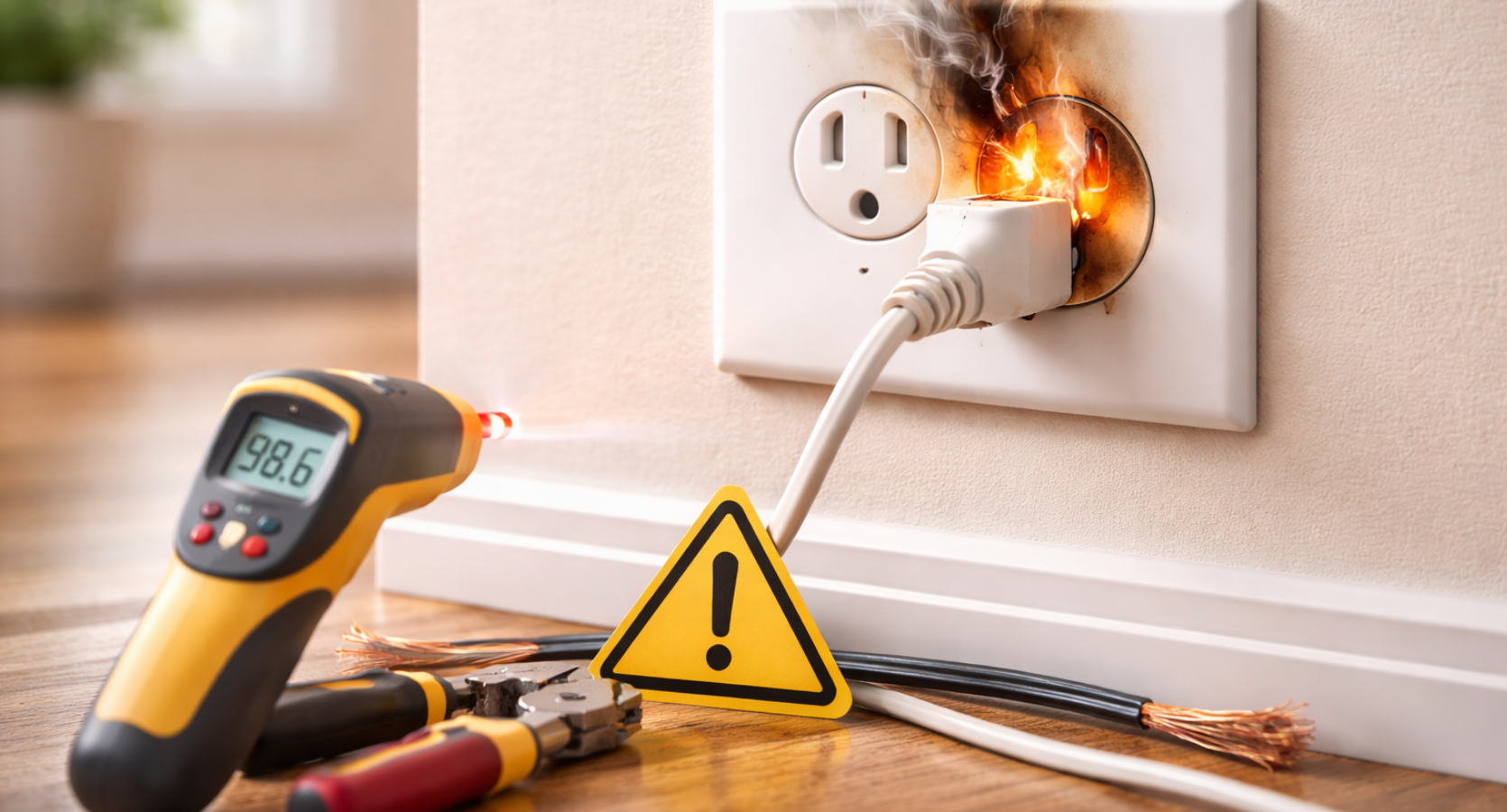
If a power point or plug faceplate feels warm, that’s not normal. In Brisbane homes, this usually signals overheating wiring, loose connections, or overloaded circuits; problems that escalate fast in heat and humidity.
If a power point or plug faceplate feels warm, that’s not normal.
Power points are designed to stay cool.
Warmth means electrical resistance is generating heat inside the wiring.
That is an early warning sign, not a harmless quirk.
In Brisbane conditions, this escalates quickly.
Why this is common in Brisbane
Brisbane homes place constant stress on electrical systems:
Prolonged summer heatwaves
High humidity accelerating insulation breakdown
Air conditioners running for long hours
Modern appliances drawing higher current
Older Queenslander wiring not designed for today’s loads
Voltage dips during hot afternoons under peak grid demand
Heat plus resistance equals failure.
Risks if ignored
Warm power points don’t stabilise. They degrade.
Ignoring it can lead to:
Electrical fires behind walls
Melted insulation and terminals
Arcing you can’t see or hear
Sudden circuit failure
Damage to connected appliances
Insurance complications after an incident
Most electrical fires begin quietly.
This is one of the earliest visible signs.
Quick Diagnosis Checklist
No tools. No touching exposed parts.
Power point warm after normal use
Heat increases when appliances run
Plug feels loose in the socket
Discolouration or fine cracking
Faint burning or plastic smell
Circuit trips occasionally
Any yes means investigation is required.
Causes (Electrical Only)
1. Loose internal wiring
Loose terminals create resistance
Resistance generates heat
Very common in older outlets
Heat worsens every time power flows
This is the most common cause.
2. Overloaded circuit
Too many appliances on one circuit
Heat concentrates at the weakest connection
Common with air fryers, heaters, dryers, and AC units
Brisbane summers expose this fast.
3. Worn or degraded power point
Internal contacts lose tension over time
Poor contact causes micro-arcing
Heat transfers into the faceplate
The failure sits behind the wall.
4. Undersized or ageing wiring
Older wiring not rated for modern demand
Insulation deteriorates faster in heat and humidity
Internal heating occurs before visible damage
This is often hidden.
5. Faulty appliance plug
Damaged or loose pins increase resistance
Heat transfers into the outlet
Often mistaken as “just an appliance issue”
Both sides must be checked.
What NOT to do
Don’t keep using the outlet
Don’t replace the faceplate yourself
Don’t spray or insert anything into it
Don’t ignore intermittent warmth
Don’t assume it will resolve on its own
Heat means damage is already occurring.
When it’s a safety emergency
Stop using the outlet immediately if:
The faceplate is hot, not just warm
There’s a burning smell
You see scorch marks or discolouration
You hear crackling or buzzing
The safety switch trips repeatedly
The outlet feeds high-load appliances
This is a fire risk situation.
A warm power point is never normal.
It’s a clear, early warning of overheating wiring.
Early action prevents fires.
Delay increases risk
If a power point in your Brisbane home feels warm, have it assessed by a licensed electrician.
At Exclusive Electrical & Air, we identify the electrical cause; loose connections, load stress, or wiring faults and make it safe, compliant, and reliable for Brisbane conditions.
Book a professional electrical inspection before heat turns into failure.