Why Power Points Melt (The Simple Explanation)
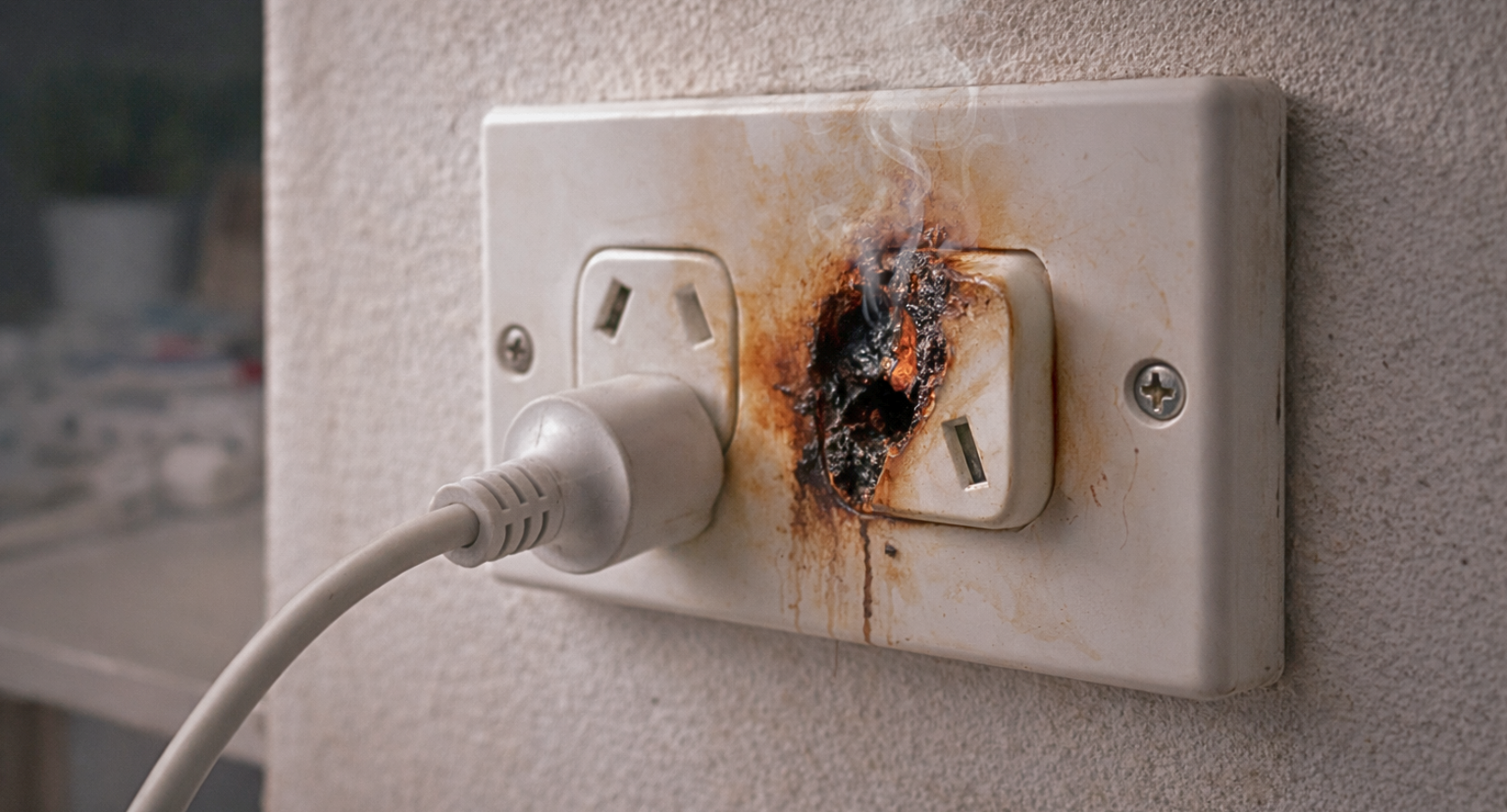
A Brisbane-focused guide explaining why power points melt, what causes outlet overheating, the warning signs homeowners should never ignore, and when to call a licensed electrician before it becomes a fire risk.
Most homeowners assume a power point is either working or broken.
But there’s a dangerous middle stage that many Brisbane homes hit without warning:
The power point is technically still working, but it’s overheating behind the wall.
That overheating can melt the plastic faceplate, damage wiring, and in serious cases, start an electrical fire.
And here’s the truth:
Melted power points are more common than people think, especially in homes with older wiring, high appliance usage, or poorly fitted outlets.
This guide explains exactly why it happens, what signs to watch for, and what you should do immediately.
Why Power Points Melt (The Simple Explanation)
A power point melts because heat builds up where electricity flows.
That heat usually comes from:
Loose connections
Overloaded circuits
Damaged wiring
Faulty appliances
Cheap or worn-out outlets
High-power appliances running too long
Electricity itself doesn’t create enough heat to melt plastic unless something is wrong.
So when a power point melts, it’s always a warning sign.
The 7 Most Common Causes of Melted Power Points
1. Loose Wiring Behind the Power Point (Most Common Cause)
This is the #1 reason outlets overheat.
If a wire inside the outlet is slightly loose, electricity creates resistance.
Resistance creates heat.
Heat builds slowly over weeks or months until the plastic melts.
This is common in:
older homes
loose terminals
power points installed years ago
vibration-prone areas
2. Overloaded Power Boards or Double Adaptors
Many melted power points happen because a single outlet is being asked to power:
heaters
kettles
air fryers
microwaves
fridges
chargers
entertainment systems
When homeowners plug a power board into a power board, or use multiple high-power devices, the outlet is forced to handle more load than it was designed for.
Result:
Heat buildup
Plastic warping
Wire damage
3. High-Power Appliances (Especially Heaters and Air Fryers)
Appliances that draw heavy current for long periods can overheat outlets.
Common culprits:
portable heaters
fan heaters
air fryers
kettles
dryers
older fridges
large TVs and gaming setups
hot water units (depending on wiring)
These appliances should never be run through a cheap extension lead or loose power point.
4. Old or Worn Out Power Points
Power points wear out slowly, especially if they’ve been used thousands of times over decades.
Over time:
springs loosen
terminals weaken
contact points degrade
That causes arcing, heat, and slow melting.
If the plug feels loose or “wiggles” inside the outlet, it’s a serious warning.
5. Moisture or Water Exposure (Outdoor or Wet Areas)
Outdoor power points, laundry outlets, and kitchen outlets can trap moisture over time.
Moisture causes:
corrosion
poor contact
short circuits
overheating
Even without visible water, Brisbane humidity alone can create condensation in outdoor fittings.
6. Cheap or Poor-Quality Installation
Not every power point is installed the same.
Poor workmanship can leave:
loose terminations
wrong cable sizes
damaged copper strands
weak connections
Even if the outlet “works,” it can still slowly overheat and fail.
7. Internal Arcing (The Silent Fire Risk)
Arcing happens when electricity jumps through gaps due to loose contact or damaged wiring.
You may not see it, but it creates:
sparks behind the wall
carbon buildup
intense heat
Arcing is one of the biggest causes of house fires, because it often happens silently.
Warning Signs Your Power Point Is Overheating
If you notice any of these, stop using the outlet:
burning smell near the wall
outlet feels warm or hot
discoloured plastic or scorch marks
flickering when something is plugged in
crackling or buzzing sounds
plug feels loose
frequent circuit trips
plastic looks warped or soft
Even one of these signs means the outlet should be checked.
What You Should Do Immediately If a Power Point Melts
Unplug everything from the outlet
Turn that circuit off at the switchboard
Do not keep using it
Do not cover it or “tape it up”
Call a licensed electrician
If the outlet is still live and continues to heat, it can damage the wiring inside the wall, which creates a larger hazard.
Why Brisbane Homes Are More Vulnerable
Brisbane homes are more likely to experience outlet overheating because of:
summer heat increasing load
higher aircon usage
increased appliances during gatherings
storm-related power surges
older wiring in many suburbs
humidity exposure over time
That’s why melted power points are not rare in Queensland.
Melted Power Points Are a Serious Warning, Not a Minor Issue
A melted outlet isn’t just “old plastic.”
It usually means:
overheating
loose wiring
arcing
overloaded circuits
possible fire risk
If you’ve seen a melted or scorched power point, it’s worth treating it as urgent.
Need an Electrical Safety Check in Brisbane?
Exclusive Electrical & Air provides licensed electrical inspections and repairs across Brisbane.
https://www.exclusiveqld.com.au/connect