Why Your Heater Keeps Tripping the Circuit Breaker
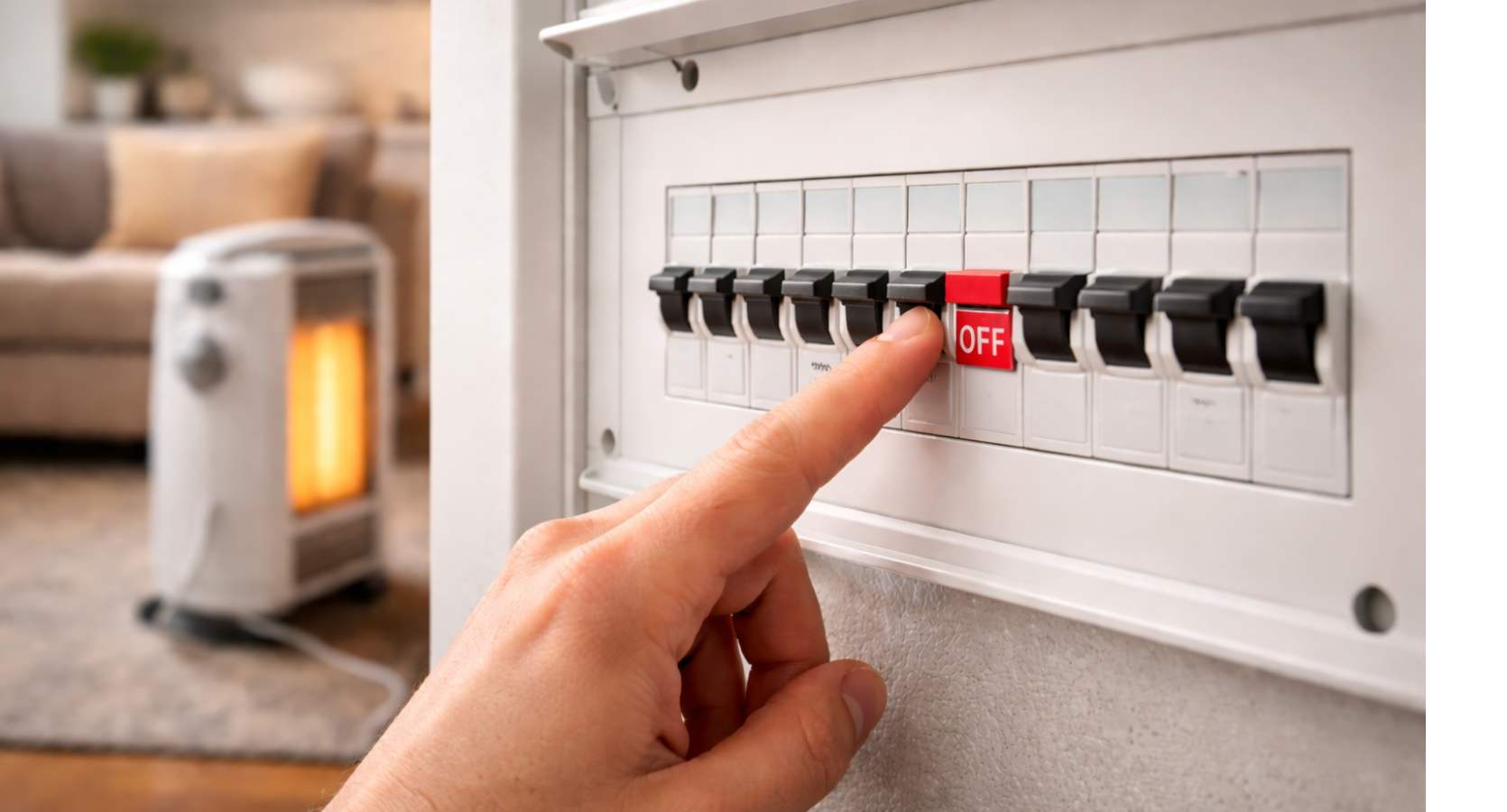
If your heater keeps tripping the circuit breaker, it may be caused by an overloaded circuit, faulty appliance, or outdated wiring. Brisbane homeowners should address the issue quickly to prevent electrical damage or fire risk.
Why Your Heater Keeps Tripping the Circuit Breaker
When temperatures drop in Brisbane, heaters suddenly become one of the most heavily used appliances in the house.
If your heater keeps tripping the circuit breaker, it’s a sign the electrical system is protecting itself from overload or fault conditions.
Circuit breakers are designed to shut power off when a circuit becomes unsafe. While that can be inconvenient, it prevents overheating, electrical fires, and damage to appliances.
Understanding why your heater is triggering the breaker can help you determine whether the issue is simple or something that requires a licensed electrician.
What a Circuit Breaker Actually Does
A circuit breaker protects the wiring inside your home.
Each electrical circuit can only carry a certain amount of current. When the electrical load exceeds that safe limit, the breaker trips and cuts power.
This happens to prevent:
Overheated wiring
Electrical fires
Damage to appliances
Electrical shock risks
If your heater repeatedly trips a breaker, it means the circuit is experiencing more load or fault current than it can safely handle.
1. The Heater Is Overloading the Circuit
Portable heaters draw a large amount of electricity.
Most heaters consume between 1500–2400 watts, which is close to the maximum load many household circuits are designed to handle.
If other devices are running on the same circuit, the combined load may exceed the breaker limit.
Common appliances sharing the same circuit may include:
Televisions
Computers
Lamps
Phone chargers
Electric blankets
Gaming consoles
When the heater turns on, the circuit may suddenly exceed its safe capacity and the breaker trips.
2. The Heater Is Plugged Into a Power Board
Many homeowners plug heaters into extension leads or power boards.
This is one of the most common causes of breaker trips.
Power boards:
Add electrical resistance
May overload easily
Often aren’t rated for heater loads
High-wattage appliances should always be plugged directly into a wall outlet.
Using extension leads with heaters can also increase fire risk.
3. The Heater Itself May Be Faulty
If the heater is older or damaged, it may draw excessive current.
Common heater faults include:
Damaged heating elements
Internal wiring issues
Worn electrical insulation
Dust buildup inside the heater
These problems can cause the appliance to draw abnormal current, triggering the breaker.
If the breaker trips immediately when the heater is turned on, the heater itself may be faulty.
4. The Circuit Is Already Near Its Capacity
Many Brisbane homes, particularly older ones, were not designed for modern electrical loads.
Back when the house was built, circuits might have powered:
Lights
A television
A refrigerator
Now the same circuit may run:
Multiple chargers
Entertainment systems
Air conditioning
Computers
Adding a heater on top of that demand may push the circuit beyond its safe limit.
This is especially common in homes with outdated switchboards or limited circuit separation.
Internal link suggestion: switchboard upgrades.
5. The Breaker May Be Doing Its Job
Sometimes the breaker is not the problem. It’s doing exactly what it’s supposed to do.
Circuit breakers are designed to detect:
Overcurrent
Short circuits
Electrical faults
If the breaker trips repeatedly, it may be preventing a more serious electrical problem.
Resetting the breaker repeatedly without investigating the cause is not recommended.
6. Your Wiring May Be Ageing
Older wiring systems may struggle with modern electrical loads.
Signs of ageing wiring include:
Frequent breaker trips
Flickering lights
Warm outlets
Burning smells near outlets
Discoloured switches
In some Brisbane homes built decades ago, wiring insulation can deteriorate over time.
If wiring cannot safely carry current, breakers may trip to prevent overheating.
7. Your Switchboard May Need an Upgrade
Older switchboards often lack the capacity to support modern appliances.
Problems may include:
Limited circuits
Old-style ceramic fuses
Ageing breakers
Poor load balancing
Switchboard upgrades can improve electrical reliability and safety while supporting modern appliances like heaters, air conditioners and EV chargers.
Internal link suggestion: switchboard upgrades Brisbane.
When You Should Call a Licensed Electrician
You should arrange an electrical inspection if:
The breaker trips every time the heater turns on
Multiple appliances cause breaker trips
Lights dim when heaters start
The switchboard is more than 20 years old
Outlets feel warm when heaters run
Electrical systems in Queensland must comply with the Electrical Safety Act 2002 (QLD) and current wiring standards.
A licensed electrician can determine whether the issue is with the heater, the circuit, or the electrical system itself.
How Electricians Diagnose Breaker Trips
When investigating breaker trips, electricians typically:
Test the heater’s power draw
Inspect the switchboard
Measure circuit loads
Check wiring condition
Identify overloaded circuits
This allows them to determine the safest and most effective solution.
Possible fixes may include:
Installing dedicated circuits
Upgrading switchboards
Replacing faulty outlets
Repairing wiring
Rebalancing electrical loads
Safe Heater Usage Tips
To reduce the risk of electrical problems during winter:
Plug heaters directly into wall outlets
Avoid using extension leads
Do not run heaters on overloaded circuits
Keep heaters clean and free of dust
Turn heaters off when not in use
These simple steps can help prevent circuit overload and improve electrical safety.
FAQs: Heater Tripping Circuit Breakers
Why does my heater trip the breaker immediately?
Immediate breaker trips usually indicate a fault inside the heater or a short circuit.
Can a heater overload a circuit?
Yes. Portable heaters draw significant power and can overload circuits if other appliances are running simultaneously.
Is it safe to keep resetting the breaker?
No. Repeatedly resetting a breaker without identifying the cause can lead to electrical damage or fire risk.
Should heaters be plugged into power boards?
No. Heaters should always be plugged directly into wall outlets to avoid overloading extension leads.
When should I call an electrician?
If the breaker trips repeatedly or multiple appliances cause the issue, a licensed electrician should inspect your system.
Keep Your Brisbane Home Warm and Safe
If your heater keeps tripping the circuit breaker, your electrical system may be struggling to handle the load.
Exclusive Electrical & Air helps Brisbane homeowners with:
Electrical fault diagnosis
Switchboard upgrades
Circuit upgrades
Power point installations
Electrical safety inspections
Our licensed electricians understand the demands Brisbane homes place on electrical systems during winter.
If breaker trips keep happening, it’s best to have your electrical system inspected before the problem worsens.