Why Your Lights Dim When Appliances Turn On (And What It Means for Your Wiring)
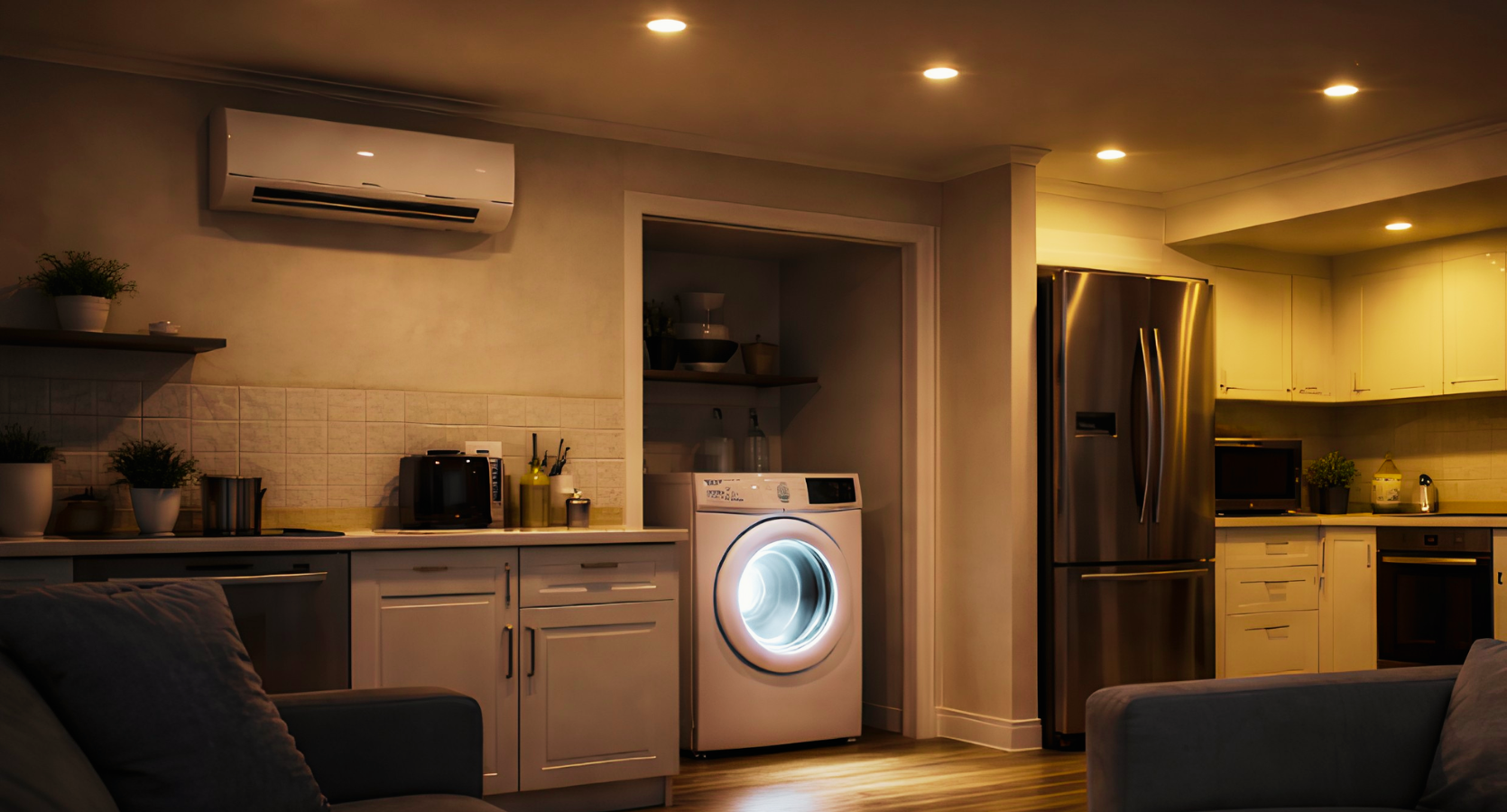
If your lights dim when appliances turn on, it may indicate voltage drop, overloaded circuits, or outdated wiring. Brisbane homeowners should have the system inspected to prevent electrical faults and safety risks.
Why Your Lights Dim When Appliances Turn On (And What It Means for Your Wiring)
Many Brisbane homeowners notice a common electrical issue: when a large appliance starts, the lights briefly dim.
It might happen when:
The air conditioner kicks in
The fridge compressor starts
The kettle or microwave switches on
A pool pump or vacuum begins running
A slight momentary dim can sometimes be normal. But frequent or noticeable dimming may indicate an electrical issue that deserves attention.
Understanding what causes it can help you determine whether your home’s wiring is functioning properly or whether it’s time to call a licensed electrician.
What Causes Lights to Dim When Appliances Turn On?
The most common cause is voltage drop.
When an appliance starts up, it draws a large surge of electrical current. If the wiring or circuits in your home can’t supply that current efficiently, the voltage to other devices drops temporarily.
Lights are particularly sensitive to voltage fluctuations, which is why they dim first.
This effect usually lasts less than a second. But repeated or severe dimming suggests the electrical system is under strain.
1. High Start-Up Power from Appliances
Many appliances require significantly more power during startup than during normal operation.
Examples include:
Air conditioning compressors
Refrigerators and freezers
Washing machines
Pool pumps
Dishwashers
Vacuum cleaners
When these appliances start, they may draw several times their normal running current for a brief moment.
If the circuit supplying power cannot handle that demand efficiently, nearby lights may dim.
In Brisbane homes with modern wiring, this effect is typically minimal. In older homes, it can be much more noticeable.
2. Overloaded Circuits in Older Homes
Many Brisbane homes built before the 1990s were wired for a much lower electrical load.
Back then, a typical household might run:
A fridge
A few lights
A television
Maybe a small air conditioner
Today’s homes often run:
Multiple split system air conditioners
Induction cooktops
Large refrigerators
Pool pumps
Home offices
Electric vehicle chargers
If several appliances share the same circuit, the wiring may become overloaded when one of them starts.
Symptoms may include:
Lights dimming
Safety switches tripping
Warm outlets or switches
Flickering lights
In many cases, this indicates the need for circuit rebalancing or a switchboard upgrade.
Internal link suggestion: switchboard upgrades.
3. Loose or Ageing Electrical Connections
Loose wiring connections can also cause voltage fluctuations.
Over time, electrical connections inside:
Switchboards
Power outlets
Light fittings
Junction boxes
can become worn or slightly loose.
This increases electrical resistance, which can lead to voltage drops when appliances draw higher current.
Besides dimming lights, warning signs may include:
Buzzing sounds from outlets
Flickering lights
Warm switches or outlets
Occasional burning smell
Loose electrical connections are a safety risk and should be inspected by a licensed electrician immediately.
4. Long Wiring Runs in Larger Homes
In larger Brisbane homes, electrical cables may run long distances from the switchboard to outlets or appliances.
Long cable runs can create natural voltage drop, particularly when high-load appliances are running.
This is more common in:
Double-storey homes
Large properties
Homes with detached garages
Properties with outdoor pool equipment
Proper circuit design and cable sizing are essential to minimise voltage loss across these distances.
5. An Outdated or Undersized Switchboard
Your switchboard distributes electricity throughout your home.
If it is outdated or undersized for modern power usage, it may struggle to manage electrical demand.
Older switchboards may:
Have insufficient circuits
Lack proper load balancing
Contain ageing breakers or wiring
Lack adequate safety switches
When multiple appliances draw power simultaneously, voltage may dip across the system.
Switchboard upgrades can significantly improve electrical stability and safety.
Internal link suggestion: switchboard upgrades Brisbane.
6. LED Lights Can Make the Problem More Noticeable
Many Brisbane homes have switched to LED lighting to reduce energy consumption.
LED lights are efficient but sensitive to voltage changes. Even small fluctuations can cause visible dimming or flickering.
Incandescent bulbs used to mask this effect because their filaments retained heat and light longer.
LEDs respond instantly to voltage variation, which makes electrical issues more obvious.
So the problem may have existed before, you just didn’t notice it.
When Light Dimming Is Normal
A very slight, brief dim when a large motor starts (such as an air conditioner) can be normal.
However, it should be:
Short (less than a second)
Barely noticeable
Infrequent
Modern electrical systems are designed to handle appliance start-up loads efficiently.
If the dimming is strong, frequent, or getting worse, it likely indicates a wiring issue.
Warning Signs You Should Call an Electrician
You should arrange an inspection if you notice:
Lights dim significantly when appliances start
Lights flicker regularly
Safety switches trip often
Power outlets feel warm
Appliances cause noticeable power fluctuations
Your switchboard is more than 20 years old
Electrical systems in Queensland must comply with the Electrical Safety Act 2002 (QLD) and current wiring standards. Older installations may still function but may not meet modern electrical load requirements.
How Electricians Diagnose Voltage Drop
A licensed electrician will typically:
Inspect the switchboard and circuits
Measure voltage levels across circuits
Check load distribution
Test connections for resistance
Identify overloaded circuits
Assess wiring condition and cable sizing
The solution may involve relatively simple fixes such as redistributing circuits, tightening connections, or upgrading breakers.
In other cases, larger upgrades may be required.
Potential Electrical Solutions
Depending on the cause, solutions may include:
Circuit rebalancing
Replacing ageing wiring
Upgrading switchboards
Installing dedicated circuits for large appliances
Improving cable sizing for high-load equipment
These upgrades not only stop lights dimming but also improve safety and electrical efficiency.
Internal link suggestion: electrical inspections Brisbane.
FAQs: Lights Dimming in Brisbane Homes
Is it dangerous if lights dim when appliances start?
Occasional minor dimming may be normal. However, significant or frequent dimming can indicate overloaded circuits or wiring issues that should be inspected by a licensed electrician.
Why do my lights dim when the air conditioner starts?
Air conditioners require a large start-up current. If your wiring or switchboard struggles to supply that current, the voltage may briefly drop, causing lights to dim.
Can an old switchboard cause lights to dim?
Yes. Older switchboards may not distribute electrical load efficiently, especially in homes that now run multiple high-powered appliances.
Do LED lights flicker more than old bulbs?
LED lights are more sensitive to voltage fluctuations, which makes electrical issues like voltage drop more noticeable.
Should I get an electrical inspection if this keeps happening?
Yes. Persistent dimming is a sign your electrical system may need maintenance, upgrades, or circuit adjustments.
Keep Your Brisbane Home’s Electrical System Safe and Reliable
If your lights dim when appliances turn on, your electrical system may be under more strain than it should be.
Exclusive Electrical & Air provides Brisbane homeowners with:
Professional electrical inspections
Switchboard upgrades
Circuit balancing
Fault diagnosis
Air conditioning electrical installations
Our licensed electricians ensure your home meets Queensland safety standards while supporting modern power demands.
If you’re noticing flickering or dimming lights, it’s best to have your system inspected before a small issue becomes a larger electrical problem.