Why Your Lights Flicker When It’s Windy or Raining
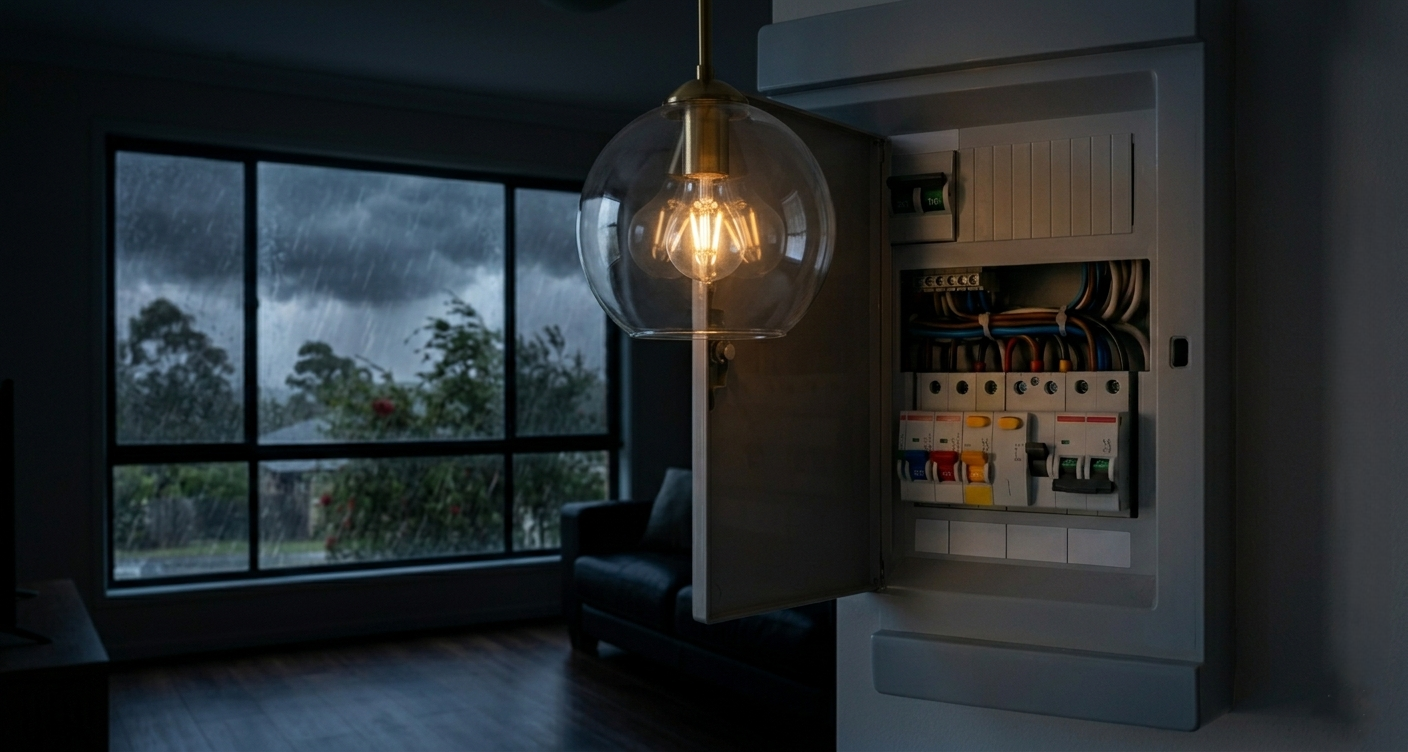
If your lights flicker during windy or rainy weather, it could be caused by external power supply issues, moisture intrusion, or internal wiring faults. Regular flickering should be professionally checked.
You notice it when the wind picks up or rain starts falling. The lights flicker. Maybe briefly. Maybe constantly.
Most people ignore it.
That’s fine… until it isn’t.
Weather-related flickering in Brisbane homes can come from either outside your property or inside your electrical system. Knowing the difference matters, because one is harmless and the other can quietly turn into a safety issue.
1. External Power Supply Issues (The Common Culprit)
Sometimes the issue isn’t your house at all.
Brisbane still has many overhead power lines, and wind can affect them more than people realise.
Common external causes include:
Power lines swaying in strong wind
Tree branches brushing against lines
Loose connections on poles
Transformer load fluctuations during storms
This can cause small voltage drops or surges, which show up as flickering lights.
How to Tell It’s External
Your neighbours experience the same issue
Flickering affects the whole house
It only happens during stronger storms
If that’s the case, the grid is having a rough moment, not your wiring.
2. Loose Electrical Connections Inside Your Home
Now the less comforting version.
If flickering happens only in your home, especially in specific rooms, it often points to loose connections.
Wind and vibration can subtly affect:
Switchboard connections
Ceiling light fittings
Junction boxes
Wall outlets
Loose connections cause inconsistent electrical flow, which leads to flickering.
Warning Signs
Flickering in specific lights only
Lights dimming unevenly
Buzzing or crackling sounds
Flickering getting worse over time
Loose connections are one of those “small problem now, big problem later” situations.
3. Moisture Getting Into Electrical Components
Rain and humidity don’t mix well with electricity. Shocking, I know.
In Brisbane, moisture can enter:
Outdoor power points
Exterior lighting
Roof cavities
Junction boxes
When water or humidity interferes with connections, it can cause:
Flickering lights
Short-term faults
Safety switch trips
If flickering happens mainly during rain, moisture is a strong suspect.
Internal link suggestion: electrical safety inspections.
4. Voltage Fluctuations During Storms
Storms can destabilise the electrical supply.
When voltage fluctuates:
Lights flicker or pulse
LEDs exaggerate the effect
Sensitive electronics react poorly
Modern LED lighting makes this more obvious because it responds instantly to voltage changes. Older bulbs used to hide this a bit better.
So the problem isn’t new. You’re just seeing it more clearly now.
5. Ageing Wiring Reacts to Weather Changes
Older Brisbane homes don’t handle environmental changes as gracefully.
Ageing wiring systems may have:
Degraded insulation
Older connection points
Less stable load distribution
When weather changes:
Temperature shifts
Humidity increases
Slight structural movement occurs
All of this can expose weaknesses in older wiring.
6. Outdoor Lighting and Circuits Are Vulnerable
If your outdoor lights are the main offenders, the issue is usually localised.
Common causes:
Water ingress into fittings
Faulty weatherproof seals
Corroded wiring
Damaged cabling
Outdoor electrical installations need to be properly rated and sealed. If they’re not, Brisbane weather will eventually find a way in.
When Flickering Is Normal (And When It’s Not)
Normal:
Brief flicker during severe storms
Whole neighbourhood affected
Short interruptions that resolve quickly
Not Normal:
Flickering during light wind or rain
Flickering in only certain rooms
Flickering that’s getting worse
Lights dimming significantly
If it’s consistent, it’s not just “weather.”
When to Call a Licensed Electrician
You should get your system checked if:
Flickering happens regularly during weather changes
Only certain lights or circuits are affected
You hear buzzing or crackling
Safety switches trip during rain
Lights dim noticeably, not just flicker
Electrical systems in Queensland must comply with the Electrical Safety Act 2002 (QLD), and faults should always be handled by licensed electricians.
How Electricians Diagnose the Issue
A proper inspection usually includes:
Checking the switchboard
Measuring voltage stability
Inspecting internal connections
Testing circuits under load
Checking outdoor fittings for moisture
This helps determine whether the issue is internal or coming from the supply network.
How to Prevent Weather-Related Flickering
You can reduce the risk by:
Ensuring outdoor fittings are weatherproof
Replacing ageing or damaged wiring
Upgrading outdated switchboards
Scheduling regular electrical inspections
Internal link suggestion: switchboard upgrades Brisbane.
FAQs: Lights Flickering in Wind or Rain
Why do my lights flicker when it’s windy?
Wind can affect power lines and external connections, causing voltage fluctuations that lead to flickering.
Is flickering during rain dangerous?
Occasional flickering may be normal, but frequent flickering can indicate moisture or wiring issues that should be inspected.
Why do only some lights flicker?
This usually indicates a localised issue, such as a loose connection or circuit problem.
Can storms damage my electrical system?
Yes. Storms can affect both the external supply and internal wiring, especially if moisture is involved.
Should I call an electrician for flickering lights?
If flickering is frequent, worsening, or isolated to your home, it’s worth having it checked.
Don’t Let “Just the Weather” Become a Bigger Problem
Weather might trigger the flicker, but it’s not always the root cause.
If your Brisbane home reacts every time the wind picks up or rain starts, your electrical system may be showing early warning signs.
Exclusive Electrical & Air helps homeowners with:
Electrical fault diagnosis
Switchboard upgrades
Outdoor electrical repairs
Lighting circuit inspections
Safety checks
Because sometimes it really is just the storm.
And sometimes it’s your wiring quietly asking for help before it turns into something far less subtle.