Why Your Smoke Alarm Keeps Beeping (And When You Should Call an Electrician)
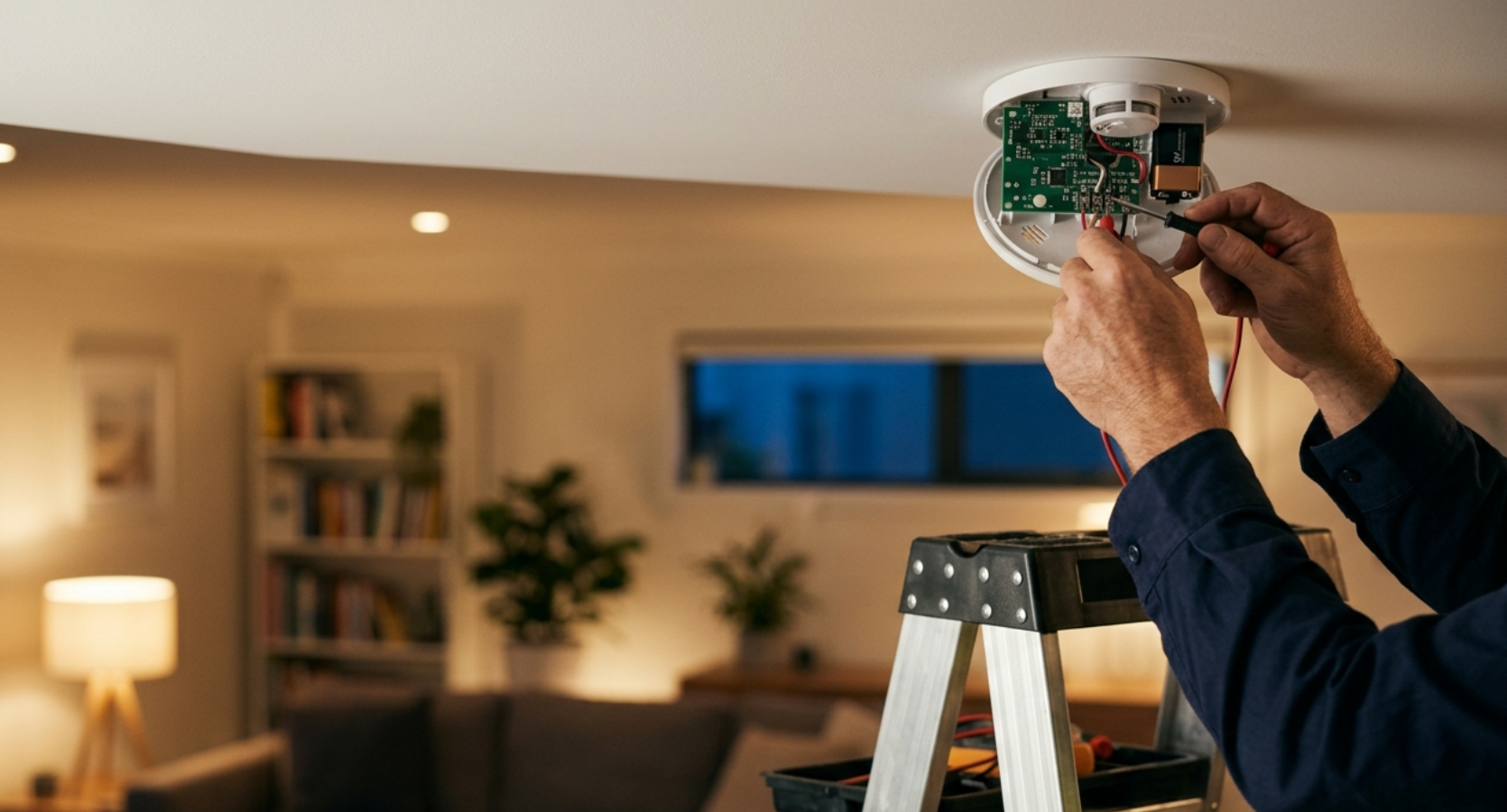
A beeping smoke alarm usually signals a battery issue, sensor fault, or end-of-life warning. Brisbane homeowners should address the problem quickly to maintain compliance with Queensland smoke alarm laws.
Why Your Smoke Alarm Keeps Beeping (And When You Should Call an Electrician)
A smoke alarm that keeps beeping is one of the most common electrical issues Brisbane homeowners face.
That persistent chirping sound typically means the alarm is trying to tell you something important. Ignoring it or removing the alarm entirely is a risky move that compromises your household’s safety.
Understanding why smoke alarms beep can help you fix the issue quickly and ensure your home remains compliant with Queensland safety regulations.
What Does a Beeping Smoke Alarm Mean?
A smoke alarm beep is different from the loud alarm triggered by smoke or fire.
The short “chirp” every 30–60 seconds is a warning signal. It usually indicates that the device requires maintenance or replacement.
Common reasons include:
Low battery
Dust or contamination inside the sensor
End-of-life warning
Power supply issues
Faulty wiring in hardwired alarms
Identifying the cause helps determine whether a quick fix is possible or whether a licensed electrician should inspect the system.
1. Low Battery (The Most Common Cause)
Even hardwired smoke alarms typically contain backup batteries.
When the battery voltage drops, the alarm emits a chirp to alert you that the battery needs replacement.
Signs this is the cause include:
A single chirp every 30–60 seconds
Chirping beginning suddenly overnight
The alarm otherwise functioning normally
Replacing the battery usually resolves the issue immediately.
However, if the chirping continues after battery replacement, another fault may be present.
2. End-of-Life Warning
Smoke alarms are not designed to last forever.
Most modern smoke alarms have a lifespan of around 10 years. After this period, the sensor becomes less reliable and the unit will often begin chirping to signal that it needs replacement.
Common signs of end-of-life warning include:
Persistent chirping even after battery replacement
The alarm is more than 10 years old
The unit displays an end-of-life indicator
Replacing the entire smoke alarm is the safest solution.
Queensland law increasingly requires photoelectric smoke alarms, which detect smouldering fires more effectively than older ionisation models.
3. Dust, Insects or Contamination
Smoke alarm sensors are sensitive devices.
Dust, insects or debris inside the unit can trigger false warnings or cause the alarm to chirp intermittently.
This is particularly common in Brisbane homes due to:
Humid conditions
Ceiling dust accumulation
Insects entering the alarm housing
Cleaning the alarm with a vacuum or compressed air can sometimes resolve the issue.
If contamination has damaged the sensor, replacement may be necessary.
4. Power Supply Issues in Hardwired Smoke Alarms
Many Brisbane homes have hardwired smoke alarms connected to the electrical system.
If the power supply is interrupted or unstable, the alarm may begin chirping.
Possible causes include:
Loose electrical connections
Faulty wiring
Tripped circuits
Switchboard issues
If multiple alarms begin chirping simultaneously, it may indicate an electrical fault rather than a battery problem.
A licensed electrician should inspect the system to ensure safe operation.
5. Interconnected Alarm System Faults
Modern Queensland homes often have interconnected smoke alarms, meaning all alarms activate if one detects smoke.
While this improves safety, it can also complicate troubleshooting.
A fault in one alarm can cause warning signals across the entire system.
Common problems include:
Communication wiring faults
Faulty interconnected units
Incorrect installation
Sensor failure in one alarm triggering others
Professional diagnosis may be required to identify the faulty unit.
Queensland Smoke Alarm Laws for Homeowners
Queensland has some of the strictest smoke alarm regulations in Australia.
Current legislation requires homes being sold or rented to have:
Photoelectric smoke alarms
Interconnected alarms throughout the property
Alarms installed in every bedroom
Alarms installed in hallways connecting bedrooms
Alarms on every level of the home
By 1 January 2027, these requirements will apply to all Queensland homes.
Older battery-only alarms may not meet these standards.
Upgrading to compliant smoke alarms ensures both safety and legal compliance.
Internal link suggestion: smoke alarm installation Brisbane.
Signs You Should Call an Electrician
Some smoke alarm issues require professional attention.
You should contact a licensed electrician if:
The alarm continues chirping after battery replacement
Multiple alarms begin chirping simultaneously
The alarm randomly triggers without smoke
Wiring appears damaged
Your alarms are more than 10 years old
Your home needs upgrading to meet QLD regulations
Electrical smoke alarm systems must be installed and serviced by licensed electricians in Queensland.
Why Professional Smoke Alarm Installation Matters
Correct installation ensures:
Compliance with Queensland legislation
Proper alarm placement
Reliable interconnection between alarms
Safe electrical wiring
Long-term system reliability
Incorrectly installed alarms may fail during emergencies or create nuisance alerts.
Professional installation eliminates these risks.
How Often Smoke Alarms Should Be Checked
Regular maintenance keeps smoke alarms functioning properly.
Recommended maintenance includes:
Monthly alarm testing using the test button
Battery replacement as required
Annual inspection of alarms
Replacing alarms every 10 years
These steps ensure your alarms remain effective and compliant with Queensland safety standards.
FAQs: Smoke Alarm Beeping in Brisbane
Why does my smoke alarm beep every 30 seconds?
This usually indicates a low battery or an end-of-life warning. Replacing the battery or the entire unit typically resolves the issue.
Why does my hardwired smoke alarm keep chirping?
Hardwired alarms still rely on backup batteries. If chirping continues after battery replacement, it may indicate wiring or power supply issues.
How long do smoke alarms last?
Most smoke alarms have a lifespan of about 10 years. After that, the sensor becomes unreliable and the unit should be replaced.
Are interconnected smoke alarms required in Queensland?
Yes. Queensland laws require interconnected photoelectric smoke alarms in homes being sold or rented, with full compliance required for all homes by 2027.
Should I call an electrician if my smoke alarm keeps beeping?
If replacing the battery doesn’t stop the chirping, or if multiple alarms are affected, a licensed electrician should inspect the system.
Keep Your Brisbane Home Safe and Compliant
A smoke alarm that keeps beeping isn’t just an annoyance. It’s a warning that something needs attention.
Exclusive Electrical & Air helps Brisbane homeowners with:
Smoke alarm inspections
Smoke alarm replacement
Interconnected alarm installation
Electrical fault diagnosis
Compliance upgrades for Queensland smoke alarm laws
Ensuring your smoke alarms are functioning correctly protects your home, your family, and your legal compliance.
If your smoke alarm keeps chirping or your system needs upgrading, a professional electrical inspection can resolve the issue quickly and safely.