Why Your Smoke Alarm Keeps Chirping Even After Replacing the Battery
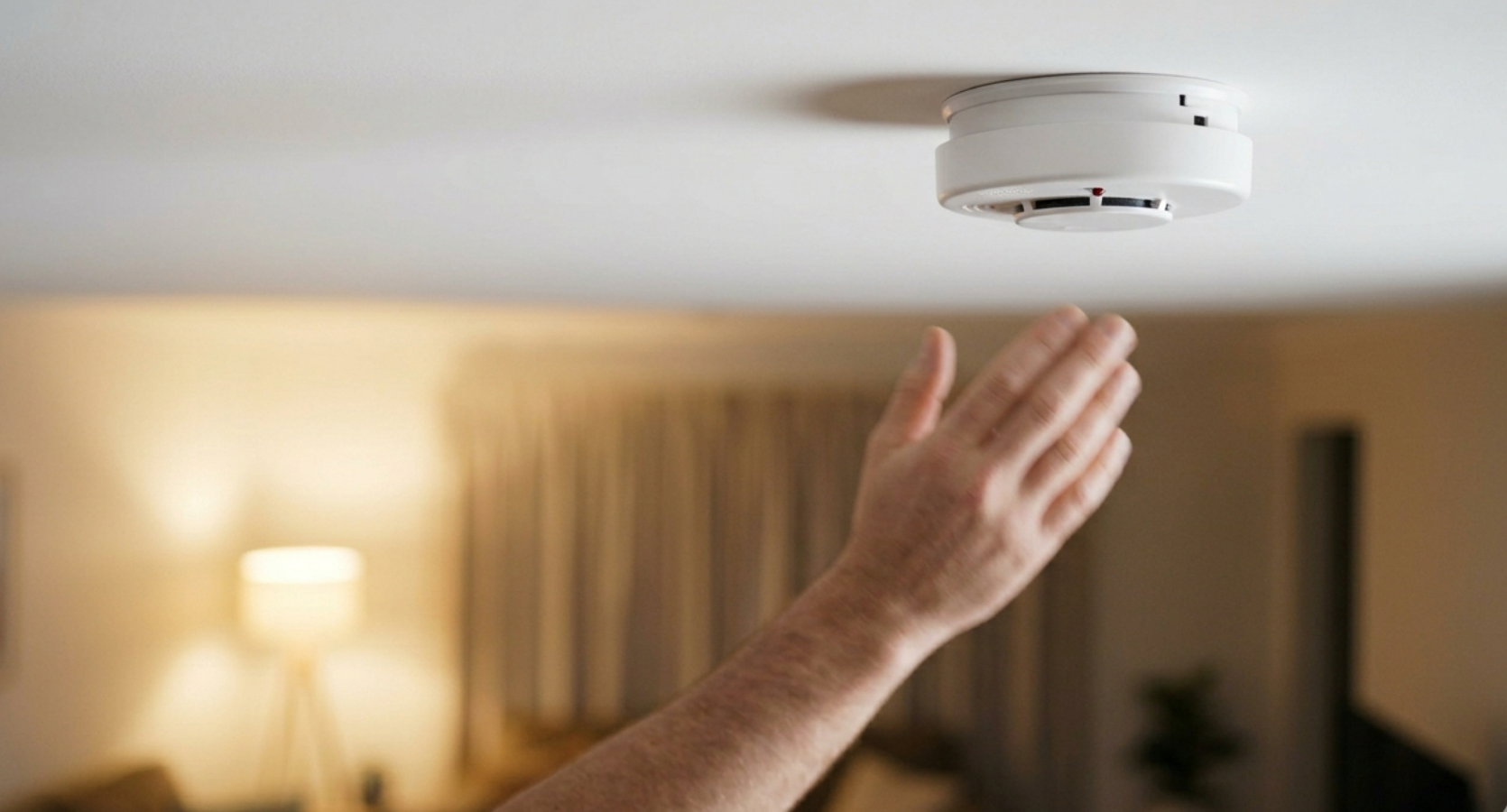
If your smoke alarm is still chirping after a battery change, the battery probably wasn't the problem. From residual charge and dust buildup to end-of-life warnings and interconnection faults, here's what's actually causing it and when the alarm needs to be replaced entirely.
Why Your Smoke Alarm Keeps Chirping Even After Replacing the Battery
You've climbed the ladder, swapped the battery, and headed back to bed. Thirty minutes later, it starts again. That single, maddening chirp every sixty seconds that somehow sounds louder at 2am than any other time of day.
Replacing the battery is the logical first move, and sometimes it works. But if your smoke alarm is still chirping afterwards, the battery was never the problem to begin with. There are several reasons a smoke alarm chirps, and most of them are telling you something worth paying attention to.
Here's what's actually going on, and what to do about it.
First, Understand What the Chirp Is Telling You
A smoke alarm communicates through sound, and not all beeping patterns mean the same thing. The key distinction is between an alarm and a chirp.
A continuous or repeating multi-beep pattern is the alarm itself, indicating detected smoke or fire. That one you already know to take seriously.
A single chirp at regular intervals, typically every 30 to 60 seconds, is a fault signal. It means the alarm has detected a problem with itself and is asking for attention. The nature of that problem is where things get a little more involved.
The Most Common Reasons Your Alarm Is Still Chirping
The New Battery Wasn't Installed Correctly
It sounds obvious, but it's more common than people admit. A battery that isn't seated firmly, is inserted the wrong way, or has a loose connection at the terminals will trigger a low-power fault signal even if the battery itself is brand new.
Before assuming the battery is the issue, remove it completely, check the contacts for any corrosion or debris, reseat the battery firmly, and test the alarm. Sometimes that's all it takes.
The Alarm Has Residual Charge From the Old Battery
Some smoke alarms hold a small residual charge even after the battery is removed. If you swap the battery quickly without clearing that charge, the alarm can continue to chirp because its internal memory still registers a low-power state.
The fix is straightforward. Remove the battery, press and hold the test button for around 15 seconds to discharge any residual power, then install the fresh battery. This resets the alarm's internal processor and often stops the chirping immediately.
Dust and Debris Inside the Alarm Chamber
Smoke alarms work by detecting particles in the air. When dust, dead insects, or debris accumulate inside the sensing chamber, the alarm can mistake them for smoke particles, triggering either a false alarm or a persistent fault chirp.
This is particularly relevant in Brisbane homes during summer, when humidity and open windows bring in more airborne particles, and in older homes with ceiling cavities that collect dust. Gently vacuuming around the alarm vents or using a can of compressed air to clear the chamber can resolve this. If the alarm is more than a couple of years old and has never been cleaned, it's overdue.
The Alarm Has Reached the End of Its Service Life
This is the one most people don't know about, and it's probably the most important.
Smoke alarms have a finite lifespan. Most photoelectric alarms are rated for ten years from the date of manufacture, not installation. When an alarm approaches or passes that date, it will often begin chirping as a built-in end-of-life warning, and no amount of battery replacement will stop it.
The manufacture date is printed on a label on the back or side of the alarm. If your alarm is approaching or past the ten-year mark, the chirp is the alarm telling you it needs to be replaced entirely. That's not a fault, it's the alarm doing exactly what it's designed to do.
In Queensland, replacing an end-of-life alarm also means replacing it with a compliant one. Under the Fire and Emergency Services Act 1990 (Qld), any replacement alarm must be a photoelectric type, powered by either mains power with a battery backup or a sealed non-removable 10-year lithium battery, and interconnected with all other alarms in the home.
When the Chirping Is an Interconnection Fault
If your home has interconnected smoke alarms, a chirp from one unit doesn't always mean that unit is the problem. In a wirelessly interconnected system, a fault in one alarm can trigger a fault signal across the network, meaning the chirping unit might simply be relaying a fault from another alarm elsewhere in the home.
This is worth checking before you replace anything. Identify which alarm is actually initiating the chirp rather than just responding to one. In hardwired interconnected systems, a wiring fault or a failing alarm on the circuit can cause the same effect across multiple units.
If you're working through a wirelessly interconnected system across a larger Brisbane home and can't isolate the source, this is a good point to call a licensed electrician rather than continue troubleshooting by trial and error.
Environmental Factors That Trigger Chirping
Brisbane's climate introduces a couple of factors that don't apply in cooler, drier cities.
High humidity can affect smoke alarm sensors, particularly in bathrooms, laundries, or homes without adequate ventilation during the wet season. An alarm positioned too close to a steam source or in a high-humidity area of the home can chirp intermittently as moisture interferes with the sensing chamber.
Temperature fluctuations can also affect battery performance. A battery that tests fine at room temperature may underperform in a hot ceiling space during a Brisbane summer, triggering a low-battery warning even when relatively new. If your alarm is in a poorly ventilated ceiling area, heat may be shortening the effective life of your batteries faster than expected.
When to Stop Troubleshooting and Replace the Alarm
Some chirping problems are solvable with a battery reset or a clean. Others are telling you something that no amount of fiddling will fix. Replace the alarm if any of the following apply:
The manufacture date is ten years ago or more
The alarm continues chirping after a full battery reset and clean
The alarm casing is yellowed, cracked, or has been painted over
The alarm has been exposed to significant moisture or heat damage
The alarm is an ionisation type, which no longer meets Queensland's requirements regardless of its age or condition
An alarm that has reached the end of its life isn't just annoying. It's potentially unreliable when it matters most.
FAQ
Why does my smoke alarm keep beeping even with a new battery? The most common reasons are a residual charge from the old battery that hasn't been cleared, dust or debris inside the sensing chamber, or the alarm reaching the end of its ten-year service life. Try removing the battery, holding the test button for 15 seconds to discharge residual power, then reinstalling a fresh battery. If it continues, check the manufacture date on the alarm itself.
How do I know if my smoke alarm needs to be replaced entirely? Check the manufacture date printed on the back or side of the alarm. If it's ten years old or more, replace it. Also replace it if it's an ionisation type, physically damaged, or continues chirping after troubleshooting.
Can humidity cause a smoke alarm to chirp? Yes. High humidity, particularly during Brisbane's wet season, can affect the sensing chamber and trigger intermittent chirping or false alarms. Alarms positioned near bathrooms, laundries, or poorly ventilated areas are most susceptible.
My interconnected alarm is chirping but it seems fine. What's going on? In an interconnected system, a chirping alarm may be relaying a fault signal from another alarm in the network rather than indicating a fault in itself. Try identifying which alarm is initiating the fault rather than just responding to it.
Does Queensland law require a specific type of replacement alarm? Yes. Any replacement smoke alarm in a Queensland home must be a photoelectric type, powered by mains power with battery backup or a sealed 10-year lithium battery, and interconnected with all other alarms in the home. Ionisation alarms and standard replaceable battery alarms do not meet the current requirements.
Can I just disconnect the chirping alarm temporarily? Technically you can remove the battery or disconnect a hardwired alarm, but you're removing fire protection from that part of your home in the process. It's not recommended, particularly overnight. Sorting the replacement promptly is the better call.
Still Chirping? It Might Be Time for a Proper Look
A chirping smoke alarm is easy to ignore, especially after you've already tried the obvious fix. But if the battery swap didn't solve it, the alarm is usually trying to tell you something worth listening to.
At Exclusive Electrical & Air, we handle smoke alarm assessments, replacements, and full compliance installations across all Brisbane suburbs. If your alarms are ageing, non-compliant, or simply refusing to behave, we'll sort it out properly, with the right equipment installed in the right locations to meet Queensland's current requirements.
With the 2027 compliance deadline for owner-occupied homes approaching, there's also no better time to check whether your full setup meets QLD standards while you're at it.
Get in touch with Exclusive Electrical & Air today. We'll stop the chirping, check your compliance, and make sure your home is properly protected.